Hamstring Tear Rehabilitation Liverpool: A Root Cause Roadmap to Recovery

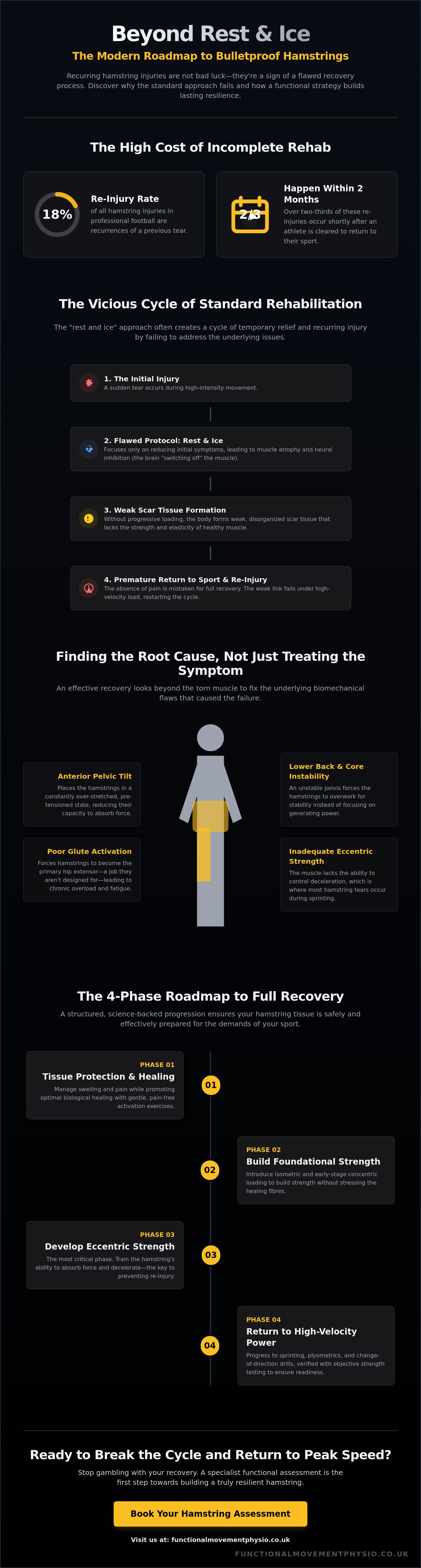
Did you know that 18% of all hamstring injuries in professional football are recurrences, with over two-thirds of those happening within just 2 months of returning to the pitch? It's a statistic that mirrors the frustration you feel when a recurring "niggle" stops you from reaching top speed. You've likely been caught between conflicting advice about whether to stretch or strengthen, all while fearing a complete rupture during your next session. Finding effective hamstring tear rehabilitation Liverpool is about more than just waiting for the pain to fade; it's about understanding the biomechanical reason your muscle failed in the first place.
We understand how exhausting it is to be stuck in a loop of temporary relief followed by sudden setbacks. You deserve a recovery plan that offers more than a short-term patch. This article shows you how a specialist functional approach helps you move beyond basic rest to build a resilient, high-performance hamstring. We'll explore the importance of identifying your specific root causes and provide a clear timeline to help you return to peak sprinting speed with total confidence.
Key Takeaways
- Learn why the standard "rest and ice" cycle often leads to weak scar tissue and how to break the loop of recurring injury.
- Discover how identifying root causes, such as pelvic tilt or hip mobility issues, prevents future tears by addressing your entire functional chain.
- Understand the structured stages of hamstring tear rehabilitation Liverpool, moving safely from tissue protection to high-velocity power.
- Explore how specialist treatments like shockwave therapy can accelerate the biological healing of complex high hamstring tears.
- Gain a clear roadmap to return to peak sprinting speed with a plan backed by sports science and objective strength testing.
The Problem with Standard Hamstring Tear Rehabilitation
A hamstring tear is far more complex than a simple muscle pull; it is a significant disruption of your entire functional chain. When you experience a tear, it affects how your hips, pelvis, and lower back interact during movement. Many athletes and runners seeking hamstring tear rehabilitation Liverpool fall into the trap of the traditional rest and ice cycle. While this might settle initial swelling, it often leads to the formation of weak, disorganized scar tissue that lacks the elasticity and resilience of healthy muscle fibres. For a foundational hamstring strain overview, it is helpful to understand the grading of these injuries, but clinical labels don't always explain why the tissue failed during your specific activity.
Standard rehabilitation often prioritises flexibility and static stretching, yet the real requirement for a safe return to sport is eccentric strength. Quick fixes like generic stretching routines can actually aggravate a healing tear by putting excessive tension on the injury site before it is strong enough to cope. This approach treats the symptom rather than the mechanical breakdown that caused the injury.
Why Rest and Ice Are Not Enough
Traditional RICE (Rest, Ice, Compression, Elevation) protocols have major limitations for long-term functional recovery. Prolonged rest is often counterproductive because it leads to rapid muscle atrophy and a decrease in tendon stiffness. These are the very attributes you need for explosive movement and deceleration. You might find that your leg feels "fine" during a light walk or a slow jog, but that doesn't mean the tissue is ready for high-velocity loading. Relying solely on the absence of pain as a green light to return to sport is a dangerous gamble. Without progressive loading, the muscle remains vulnerable to the exact same forces that caused the initial tear.
The Trap of Recurring Hamstring Strains
The re-injury rate for hamstrings is alarmingly high, with 18% of injuries in professional settings being recurrences. Over two-thirds of these happen within just 2 months of returning to play. This is often due to a phenomenon called neural inhibition, where your brain "shuts down" the affected muscle to protect it from further pain. If your hamstring tear rehabilitation Liverpool doesn't specifically target this neuromuscular connection, the muscle remains "offline" even after the tissue has technically healed. This creates a permanent weak link in your sprinting mechanics, ensuring that the muscle is significantly more likely to fail again the moment you attempt to reach top speed or change direction rapidly.
- Muscle Atrophy: Weakness that develops within days of stopping activity.
- Neural Inhibition: The brain's refusal to fully "fire" the muscle after trauma.
- Incomplete Mechanics: Compensations in the hip or pelvis that put extra stress on the healing tissue.
- Scar Tissue: Disorganized fibres that are prone to tearing again under high tension.
Identifying the Root Cause of Your Hamstring Pain in Liverpool
While an MRI or ultrasound can tell you the grade of your tear, they can't tell you why your muscle failed in that specific moment. Effective hamstring tear rehabilitation Liverpool must look beyond the site of pain. If we only treat the damaged tissue, we ignore the mechanical stress that caused the initial overload. By assessing your entire musculoskeletal system, we identify the movement flaws that turn a standard sprint into an injury risk. This approach ensures your recovery isn't just a temporary patch but a long-term solution.
Biomechanical Analysis and Pelvic Positioning
Your pelvis acts as the anchor point for your hamstrings. If you have an anterior pelvic tilt, your hamstrings are placed in a constant state of overstretch. This pre-tensioned state means the muscle has less "give" when you perform high-intensity movements. Lower back stability is also vital; a weak core leads to an unstable pelvis, forcing hamstrings to overwork for stability. Pelvic mechanics dictate the eccentric load placed on the hamstring during the late swing phase of running. This is a key part of hamstring injury diagnosis and treatment.
We also evaluate how your glutes are functioning. Your gluteus maximus is designed to be the primary engine for hip extension. When the glutes are poorly recruited, the hamstrings must compensate to provide power. This synergistic dominance leads to chronic fatigue in the hamstring, making it susceptible to tearing under high loads. Identifying these imbalances during an initial consultation is the first step toward a permanent fix.
The Role of Gait Analysis in Recovery
Running is a repetitive cycle where small errors lead to big problems. Overstriding is a common culprit; it occurs when your foot lands too far in front of your centre of mass. This position forces the hamstring to act as a brake while simultaneously trying to pull you forward. We use high-definition video analysis to catch movement flaws that the naked eye misses. This comprehensive gait analysis in Liverpool allows us to break down your running form frame-by-frame. We look at your joint angles at the point of peak tension to ensure your hamstring tear rehabilitation Liverpool addresses your specific movement profile.
By fixing these biomechanical "why" factors, we remove the excessive stress from the muscle. This allows the tissue to heal in a functional environment, rather than just resting in a dysfunctional one. It's the difference between hoping the pain doesn't come back and knowing your body is resilient enough to handle the demands of your sport.
A Structured Roadmap for Hamstring Rehabilitation
Recovery is a ladder, not a waiting game. You cannot simply wait for the pain to subside and expect your muscle to handle the explosive demands of a full sprint. Effective hamstring tear rehabilitation Liverpool follows a strict, milestone-based progression that moves you from initial tissue protection to high-velocity power. You must earn the right to progress to each subsequent phase through objective strength testing. This data-driven approach removes the guesswork and ensures that your return to the pitch or track is backed by physical readiness rather than just hope.
Phase 1: Protection and Pain Management
The first 72 hours following an injury are critical for long-term success. During this window, you must avoid aggressive stretching, as pulling on the fresh tear can disrupt the early healing process. Instead, we focus on early isometric holds. These are "static" contractions where the muscle works without changing length. They help maintain muscle fibre recruitment and reduce pain without aggravating the injury site. You can maintain your cardiovascular fitness through non-impact activities like cycling, provided they remain pain-free and don't place excessive tension on the healing tissue.
Phase 2: Eccentric Loading and Strength
Once the initial pain settles, we move into the strengthening phase. Eccentric exercises, such as Nordic curls, are considered the gold standard in this comprehensive guide to hamstring rehabilitation. These movements focus on the "lowering" phase of an exercise, effectively building the brakes of your muscle. This is vital because most hamstring tears occur when the muscle is trying to decelerate your leg during a sprint. Eccentric training specifically increases the length of your muscle fascicles, which makes the tissue more resilient to the high-tension forces of high-speed running.
Phase 3: Power and Return to Speed
The final phase bridges the gap between the gym and the field. We introduce plyometrics and controlled accelerations to test how your hamstring handles rapid loading. This is where we conquer the fear of "pinging" the muscle again. We use specific metrics to ensure your injured side is within 10% of your healthy side's strength before you clear the final hurdles. This transition is managed through a return to sport assessment Liverpool, giving you the clinical green light to open up your stride with total confidence. Our goal is a safe return to speed where you feel stronger than you were before the injury occurred.
Specialist Treatments to Accelerate Your Recovery
While progressive loading is the non-negotiable foundation of any successful recovery, specialist clinical tools can significantly accelerate the biological healing process. Integrating these interventions into your hamstring tear rehabilitation Liverpool plan ensures that you aren't just waiting for time to pass. Instead, we use evidence-based technology to stimulate tissue repair and manage the compensatory patterns that often develop after an injury. These treatments bridge the gap between initial trauma and the high-intensity strength work required for a full return to sport.
Shockwave Therapy for Hamstring Tendinopathy
Shockwave therapy is a game changer for runners and athletes dealing with "high hamstring" pain near the sitting bone. This area, known as the proximal hamstring tendon, often has a poor blood supply, which makes natural healing slow and frustrating. Shockwave uses mechanical acoustic waves to create "micro-trauma" in the stubborn tissue. This sounds counterintuitive, but it actually triggers a powerful healing response by increasing local blood circulation and stimulating collagen production. It's a highly effective, non-invasive alternative to corticosteroid injections or surgery for those who have struggled with chronic issues for months.
By using shockwave therapy within a broader rehabilitation programme, we can settle tendon pain faster, allowing you to progress to heavier loading exercises sooner. It helps "reboot" the healing cycle in tissues that have become stagnant or degenerative. This technology is particularly useful for individuals who feel they have hit a plateau with exercise alone, providing the necessary stimulus to move into the more demanding phases of recovery.
The Role of Sports Massage in Rehab
When you tear a hamstring, your body naturally tries to protect the area by increasing tension in the surrounding muscles. You might notice your quads feel unusually tight or your lower back starts to ache as your body compensates for the weak link. This "muscle guarding" is a temporary survival mechanism, but it can quickly become a hindrance to fluid movement. We use expert sports massage in Liverpool to manage this compensatory tension and ensure your functional chain remains balanced.
Beyond tension management, soft tissue work supports the lymphatic system in clearing inflammation following an acute tear. We also use medical acupuncture to target specific trigger points that are "stuck" in a protective state, improving local blood flow to the injured fibres. This combination of manual therapy and technology ensures that every obstacle to your recovery is removed. If you are ready to move past temporary relief and start a targeted recovery plan, you can book a specialist shockwave or physiotherapy session at our Liverpool clinic today.
Start Your Hamstring Recovery at Our Liverpool Clinic
Stop guessing with your recovery and start following a plan backed by sports science. Many athletes spend weeks or even months in a cycle of "resting and hoping," only for the pain to return as soon as they pick up the pace. This frustration ends when you choose a specialist approach to hamstring tear rehabilitation Liverpool. Our clinic doesn't just treat the symptom; we identify why the tissue failed so you can return to your sport with total confidence. You shouldn't have to live with the fear of your hamstring "going" every time you push for a sprint.
Our Liverpool city centre clinic is specifically designed for high-performance recovery. We work with injured runners, footballers, and gym-goers who are tired of conflicting advice and slow progress. By focusing on the root cause of your injury, we ensure that your return to peak performance is both sustainable and permanent. You'll move from a state of limitation to a state of empowerment, mastering your own body's mechanics along the way. This isn't about a quick fix; it's about building a body that's more resilient than it was before the injury occurred.
What to Expect During Your Initial Consultation
Your journey begins with a comprehensive physical assessment. We don't just look at the site of the tear. We evaluate your hip biomechanics, pelvic stability, and glute recruitment to see how your entire functional chain is performing. This thoroughness allows us to give you a clear diagnosis and a specific injury grade, which is essential for setting realistic expectations. We'll provide you with an estimated recovery timeline so you know exactly when you can expect to be back at full speed. Understanding the "why" behind your injury is the first step in ensuring it never happens again.
Following the assessment, you won't leave with just a piece of paper. We provide your initial exercise plan via our digital rehab platform. This includes high-quality video demonstrations of each movement, ensuring you perform your exercises with the precision required for optimal healing. You can track your progress in real-time, providing a clear sense of structure and safety as you move through the different phases of your roadmap. This digital support ensures you're never left wondering if you're doing your exercises correctly between clinic visits.
Book Your Assessment Today
Taking the first step is often the hardest part of the recovery process. However, the sooner you start a structured programme, the lower your risk of developing chronic weakness or compensatory issues in your lower back and hips. Our specialist team is ready to help you build a more resilient hamstring and unlock your true movement potential through targeted hamstring tear rehabilitation Liverpool. We're here to guide you every step of the way, from initial pain management to your first full-speed sprint.
Visit our Baltic Triangle clinic to access high-level care in a supportive, professional environment. We're committed to long-term solutions that get you back to doing what you love without the constant worry of re-injury. Our goal is to help you master your movement and achieve longevity in your athletic pursuits. Book your hamstring assessment at Functional Movement Physio and take control of your recovery today.
Reclaim Your Performance and Sprint with Confidence
You don't have to stay trapped in a cycle of recurring "niggles" or settle for the temporary relief of basic rest. Successful hamstring tear rehabilitation Liverpool requires a shift from managing pain to building functional resilience. By addressing the biomechanical root causes identified through our specialist gait analysis technology, you can stop the compensations that lead to re-injury. This approach ensures your recovery is built on a foundation of movement quality rather than just the absence of symptoms.
Our expertise in eccentric loading protocols ensures your muscle is conditioned to handle the specific demands of deceleration and high-speed running. Located in a convenient Liverpool city centre location, we provide the structured roadmap you need to move from early protection to peak power with total clarity. It's time to stop guessing and start following a plan that prioritises your long-term athletic health and longevity. You deserve to move with freedom and the quiet confidence that your body is prepared for the challenges ahead.
Take the first step toward a permanent recovery. Book your hamstring rehabilitation assessment in Liverpool today to begin your journey back to full speed. You have the potential to move better and stronger than you did before your injury.
Frequently Asked Questions
How long does a Grade 2 hamstring tear take to heal?
A Grade 2 hamstring tear typically requires 4 to 8 weeks for a full return to competitive sport. This timeline depends heavily on the location of the injury; tears closer to the tendon usually take longer than those in the muscle belly. Adhering to a structured loading programme is essential to ensure the tissue is resilient enough for high-speed running.
Should I stretch my hamstring if I think I have torn it?
No, you should avoid aggressive stretching during the first 72 hours after an injury. Stretching a fresh tear can disrupt the initial healing process and interfere with the formation of new muscle fibres. Instead of pulling on the tissue, focus on gentle, pain-free movement and early isometric holds to maintain muscle recruitment without causing further damage.
Can I still go to the gym with a hamstring strain?
Yes, you can continue training if you modify your routine to protect the healing tissue. While you must avoid heavy deadlifts or explosive movements initially, you can focus on upper body strength, core stability, and single-leg work for your uninjured side. Our approach to hamstring tear rehabilitation Liverpool ensures you stay active while safely progressing your injured leg through specific, low-load exercises.
Why does my hamstring keep tearing in the same spot?
Recurrent tears often happen because the underlying root cause, such as an anterior pelvic tilt or glute weakness, was never corrected. If your previous rehab focused only on the site of pain, the original mechanical stress remains. This leaves the area vulnerable to re-injury; especially if the brain is still "protecting" the muscle through neural inhibition, which limits its power output.
Is walking good for hamstring tear rehabilitation?
Walking is an excellent low-impact activity that promotes blood flow and maintains joint mobility during the early stages of recovery. It provides a gentle stimulus to the healing fibres without the high eccentric forces found in running. You should ensure your gait remains natural; if you find yourself limping or feeling sharp pain, you may need to reduce your distance or pace.
When can I start running again after a hamstring injury?
You can typically begin a phased return to running once you have regained 90% of your strength compared to the uninjured leg. You must also be able to perform high-level tasks, such as hopping and lunging, without any pain or apprehension. We use objective testing to ensure your tissue is ready for the transition from gym-based strength work to pitch-based accelerations.
Do I need an MRI for a hamstring tear in Liverpool?
Most Grade 1 and 2 tears do not require an MRI, as a thorough clinical assessment is usually enough to guide your recovery. Imaging is typically reserved for suspected Grade 3 complete ruptures or cases where progress has stalled despite consistent rehabilitation. Specialist hamstring tear rehabilitation Liverpool prioritises how your muscle functions during movement rather than relying solely on a static picture.
What is the best exercise for hamstring rehab?
There is no single "best" exercise, but eccentric movements like Nordic curls and Romanian deadlifts are vital for long-term resilience. The key is the progression; starting with isometrics to settle pain before moving into slow strength work and finally explosive power. Each exercise must be chosen based on your specific biomechanical needs and the current stage of your tissue healing.