Strength and Conditioning for Runners Liverpool: The Ultimate Performance Guide
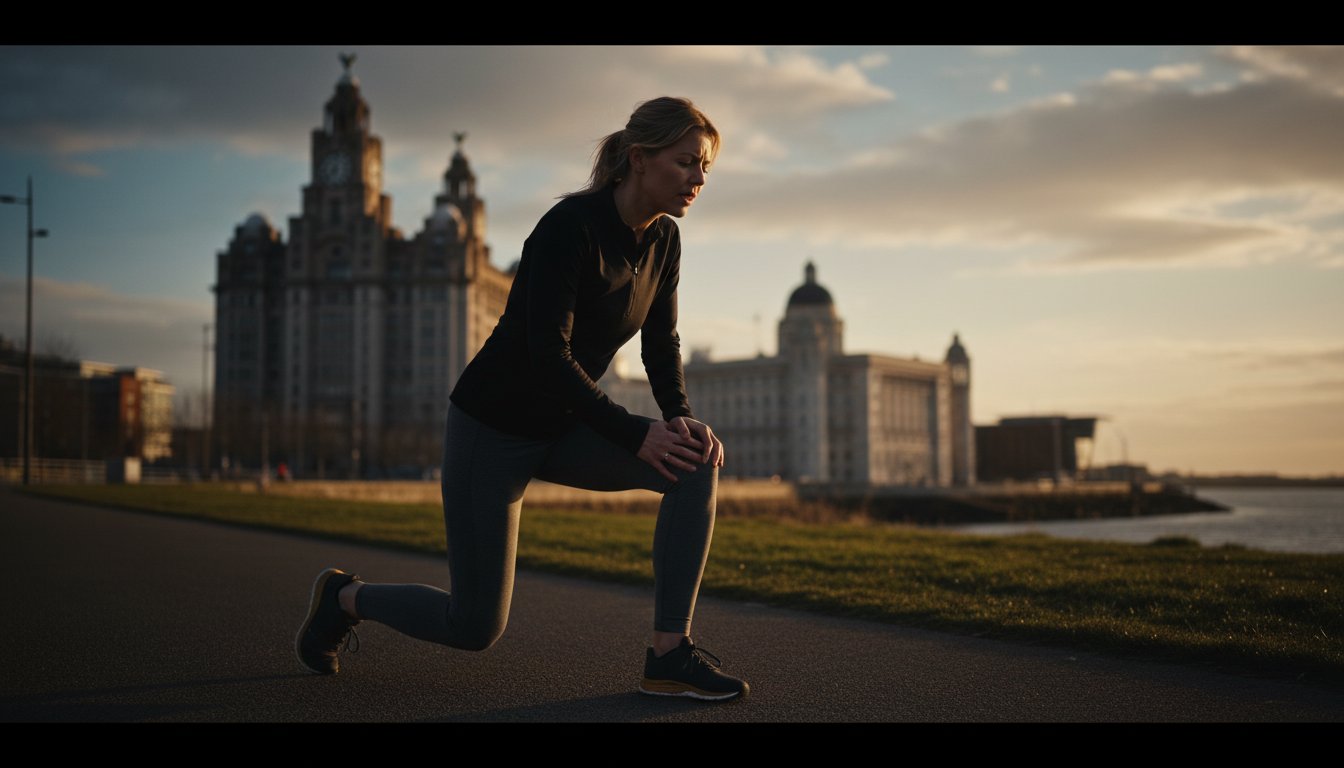
Strength training for runners isn't about building bulky muscle; it's about increasing the structural tolerance of your tissues to handle three times your body weight with every single stride. If you're currently managing recurring shin splints or feeling your form collapse during those final miles of a race, you've likely realized that just running more isn't the answer. Finding effective strength and conditioning for runners Liverpool is the difference between a season spent on the sidelines and one spent hitting new personal bests.
It's frustrating to feel stuck in a cycle of injury and recovery, especially when gym advice feels contradictory or generic. You want to feel confident that your body can handle the impact of the pavement without failing you. We believe in moving beyond symptom management to address the biomechanical imbalances that cause pain in the first place.
In this guide, you'll learn how a root cause approach to training helps you run faster and recover quicker. We'll explore the specific movements that build structural resilience and explain why a functional assessment is the first step toward long term, injury free running on the streets of Liverpool.
Key Takeaways
- Understand how increasing your tissue load tolerance protects your body from the impact forces of running on varied terrain.
- Learn why relying on stretching and foam rolling often fails to solve the underlying biomechanical issues causing recurring injuries.
- Discover how a professional strength and conditioning for runners Liverpool programme uses compound movements to build structural resilience.
- Identify the critical differences between a standard shoe shop gait analysis and a clinical runner’s assessment focused on root causes.
- Establish a sustainable two session per week framework that prioritises long term performance over temporary symptom relief.
Why Strength and Conditioning is the Missing Link for Liverpool Runners
Strength and conditioning for runners Liverpool is often misunderstood as simply hitting the gym to get bigger muscles. In reality, it's a targeted programme designed to bridge the gap between your current physical capacity and the intense demands of your training volume. While many focus solely on cardiovascular fitness, your musculoskeletal system requires a specific type of conditioning to thrive. Whether you're navigating the uneven paths of Sefton Park or the hard pavement of the Liverpool waterfront, your body must manage tissue load tolerance. This is the specific amount of stress your bones, tendons, and muscles can handle before they begin to fail.
Running is essentially a series of thousands of single leg hops. Every time your foot strikes the ground, your body must remain stable while managing enormous forces. Without the specific stability required to control your landing, your joints absorb the impact that your muscles should be managing. By applying the principles of strength training, we can transform your body from a fragile structure into a resilient machine. This is the difference between general fitness and runner specific conditioning; one makes you sweat, while the other makes you durable.
The Science of Impact Forces
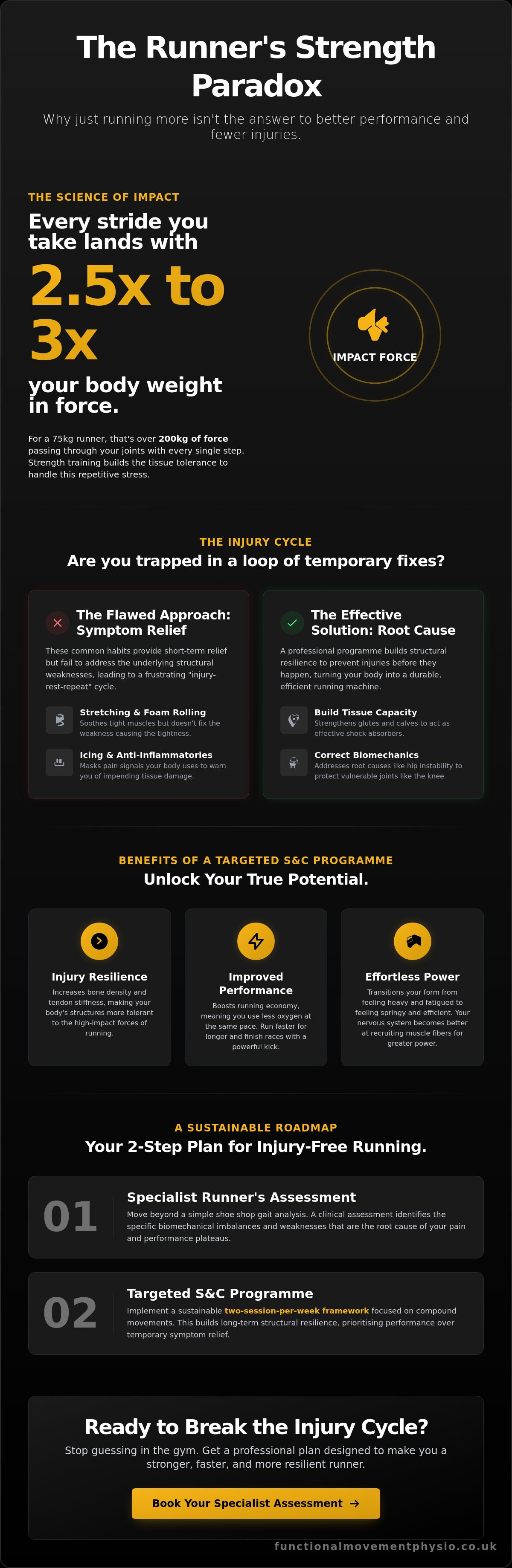
Every time your foot hits the ground, you absorb between 2.5 and 3 times your body weight. If you weigh 75kg, that is over 200kg of force passing through your ankle, knee, and hip with every single stride. Strength and conditioning prepares your entire musculoskeletal system for this repetitive stress by increasing bone density and tendon stiffness. This preparation ensures that your tissues don't just survive the run but actually adapt and grow stronger from the stimulus. Plyometric loading is the essential ingredient that develops the reactive stiffness needed for superior running economy.
Performance Beyond the Stopwatch
Conditioning isn't just about avoiding the physio table; it's about unlocking your true speed. By improving your running economy, you use less oxygen to maintain the same pace, which means you can run faster for longer without hitting the wall. Your nervous system becomes significantly more efficient at recruiting muscle fibres, leading to greater power output and a transition from feeling heavy and fatigued to feeling springy and efficient on your feet. You'll find that the final miles of your race feel less like a struggle for survival and more like a controlled, powerful finish.
The Problem: Why High Mileage and Quick Fixes Often Fail
Many athletes searching for strength and conditioning for runners Liverpool are already trapped in the frustrating "injury-rest-repeat" cycle. You might find that your fitness improves rapidly, but your body can't seem to keep up with the demands of your training plan. This often leads to a reliance on temporary solutions. While foam rolling and stretching might offer short term relief, they are essentially band-aids. They soothe the symptoms of tight IT bands or sore calves without addressing the underlying structural weakness that caused the tension in the first place.
The core issue is often a lack of specific tissue capacity. When you run, your glutes and calves must act as shock absorbers. If these muscles are weak, the stress of every stride is transferred to your joints and connective tissues, leading to common pathologies like shin splints or runner's knee. Simply adding more miles to your week won't fix this. In fact, increasing volume on top of a dysfunctional foundation only accelerates the rate of mechanical breakdown. Understanding how strength training prevents running injuries is crucial because it shifts the focus from managing pain to building the capacity your body needs to thrive.
The Trap of Symptom-Based Treatment
Icing a painful knee after a run might reduce inflammation, but it does nothing to correct the hip instability that's causing the knee to collapse inward. Many runners also rely on anti-inflammatories to get through their Sunday long runs. This is a dangerous strategy. It masks the pain signals your body is using to warn you of impending damage. Ignoring these "niggles" is exactly how a minor irritation evolves into a chronic condition like Achilles tendinopathy, which can sideline you for months. If you're tired of temporary fixes, a professional assessment can identify exactly where your movement patterns are failing.
Structural Weakness vs. Cardiovascular Fitness
It is a common physiological reality that your heart and lungs develop much faster than your tendons and joints. You might have the aerobic engine to run a sub-4 hour marathon, but if your musculoskeletal system is a "weak chassis," it will eventually fail under the pressure. This is why high mileage alone is rarely enough for long term success. Many runners avoid the gym because they fear "bulking up" and becoming heavy. However, effective strength and conditioning for runners Liverpool focuses on neural adaptation. This process teaches your brain to recruit muscle fibres more efficiently, making you stronger and more powerful without adding unnecessary body mass. We aim to build a resilient structure that can support your cardiovascular ambitions.
The Root Cause Approach: Biomechanics and Gait Analysis
The foundation of effective strength and conditioning for runners Liverpool begins with understanding your unique movement signature. Many runners jump straight into a heavy lifting programme without identifying the underlying compensations that lead to injury. At Functional Movement Physio, we focus on the "why" behind your pain. If your knee hurts, we don't just look at the knee; we examine the pelvic control and ankle mobility that dictate how force is distributed through your leg. This diagnostic approach ensures that your gym work actually solves problems instead of creating new ones.
A professional runner's assessment is fundamentally different from a simple shoe shop gait analysis. While a retail fitting might focus on whether your foot rolls inward to sell you a specific trainer, a clinical assessment looks at the musculoskeletal drivers of that motion. We identify the specific movement compensations you've developed over years of training. A scientific review on strength training for runners confirms that these clinical interventions significantly improve running economy by optimising how the body handles repetitive impact. We use this evidence to build a roadmap that prioritises your structural integrity.
Comprehensive Gait Analysis in Liverpool
We utilise high speed video analysis to spot biomechanical inefficiencies that are invisible to the naked eye. By slowing down your stride, we can see exactly how your foot strike pattern influences the load placed on your shins and knees. For example, an overstride can increase the braking force on your joints, leading to the chronic knee pain that sidelines many local athletes. This level of detail allows us to make precise adjustments to your form and your strength programme, ensuring every mile you run is as efficient as possible.
Identifying Muscular Imbalances
Most running injuries are the result of poor load management. To fix this, we perform specific tests to identify weaknesses in your posterior chain. We focus on three key areas:
- Gluteal Function: Assessing your ability to stabilise the pelvis and prevent the knee from collapsing inward.
- Calf Capacity: Testing the endurance of the soleus and gastrocnemius, which are vital for propulsion.
- Hamstring Strength: Ensuring these muscles can effectively decelerate your leg during the swing phase.
Your core stability also plays a vital role in maintaining an upright posture during fatiguing runs. When your core is weak, your form collapses as you get tired, which shifts the work onto smaller, less capable muscles. By identifying these imbalances early, we can create a targeted plan that builds the specific resilience you need for long term success.
Actionable Guidance: A Sustainable S&C Roadmap for Runners
Many athletes struggle to balance the gym with their weekly mileage. You don't need to live in the weight room to see results. A structured approach to strength and conditioning for runners Liverpool involves two dedicated 45 minute sessions per week. This frequency is enough to stimulate neural adaptation and tissue growth while allowing your body to recover for your high intensity track workouts or weekend long runs. Consistency is more valuable than intensity when you're first building your foundation.
Progressive overload is the foundation of this roadmap. You must gradually increase the resistance or complexity of your movements to build genuine resilience. If you've been lifting the same 5kg dumbbells for six months, your tissues have already adapted and stalled. To continue improving, you need to challenge your musculoskeletal system with heavier loads or more demanding single leg variations. This process ensures your "chassis" is strong enough to support the "engine" you've built through cardiovascular training.
The Essential Movement Patterns
Focus on compound movements that provide the highest return on investment. These exercises mimic the demands of your gait cycle and address the root causes of common injuries:
- Single leg strength: The split squat is a runner's best friend because it addresses imbalances between your left and right sides while building stability in the hip and knee.
- Posterior chain power: Deadlifts and glute bridges target the hamstrings and glutes. These muscles are essential for driving you forward and decelerating your leg during the swing phase.
- Calf resilience: Weighted calf raises are the often overlooked key to preventing plantar fasciitis and Achilles issues. Aim for 3 sets of 8 to 12 controlled repetitions to build the necessary endurance.
Integrating Pilates for Core Resilience
While heavy lifting builds raw strength, clinical pilates Liverpool provides the fine tuned control needed for optimal running posture. It helps you maintain a stable pelvis and neutral spine, even when fatigue sets in during the final miles of a race. If you're short on time, you can integrate these three core stability exercises at home:
- Dead Bugs: Focus on keeping your lower back pressed into the floor while slowly extending opposite limbs.
- Bird-Dog: Maintain a perfectly level pelvis while extending your arm and opposite leg.
- Side Planks: Build lateral hip stability to prevent the "hip drop" that often leads to IT band syndrome.
Balancing these sessions requires a smart approach to your training calendar. Avoid heavy leg days 24 hours before a maximal effort sprint session. Instead, schedule your strength work on your "easy" run days or several hours after a morning run. This ensures your nervous system isn't too fatigued to perform either task safely. If you're unsure how to structure your week, booking a Runner's Assessment is the best way to get a personalised plan that fits your specific goals.
Specialist Runner’s Assessments at Functional Movement Physio
Choosing a partner for your strength and conditioning for runners Liverpool journey is a decision that impacts your longevity in the sport. While many facilities offer general coaching, Functional Movement Physio provides a clinical edge that integrates injury prevention with high performance. We understand that as a runner, your biggest fear is being told to stop. Our primary goal is to keep you on the road by building a body that is capable of handling your training load rather than simply managing your symptoms after they occur.
Having a physiotherapist design your strength programme offers a level of precision that a general gym plan cannot match. We don't just guess which exercises might help; we use clinical data to determine exactly which tissues require more capacity. This personalised approach ensures that every minute you spend in the gym is directly contributing to your resilience and speed. We focus on the fine details of musculoskeletal health to ensure your training is both safe and effective.
From Pain to Peak Performance
We specialise in bridging the gap between acute injury rehabilitation and high performance training. If you've struggled with recurring issues, our physiotherapy Liverpool services provide the foundation for your recovery. Once the initial pain is managed, we transition you into a bespoke movement plan designed for your specific race goals. This continuity of care means your strength work is always aligned with your clinical needs, preventing the common setbacks that happen when rehab and training are treated as separate entities.
Your Next Steps in Liverpool
It's time to stop guessing and start progressing with a strategy backed by science. Whether you're training for a personal best at the Liverpool Half Marathon or enjoying your weekly miles through Sefton Park, Princes Park, or along the Crosby coastline, you deserve a body that feels strong and reliable. We've helped countless local runners move from a state of constant "niggles" to a state of quiet confidence in their physical capacity.
Your journey toward a faster, injury free season begins with a clear understanding of your current movement patterns. Don't wait for a minor ache to become a season ending injury. Take control of your performance and master your own body with a plan tailored specifically to your gait and goals. You can book an appointment today to start your specialist Runner's Assessment and join a community of athletes who prioritise long term functional health.
Take Control of Your Running Future
You've seen how shifting your focus from managing symptoms to building structural capacity can transform your performance. By addressing the root cause of your movement compensations, you move away from the frustration of recurring injuries and toward sustainable speed. Our approach to strength and conditioning for runners Liverpool ensures that your training is built on a foundation of clinical evidence rather than guesswork.
With our Specialist Runner’s Assessment package, you receive a detailed video gait analysis and a bespoke strength and conditioning plan designed by a qualified physiotherapist. This isn't a generic gym programme; it's a precise roadmap tailored to your specific biomechanics. It's time to stop letting "niggles" dictate your training schedule and start building the resilience your body deserves.
Book your Specialist Runner’s Assessment at Functional Movement Physio to start your journey toward an injury free season. You have the potential to run faster and feel stronger than ever before. We're here to help you unlock that potential and get back to doing what you love with total confidence.
Frequently Asked Questions
Do I need to join a gym to do strength and conditioning for running?
You don't need a gym membership to begin improving your structural tolerance. Many initial exercises can be performed at home using your own body weight or resistance bands. Once you've mastered these movement patterns, you'll eventually need heavier external loads to continue building the tissue resilience required for long distance running. We can help you transition from home routines to more advanced loading when your body is ready.
Will lifting weights make me too heavy and slow down my running times?
Lifting weights won't make you heavy or slow if the programme is designed correctly. Strength training for endurance athletes focuses on neural adaptation, which teaches your brain to recruit muscle fibres more efficiently without significantly increasing muscle mass. This improves your power to weight ratio. You'll become more explosive and efficient during each stride rather than bulky and sluggish.
How many times a week should a runner do strength training?
Two sessions per week is the optimal frequency for most runners to build strength without compromising their cardiovascular training. This schedule provides enough stimulus for your musculoskeletal system to adapt while allowing for adequate recovery. During peak racing seasons, you might drop to one maintenance session to ensure your legs remain fresh for competition while maintaining your hard earned gains.
Can strength and conditioning help with my recurring runner’s knee?
Strength and conditioning is highly effective for resolving runner's knee by addressing the mechanical root causes. Patellofemoral pain is often the result of poor pelvic control or weak gluteal muscles causing the knee to track incorrectly. By strengthening these supporting structures, you reduce the stress on the joint. This allows the irritated tissues to heal and prevents the pain from returning during your long runs.
Is it better to do strength training before or after my run?
It is generally best to separate your running and strength sessions by at least six hours. If you must do both in one day, perform your run first to ensure your cardiovascular quality doesn't suffer from muscular fatigue. However, if your primary goal is rehabilitating a specific injury, performing your strength work first while you're fresh can be more beneficial for ensuring correct form.
What are the best exercises for runners to prevent shin splints?
Focused calf and tibialis anterior exercises are the most effective way to prevent shin splints. Weighted calf raises build the endurance of the soleus muscle, which absorbs the majority of the impact during landing. Strengthening the muscles on the front of your lower leg also helps manage the load that often leads to bone stress. Consistency with these movements is vital for long term bone health.
Should I stop running if I start a new strength and conditioning programme?
You don't need to stop running when starting a new programme unless you're dealing with an acute, high grade injury. Our philosophy is to modify your running volume rather than removing it entirely. This approach keeps your cardiovascular system active while your tissues adapt to the new strength and conditioning for runners Liverpool demands. We aim for a seamless integration of both training styles.
How long does it take to see the benefits of strength training in my running?
You'll likely notice improvements in your coordination and "feel" within the first 14 to 28 days due to neural adaptations. However, significant changes in tendon stiffness and muscle strength typically take 8 to 12 weeks of consistent training. Patience is essential; we're focused on building long term resilience rather than providing a temporary quick fix that won't last the season.