Hyrox Physio in Liverpool
Hyrox is brutal. The combination of running, sled work, sandbag carries, and burpee broad jumps under fatigue creates a unique set of injuries that most physios have never seen before. We treat Hyrox athletes across Liverpool and Merseyside, from first-time finishers to Pro division competitors. Get back to the start line faster, stronger, and ready to PB.
Hyrox athletes we treat.
Hyrox is unforgiving in ways that other functional fitness events aren't. The repeated transitions from running to high-intensity strength work load tissues in ways your body simply isn't used to. We see injuries from athletes at every level.
- First-timers training for their first Hyrox who hit a wall with shin splints, knee pain, or shoulder fatigue
- Doubles partners ramping training volume rapidly together and starting to break down
- Pro and Pro Doubles competitors looking for marginal gains in recovery and durability
- Athletes returning from injury trying to get back to race-day fitness without re-injuring
- CrossFitters transitioning into Hyrox finding the running volume exposes weaknesses you didn't know you had
Common Hyrox injuries we treat.
The most common Hyrox injuries come from one of three sources: the running volume, the high-intensity transitions, or the specific demands of station work. Here's what we see:
Shin splints & running pain
Medial tibial stress syndrome from rapidly increased running volume. Especially common in athletes who came from strength backgrounds and aren't used to running 8km in a session.
Plantar fasciitis
The combination of running plus high-load station work irritates the plantar fascia. Often appears as morning heel pain that eases as you move, then comes back during training.
Lower back pain
From sandbag lunges, sled push, and burpee broad jumps under fatigue. Often a sign of weak glutes letting the lower back take loads it isn't designed for.
Shoulder pain
Wall balls and sled pull put serious load on the shoulders, especially when form breaks down under fatigue. Rotator cuff strains and impingement are common.
Hip flexor pain
Running plus lunges plus sled work loads the hip flexors heavily. Tightness can quickly turn into pain that limits stride length and lunge depth.
Knee pain
Patellar tendinopathy from wall balls and broad jumps, plus runner's knee from increased running volume. Often the deal-breaker that stops athletes peaking properly.
How we treat Hyrox injuries.
Hyrox-specific physiotherapy means understanding the event. The total volume, the station order, the way fatigue compounds. A standard "rest and ice" approach won't work for an athlete with a race in 8 weeks. We assess, treat, and modify training so you keep progressing.
Assess race-relevant movement
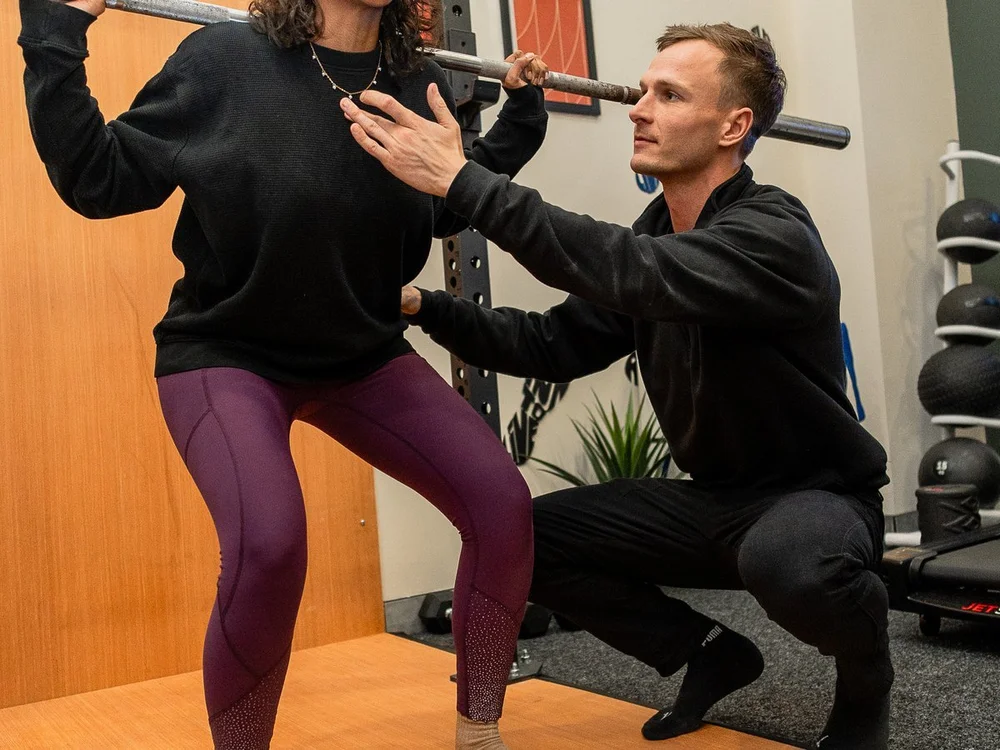
We'll watch you run, lunge with load, perform burpee broad jumps, and assess your sled push position. Most Hyrox injuries show up clearly in one of these movements.
Address the root cause
Hands-on treatment for the painful tissues, plus targeted strength and mobility work that addresses what's actually driving the issue. Often the cause is two or three movement faults away from the pain.
Modify, don't stop
Most Hyrox athletes can keep training around an injury. We'll give you a plan that protects the painful tissue while keeping conditioning, race-specific fitness, and unaffected stations progressing.
Race prep and recovery.
Treatment isn't the only reason Hyrox athletes work with a sports physio. Many of our clients come in for performance-focused sessions before a race or for recovery work in the days after.
- Pre-race assessment to identify weaknesses that might break down on race day, with targeted work to bulletproof them
- Sports massage in the days before and after a race to manage soft tissue and aid recovery
- Movement screens at the start of a training block to set you up for high-volume training without breakdown
- Post-race recovery sessions when everything is sore and you want to bounce back faster for the next block
Why FM Physio for Hyrox in Liverpool.
Hyrox needs a physio who understands the event. The pacing, the station-by-station load, the way running fatigue affects strength performance. That's us.
- Specialists in functional fitness injuries. We work with Hyrox, CrossFit, and hybrid athletes every week.
- Hands-on AND gym-based treatment. We rehab you in our gym space using the movements you actually do in your sport, not on a couch.
- Baltic Triangle clinic. Central Liverpool, accessible from the city's gyms and Hyrox training venues.
- Same-day appointments often available. Important when you've got a race in three weeks and something's just gone wrong.
- 45-minute initial assessments. Time to actually understand the issue and explain what we're going to do.
- No GP referral needed. Direct booking, no waiting.
Hyrox athlete FAQs.
I've got a race in 6 weeks and I've just picked up an injury. Can you help?
Usually, yes. Most acute Hyrox injuries are manageable with the right approach in a 6-week window. We'll assess the injury, give you a realistic answer about race feasibility, modify your training around it, and aim to get you to the start line in good shape.
The honest version: some injuries genuinely need more time. We'll tell you straight whether racing is sensible, rather than telling you what you want to hear.
Should I be doing physio before injuries happen?
If you're training seriously for Hyrox, yes. A movement screen at the start of a training block can identify weaknesses likely to break down at higher volumes. It's cheaper and faster to fix a weakness now than rehab the injury it causes in 8 weeks.
Many of our Hyrox clients book in 6-8 weeks out from a race for a "pre-race MOT". We assess where they're at, identify any niggles before they become injuries, and get a final block of strengthening done.
What's different about Hyrox physio versus general sports physio?
The event itself. Most general sports physios haven't watched a Hyrox or trained for one. They don't understand why your lower back is killing you after sandbag lunges, or why your shoulders are wrecked after wall balls under fatigue.
A Hyrox-aware physio knows the specific demands of each station, where injuries typically come from, and how to load you back to race-specific fitness rather than just "back to normal."
Do I need to stop training while you treat me?
Almost never completely. In most cases we'll modify your training, keeping the parts that don't aggravate the injury, reducing the parts that do, and adding rehab work alongside. Most Hyrox athletes keep training through treatment with adjustments.
Can shockwave therapy help my shin splints or plantar fasciitis?
For chronic plantar fasciitis (8+ weeks of persistent pain), shockwave is one of the most effective treatments available. For shin splints, the evidence is more mixed but it can help in stubborn cases. We offer shockwave at the clinic and will tell you honestly whether it's a good fit for your specific situation.
How much does an initial assessment cost?
£75 for a 45-minute initial assessment, which includes movement screen, hands-on assessment, watching you perform the relevant Hyrox movements, and a clear treatment plan. We accept Simplyhealth and Medicash cash plans.
How quickly can I be seen before a race?
Same-day or next-day appointments are typically available. If you've got a race close and need urgent assessment, call us on 0151 601 1481 directly and we'll find a slot.
Related conditions.
Hyrox injuries often overlap with other areas. If a specific body part is your main concern, these pages go deeper:
Get to the start line.
Most Hyrox injuries are most fixable in the first two weeks. Don't train through it for a month then panic when the race is close. Book an assessment now.