
Elbow Pain Relief · Liverpool City Centre
Elbow Pain Physiotherapist Liverpool
Tennis elbow, golfer's elbow, and bicep tendinopathy are some of the most common and most stubborn injuries we treat. They linger for months when ignored. They respond fast to the right treatment.
- Alleviate elbow pain quickly
- Shockwave therapy available in-clinic
- Appointments 8am to 8pm
£75 new patient elbow assessment
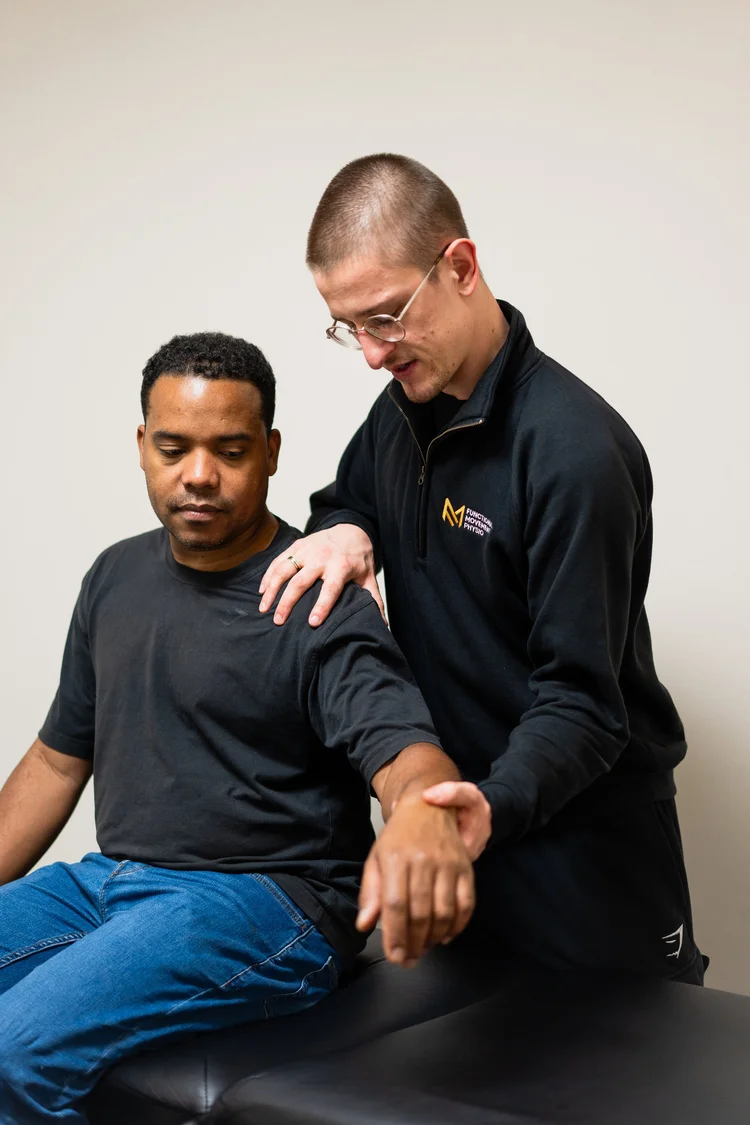
What causes elbow pain?
Most elbow pain is not from a single event. It builds up through repeated load on the tendons and joints around the elbow, often from activities that do not feel particularly strenuous. By the time it hurts, the tissue is already in a chronic state that needs deliberate treatment to resolve.
We see this pattern every day at our Liverpool clinic, particularly in:
- Racquet sports players from padel, tennis, and squash, where gripping and swinging loads the elbow tendons heavily
- Lifters and gym-goers with pain from heavy gripping, pull-ups, hook-grip deadlifts, and high-volume curls
- Climbers dealing with medial elbow pain from repetitive grip work
- Office workers and tradespeople with pain from repetitive movements, keyboard use, or manual handling
- Anyone with persistent elbow pain that has lasted more than a few weeks and is not improving with rest
Most elbow conditions respond well to focused physiotherapy, especially when caught early.
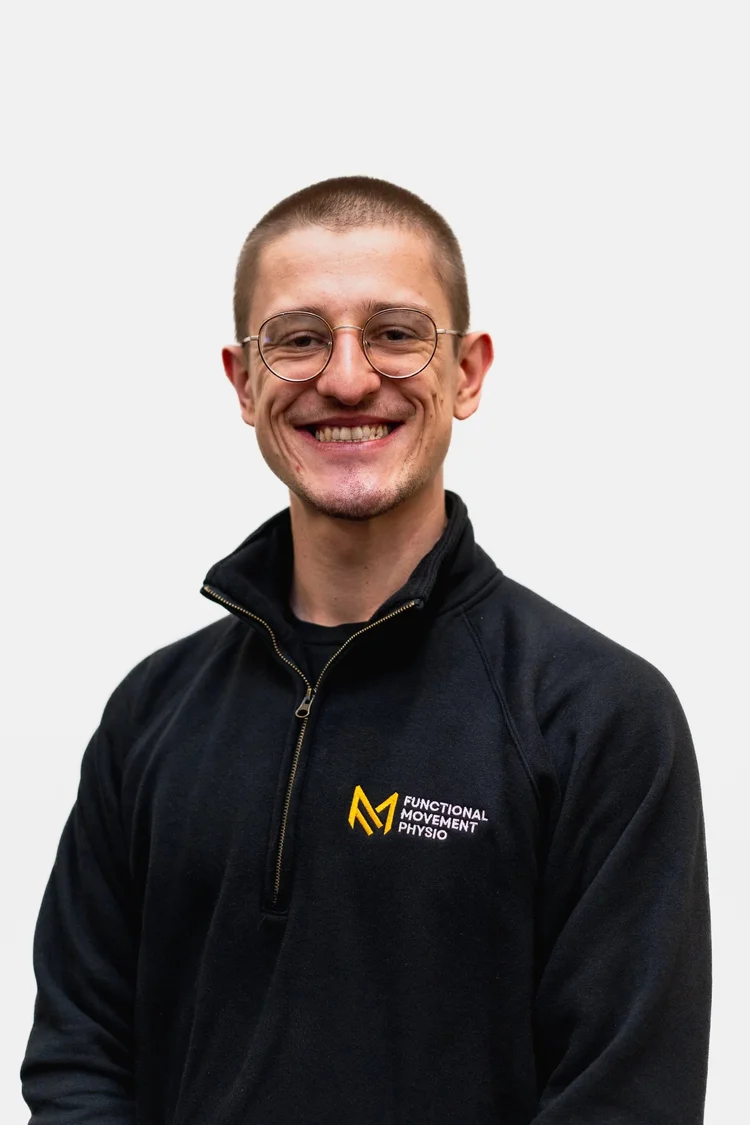
Meet your specialist
Arek Rogozinski
HCPC registered · PH147555Arek is a Specialist Physiotherapist at our Liverpool clinic with strong knowledge of upper limb and tendon rehabilitation and expert hands-on treatment. He helps patients recover from tennis elbow, golfer's elbow, and other stubborn tendon problems using progressive loading and shockwave therapy. You are in safe, fully qualified, HCPC-registered hands from your first assessment through to long-term recovery.
Conditions
Elbow conditions we treat
Different types of elbow pain have different causes and respond to different treatments. Getting the diagnosis right is half the battle.
Tennis elbow
Pain on the outside of the elbow. Common in racquet sports, lifters, and anyone who grips and twists repetitively. Often worse the morning after activity.
Golfer's elbow
Pain on the inside of the elbow. Often seen in climbers, hook-grip lifters, and people who do a lot of pulling motions.
Bicep tendinopathy
Pain in the front of the elbow or upper forearm. Often shows up in lifters doing heavy curls or chin-ups.
Triceps tendinopathy
Pain at the back of the elbow, often felt during pressing movements or push-ups. Common in lifters with high pressing volume.
Olecranon bursitis
Swelling and tenderness at the bony point of the elbow. Sometimes from trauma, sometimes from prolonged pressure.
Cubital tunnel syndrome
Nerve pain or pins and needles in the ring and little fingers, often worse at night, as the ulnar nerve is compressed at the elbow.
Our approach
How we treat elbow pain
Tendon conditions like tennis elbow used to be treated with rest, anti-inflammatories, and sometimes steroid injections. The evidence has shifted. Modern tendon rehab is about progressive loading, hands-on treatment, and identifying what is driving the load.
Accurate diagnosis
Not all elbow pain is tennis elbow. We assess where the pain is, what aggravates it, and rule out nerve involvement, joint issues, or referred pain from the neck or shoulder.
Hands-on plus loading
Manual therapy to reduce immediate pain and tissue irritation, combined with a structured loading programme to rebuild tendon capacity. Both matter.
Address the cause
Equipment review, technique modification, training volume adjustment, or work setup changes. The treatment will not hold if the cause is not addressed.
Stubborn cases
Shockwave therapy for tennis and golfer's elbow
For chronic tennis elbow or golfer's elbow that has lasted more than 6 to 8 weeks despite rest and exercise, shockwave therapy is one of the most effective treatments available. It works by stimulating blood flow and collagen repair in tendons that have got stuck in a chronic state.
Tennis elbow
Targets the common extensor tendon on the outside of the elbow, the classic stubborn case that resists rest alone.
Golfer's elbow
Targets the common flexor tendon on the inside of the elbow, common in climbers and hook-grip lifters.
How it works
Used alongside loading exercises, not as a standalone fix. Most patients see meaningful improvement within 3 to 6 sessions.
Why us
Why FM Physio for elbow pain in Liverpool
Hands-on assessment plus progressive rehab
Shockwave therapy available in-clinic
45-minute initial assessments
Central Baltic Triangle clinic
Same-day appointments and no referral needed
Our therapists
Top rated elbow pain physio Liverpool
20+ years experience
All our sports therapists and physiotherapists are handpicked as the best in the industry.
300+ 5-star reviews
We do not bang our own drum, our clients do it for us.
HCPC and CSP registered
Fully qualified, regulated physiotherapists. You are always in safe, professional hands.
Elbow pain FAQs
How long does tennis elbow take to recover from?
It depends entirely on how long you have had it. Acute tennis elbow (within 6 weeks of onset), treated properly, often resolves in 4 to 8 weeks. Chronic tennis elbow (3+ months) typically takes 8 to 16 weeks and often benefits from shockwave alongside loading.
The most important factor is starting treatment early. Tennis elbow ignored for 6 months can take 6 months to treat. Caught at 6 weeks, it can be gone in a month.
Should I rest until the pain goes away?
Complete rest is one of the worst things you can do for tendon pain. The current evidence is clear: tendons need progressive loading to heal properly. Sitting still and waiting often makes things worse, because the tendon gets weaker while you wait.
You may need to modify or reduce the specific activities causing pain, but you should not stop using the arm entirely.
Will a brace or strap fix tennis elbow?
Braces can give temporary pain relief by changing where forces transmit through the tendon, but they do not fix the underlying problem. If you have worn a strap for months and still have pain, it is masking the issue rather than resolving it. Braces have a place in short-term management, but they are not the treatment.
What about steroid injections?
Steroid injections give fast pain relief, but the evidence shows they often lead to worse long-term outcomes, with higher recurrence rates and slower full recovery than progressive loading. We do not perform injections. If you are considering one, talk to your GP, but be aware of the evidence first.
Do I need a scan?
Most elbow conditions are diagnosed clinically without imaging. Scans often show findings (small tears, mild thickening) in people without pain, which can be misleading. If we think imaging is needed, we will refer you appropriately.
Can I still play sport while we are treating my elbow?
Usually yes, in a modified form. We will often reduce volume, adjust technique, recommend equipment changes, and run the loading programme alongside continued, modified sport. Complete cessation is rarely necessary and often counterproductive.
What are your prices?
£75 for a 45-minute initial assessment, including a full elbow and upper limb assessment, hands-on treatment, and a clear plan to take away. We accept Simplyhealth and Medicash cash plans.
Related services and pages
Elbow pain often connects to issues higher up the chain, or relates to your sport or training. These pages may help:
Fix it early
Elbow pain caught early is a 4 to 8 week problem. Ignored for six months, it becomes a six-month problem. Book an assessment and let us resolve it properly.
Book appointment