
Strength & Conditioning Physio · Liverpool City Centre
Strength and Conditioning Physiotherapist Liverpool
Lifting and strength training build resilient bodies, but heavy and high-volume work has its own injury profile. We treat lifters and gym athletes, and use strength as the foundation of how we rehab everyone.
- Treat and prevent lifting injuries
- Strength-led rehab
- Appointments 8am to 8pm
£75 new patient sports assessment
Training hard but something's grumbling?
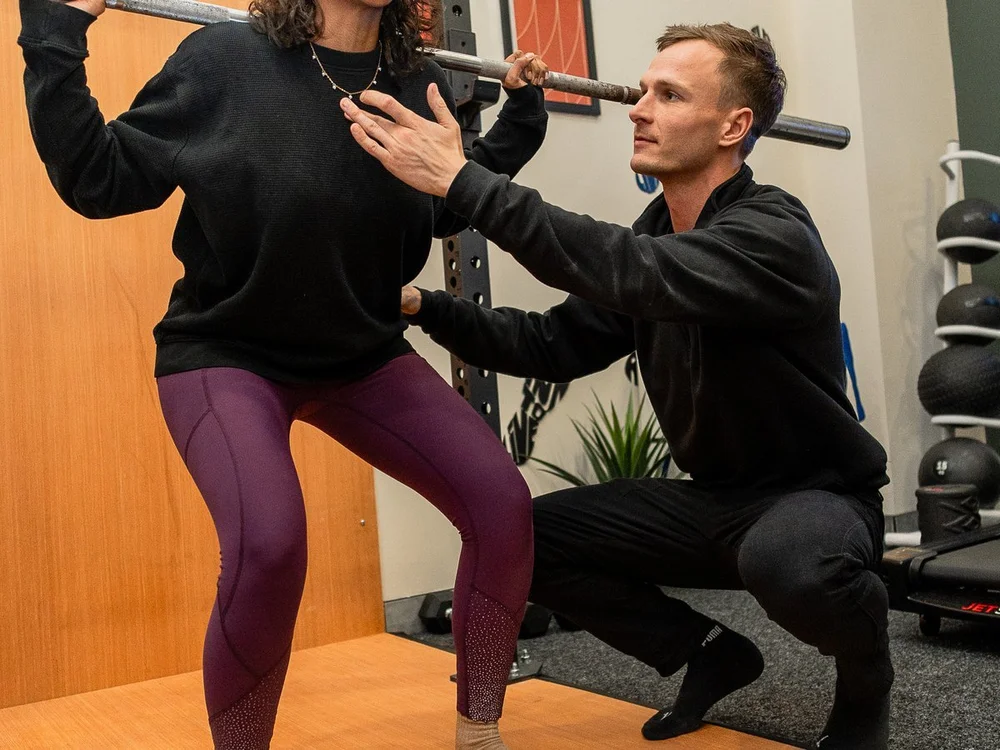
Strength training is one of the best things you can do for your body, but squats, deadlifts, presses, and Olympic lifts load the spine, shoulders, knees, and hips heavily. When something tweaks, you need a physio who lifts, understands the movements, and will not just tell you to stop.
Common issues we see in strength & conditioning athletes:
- Lower back pain from deadlifts, squats, and loaded carries
- Shoulder pain from pressing, overhead work, and bench
- Knee pain from squatting volume and depth
- Elbow and wrist pain from pressing, front rack, and grip
- Hip and groin niggles from squatting and pulling
- Tweaks that recur every time you load the same lift

What we treat
Strength and Conditioning injuries we treat
We understand the specific demands of the sport and treat the injuries that come with it, including:
Lower back pain
From deadlifts, squats, and heavy loaded movements.
Shoulder pain
From pressing, overhead work, and bench volume.
Knee pain
Patellar tendinopathy and anterior knee pain from squatting.
Elbow and wrist pain
From pressing, front rack, and grip-heavy work.
Hip and groin issues
From squatting, pulling, and loaded hinging.
Tendinopathies
Patellar, elbow, and shoulder tendon pain from loading.
Keep lifting
Rehab without racking the barbell
You should not have to stop lifting to recover. We modify your programming, scale loads, and find what you can train safely, while fixing the problem and building you back to full strength.
Scale, don't stop
We find the lifts and loads you can train safely so you keep progress while you rehab.
Fix the weak link
We identify the strength, mobility, or technique gap driving the injury.
Back to full load
A clear path back to your working weights and the lifts that caught you out.
Our approach
How we treat lifting injuries
Assessment that speaks lifting
Hands-on plus loading
Modify, do not stop
Strength as the foundation
Back to full strength
Who this is for
Our therapists
Strength & Conditioning Physio specialists in Liverpool
20+ years experience
All our sports therapists and physiotherapists are handpicked as the best in the industry.
300+ 5-star reviews
We do not bang our own drum, our clients do it for us.
HCPC and CSP registered
Fully qualified, regulated physiotherapists. You are always in safe, professional hands.
Questions? We have got answers
Will I have to stop lifting?
Almost never entirely. We scale and modify your programming so you keep training and progress while we treat the injury at the source. Total rest rarely fixes lifting injuries and costs you hard-won strength.
Do you understand barbell training?
Yes. We assess and rehab around the actual lifts, squat, deadlift, bench, press, Olympic lifts, rather than giving generic exercises, and build you back to full load.
Why does the same lift keep tweaking me?
Recurring injuries usually point to a strength, mobility, or technique gap that shows up under load. We find and close it, rather than just settling the flare.
Do I need a referral?
No referral needed. You can book directly. We also accept Simplyhealth and Medicash cash plans.
What are your prices?
A new patient assessment is £75 for 45 minutes, including a full assessment, hands-on treatment, and a clear plan.
Related services and pages
These pages may help with your training and recovery:
Keep training, fix the problem
You do not have to stop lifting to recover. Book a strength assessment and get a plan that keeps you under the bar from a Liverpool specialist.
Book appointment