Does Shockwave Therapy Hurt? What to Expect During Your Recovery

What if the mild discomfort you feel during a treatment session is actually the "reset" button your body has been waiting for? If you have been struggling with chronic tendon pain that refuses to budge despite months of rest, it is natural to feel a bit of anxiety about clinical procedures. You are likely asking yourself: does shockwave therapy hurt? It is a fair question, especially when you are already frustrated by quick fixes that haven't delivered any lasting results or genuine relief.
I understand that the idea of "shocks" can sound intimidating, but the reality is far more manageable than the name suggests. You deserve to move without restriction, and understanding the process is the first step toward regaining your physical capacity. This article will help you understand the exact sensation of shockwave therapy and explain why any temporary discomfort is a vital step toward fixing the root cause of your pain rather than just masking symptoms.
We will explore the technical methodology behind the treatment and what to expect during the post-treatment recovery phase. By the end, you will have a clear, actionable path forward, giving you the confidence that this intervention can finally unlock your potential for purposeful, pain-free movement.
Key Takeaways
- Understand why the rhythmic sensation of shockwave therapy is a sign that your body is finally restarting its natural healing process.
- Get a direct answer to the question, does shockwave therapy hurt, and learn how we manage intensity to ensure the treatment is effective yet tolerable.
- Learn how acoustic waves trigger neovascularisation to fix chronic tendon issues that have failed to respond to traditional rest or quick fixes.
- Compare the regenerative benefits of shockwave therapy against the potential risks and long term damage associated with invasive surgery or steroid injections.
- Understand why we combine therapy with a professional assessment to identify the movement patterns causing your injury, ensuring a sustainable return to activity.
What Does Shockwave Therapy Actually Feel Like?
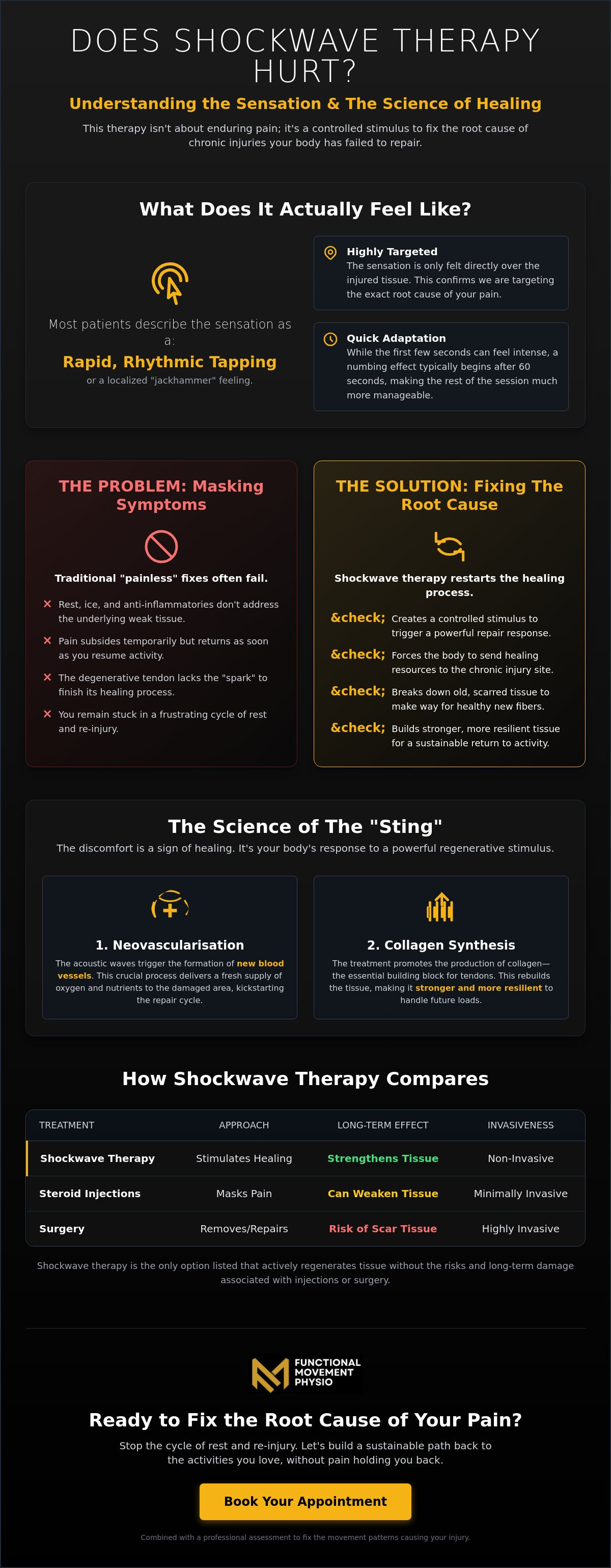
Extracorporeal shockwave therapy (ESWT) is a non-invasive treatment that uses high-energy acoustic waves to stimulate healing in damaged soft tissue. Unlike surgery or injections, it works from the outside in, sending pulses through the skin to the specific site of your injury. Because the word "shock" is in the name, it's natural to ask: does shockwave therapy hurt? Most patients describe the sensation as a rapid, rhythmic tapping or a small, localized "jackhammer" feeling.
One of the most interesting aspects of this treatment is its specificity. The sensation is typically only felt when the probe is placed directly over the injured or degenerative tissue. If the device moves over healthy tissue, you'll likely feel very little. This feedback is actually helpful, as it confirms we're targeting the exact root cause of your discomfort. It's common to feel a sense of apprehension, especially if you're worried that an intense stimulus might worsen your injury. However, ESWT is designed to trigger a repair response, not to cause further damage.
The Problem: Why Masking Pain Fails
If you've been dealing with chronic tendon pain, you've likely tried the standard cycle of rest, ice, and anti-inflammatories. These "painless" treatments often fail because they don't address the underlying issue. When a tendon remains in a degenerative state, it essentially lacks the biological "spark" needed to finish the healing process.
Many runners and gym-goers find themselves stuck in a frustrating loop. You rest for a month, the pain subsides, but as soon as you return to your sport, the ache comes roaring back. This happens because rest alone doesn't improve the load-bearing capacity of your tissue. Without a specific stimulus to restart the repair cycle, the tendon stays weak and vulnerable to re-injury.
Acute Pain vs. Therapeutic Stimulus
It's vital to distinguish between the "bad" pain of an injury and the "productive" discomfort of shockwave therapy. Injury pain is a warning signal from your nervous system that something is wrong. In contrast, the sensation during ESWT is a controlled, therapeutic stimulus. It's entirely skin-safe and non-invasive, meaning there is no risk of breaking the skin or causing external wounds.
The good news is that your body adapts quickly. While the first few seconds might feel intense, the sensation usually begins to dull after about 60 seconds of treatment. This numbing effect happens as the pulses interact with your nerve endings, making the rest of the session much more manageable. You aren't just enduring pain; you're participating in a process that forces your body to pay attention to an area it has previously failed to fix.
The Science of the Sting: Why Discomfort Signals Healing
The discomfort you feel during a session isn't a sign of damage. It is your body's response to a powerful regenerative stimulus. Many people worry and ask, does shockwave therapy hurt because they fear worsening an already sensitive injury. In reality, that "sting" is the sound waves interacting with dense, calcified, or scarred tissue that has stopped healing on its own. This interaction is the first step in a biological reset that moves you away from chronic pain and toward peak performance.
At Functional Movement Physio, we use a Root Cause Approach. We don't just want to numb the area; we want to stimulate the body to repair itself from within. By creating controlled micro-trauma, shockwaves force the body to initiate neovascularisation. This process triggers the growth of new blood vessels, which bring fresh nutrients and oxygen to the site. Simultaneously, the treatment promotes collagen synthesis. Collagen is the structural building block your body needs to rebuild strong, functional tendons that can actually handle the loads of running or lifting.
The intensity you feel is simply the acoustic waves breaking down old, stagnant tissue patterns. It is a necessary step to clear the path for new, healthy fibers to take their place. Think of it as a partnership between the expert and your body's own natural resilience. We are providing the stimulus, and your body is providing the repair.
Restarting the Biological Clock
Chronic injuries often become stagnant because your brain essentially "forgets" the injury is there once the initial inflammatory phase has passed. Without a fresh signal, the healing process stalls. Shockwave therapy "tricks" the brain into sending healing resources back to the area by creating a new, controlled inflammatory response. It also helps manage long term pain by reducing Substance P, a neurotransmitter that transmits pain signals to the brain. This leads to a lasting reduction in sensitivity.
Targeting the Root Cause in Liverpool
We often use Shockwave Therapy for Achilles Tendonitis Liverpool to help local athletes return to their sport. Neovascularisation is the formation of new blood vessels to deliver oxygen to damaged tendons. This treatment is never used in isolation at our clinic. It is always part of a wider functional movement plan designed to fix the underlying mechanics that caused the injury in the first place. If you are tired of temporary fixes, you can book an initial physiotherapy consultation to start a plan that addresses the source of your pain.
Shockwave Therapy vs. Traditional Treatments
When you are weighing up your options for recovery, it is easy to focus on the immediate sensation rather than the long term outcome. You might wonder, does shockwave therapy hurt more than a simple injection or a course of painkillers? While a pill or a needle might seem easier in the moment, they often fail to address why your pain started in the first place. Shockwave therapy is a regenerative treatment, meaning it actively works to repair the structure of your tissue rather than just masking the symptoms.
Traditional symptom management, like taking ibuprofen, simply numbs the signals your body is sending you. It does nothing to resolve the underlying degeneration. In contrast, clinical research shows that shockwave therapy has a success rate of 60% to 75% for conditions like Tennis Elbow. This isn't just about temporary relief; it is about achieving a sustainable return to the activities you love by fixing the root cause.
Why We Avoid Cortisone Injections
Many patients come to our Liverpool clinic having already had a cortisone injection. While these can provide rapid relief, they carry a significant risk: they can weaken the tendon over time. Repeated steroid use is associated with a higher risk of tendon rupture and further degeneration. We view ESWT as the superior second-line treatment for chronic tendinopathy because it promotes structural repair. Instead of numbing the area, you are investing in the long term health of your physical capacity.
Shockwave vs. Surgery: A Liverpool Perspective
Surgery should always be a last resort. It involves anaesthetic, surgical risks like infection, and a lengthy period of forced inactivity. ESWT allows you to remain mobile throughout your treatment course. You don't have to take weeks off work or stop moving entirely, which is essential for maintaining your baseline fitness. From a practical standpoint, a course of shockwave is also far more cost-effective than private surgery. You get a high performance solution without the complications and downtime of an invasive procedure.
Your Treatment Roadmap: Managing Sensation and Recovery
When you arrive at our Liverpool clinic for your session, the process is structured to keep you comfortable and informed. We start by applying a coupling gel to the skin, which allows the acoustic waves to travel efficiently into the target tissue. As the treatment begins, you will hear a rhythmic clicking sound. We start at a low energy setting to let your nervous system habituate to the stimulus. This gradual approach directly addresses the common worry: does shockwave therapy hurt? By starting slowly, we ensure the sensation is never overwhelming.
In the 24 hours following your appointment, you might experience a dull, throbbing ache. This is a completely normal part of the inflammatory response we have intentionally triggered. It is your body's way of saying the repair process is underway. One critical piece of advice: do not take anti-inflammatory medication like ibuprofen after your session. These drugs can dampen the very response we are trying to create, potentially slowing down your recovery. If you are ready to stop managing symptoms and start fixing the cause, you can book your initial shockwave therapy consultation today.
The Importance of Communication
You are always in total control of the session. We rely on your real-time feedback to find the "therapeutic window", the point where the treatment feels challenging but tolerable. We don't just set the machine and walk away. We carefully ramp up the energy levels as your tissue becomes more resilient during the session. This personalized dosing ensures we are providing enough stimulus to trigger healing without causing unnecessary distress. Our goal is to work with you to find the exact intensity that will yield the best results for your specific injury.
Post-Treatment Practical Advice
Hydration and gentle mobility are your best tools during the first 48 hours. While you should avoid heavy loading, like a personal best deadlift or a high intensity interval run, you must keep moving. Gentle walking or basic range of motion exercises help support the healing response and maintain blood flow to the area. Most patients begin to notice functional improvements, such as reduced morning stiffness or increased ease of movement, after the second or third session. True structural repair takes time, but these early signs indicate that you are successfully moving from physical limitation toward peak performance.
Fixing the Root Cause at Functional Movement Physio
Shockwave therapy is a powerful tool for restarting the body's natural repair mechanisms, but at Functional Movement Physio, we never view it as a standalone solution. Applying acoustic waves to a damaged tendon without addressing the movement patterns that caused the injury is like patching a leaking pipe without turning off the water. We believe in a partnership between expert intervention and your own physical resilience. Our goal is to move you beyond symptom management and toward peak performance by identifying the exact source of your dysfunction.
This is why we integrate every shockwave session into a comprehensive recovery roadmap. We combine the regenerative power of ESWT with personalized strength and conditioning programs. This ensures that as your tissue heals, it also becomes more capable of handling the specific loads of your sport or daily life. If you have been frustrated by treatments that only offer temporary relief, it is likely because the underlying mechanics were ignored. We are here to provide the clarity and structure you need to achieve sustainable results.
Beyond the Machine: A Holistic Approach
For many of our clients, the journey begins with a specialist Runner’s Assessment. We use this to analyze your gait, core stability, and joint mechanics to see why your body is overworking certain areas. If you are a runner, fixing a hip drop or an inefficient foot strike is essential to prevent your tendon pain from returning. We apply this same level of scrutiny to every part of the body. For example, our Golfer’s Elbow expertise allows us to assess the entire limb, from the shoulder to the wrist, ensuring the whole system is functioning as a unit.
Fixing the root cause requires a commitment to looking at the big picture. We don't just treat the site of the pain; we optimize your entire movement profile. This holistic approach is what allows our patients in Liverpool to return to meaningful personal activities with the confidence that their body is stronger and more resilient than before.
Take the First Step to Pain-Free Movement
It is natural to feel some anxiety about new clinical procedures. You might still be wondering, does shockwave therapy hurt enough to make you reconsider? As we have discussed, the sensation is a controlled, therapeutic stimulus that stays within your personal tolerance levels. You are always in control of the process. Fear of temporary discomfort should not be the barrier that stops you from seeking a genuine cure for chronic pain.
Stop guessing about your recovery and stop settling for "quick fixes" that don't last. You deserve a professional roadmap that prioritizes long term wellness and full physical capacity. If you are ready to master your own physical capabilities and return to the activities you love, the first step is a thorough evaluation. Book your assessment at Functional Movement Physio today and let's start fixing the root cause together.
Start Your Journey Toward Sustainable Recovery
Understanding the difference between injury pain and therapeutic stimulus is the first step toward reclaiming your physical capacity. While you may have arrived here asking does shockwave therapy hurt, you now know that the manageable tapping sensation is actually the sound of your body restarting its natural healing process. By triggering neovascularisation and collagen synthesis, this evidence-based protocol fixes the structure of your tendons rather than just masking the symptoms with temporary numbing agents.
At Functional Movement Physio, our specialist clinical team in Liverpool combines these advanced treatments with a root-cause diagnostic approach. We don't just treat the site of your pain; we identify the movement patterns that caused the issue in the first place. This ensures your results are sustainable and your return to activity is permanent. Stop letting chronic pain dictate your lifestyle and start a recovery plan designed for high performance.
Book your Shockwave Therapy assessment in Liverpool today. You have the resilience to overcome this injury, and we have the expertise to guide you back to full, purposeful movement.
Frequently Asked Questions
Is shockwave therapy painful for everyone?
Pain is entirely subjective and depends on the specific location and severity of your injury. While some patients only feel a rhythmic tapping, others might find the sensation more intense. We always start at a low intensity to gauge your response. This ensures the treatment remains within your tolerance levels while still providing the necessary stimulus to trigger healing in the damaged tissue.
How long does the discomfort last after a session?
Any post-treatment ache typically subsides within 24 to 48 hours. This sensation is often described as a dull throb, similar to the feeling after a heavy gym session. It is a sign that your body's inflammatory response has been successfully activated. We recommend avoiding strenuous activity during this window to allow the initial phase of tissue repair to take place without unnecessary interruption.
Can shockwave therapy cause any damage to my bones or nerves?
Shockwave therapy is a non-invasive procedure that does not damage healthy bone or nerve tissue. The acoustic waves are specifically tuned to interact with dense or degenerative soft tissue. When administered by a licensed healthcare professional, the risks are minimal. It is a safe alternative to invasive interventions, focusing on stimulating your body's natural resilience rather than causing structural harm.
Why can I not take ibuprofen after my shockwave treatment?
You should avoid ibuprofen because it is an anti-inflammatory that can block the healing response we are trying to trigger. Shockwave therapy works by creating a controlled inflammatory environment to restart the repair process. If you suppress this with medication, you are working against the treatment. If you need relief, paracetamol is a safer choice that doesn't interfere with the biological reset.
What if I cannot tolerate the sensation during the session?
You are always in total control of the treatment intensity. If you find the sensation too intense, we can immediately lower the energy levels on the machine. Many patients find that their anxiety about whether does shockwave therapy hurt decreases once they realize we can ramp up the intensity gradually. Our goal is to find a level that is challenging but tolerable for your condition.
How many sessions will I need before the pain starts to decrease?
Most patients require between three and five sessions to see a significant reduction in chronic pain. You might feel some immediate relief due to the numbing effect of the pulses on your nerve endings, but structural repair takes longer. Clinical data shows that success rates for conditions like plantar fasciitis range from 70% to 80% after a full course of treatment combined with a movement plan.
Are there any people who should avoid shockwave therapy?
Certain contraindications exist for this treatment, and we screen for these during your consultation. You should avoid shockwave therapy if you are pregnant, have a blood clotting disorder, or are taking anticoagulant medication. It is also unsuitable for individuals with a pacemaker or those being treated for cancer in the target area. We ensure this is the safest path forward before starting any intervention.
Will I be able to drive home after my appointment in Liverpool?
You will be able to drive yourself home immediately after your appointment at our Liverpool clinic. Unlike surgical procedures, shockwave therapy does not require any sedation or local anaesthetic that would impair your ability to operate a vehicle. While the treated area might feel slightly tender or heavy, this sensation does not interfere with your coordination or safety on the road.