
Wrist Pain Relief · Liverpool City Centre
Wrist Pain Physiotherapist Liverpool
Carpal tunnel, De Quervain's, TFCC tears, wrist tendinopathy. Wrist pain has more possible causes than almost any other joint, and getting the diagnosis right changes everything about treatment.
- Accurate diagnosis of wrist and hand pain
- Specialist physiotherapists and sports therapists
- Appointments 8am to 8pm
£75 new patient wrist assessment
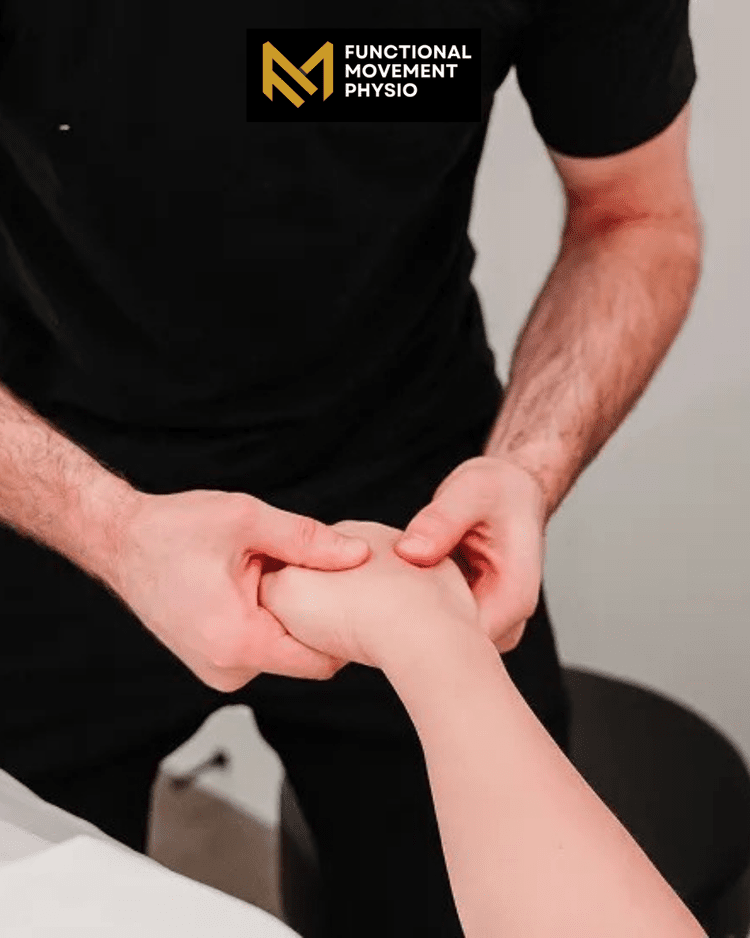
What causes wrist pain?
Wrist pain is one of the most misdiagnosed joint problems we see. Two people can describe almost identical symptoms and have completely different conditions, with completely different treatment needs. RSI and wrist strain get used as catch-all labels that often do not reflect what is actually going on.
We see wrist pain every day at our Liverpool clinic, particularly in:
- Climbers with wrist pain from crimping, campus boarding, and high-volume grip loading
- Lifters and gym-goers from front rack positions, pressing, hook grip, and high-volume dips
- Racquet sports players with thumb-side or wrist pain from gripping and twisting
- Office workers with carpal tunnel symptoms, keyboard and mouse-related pain, or wrist stiffness
- New parents with De Quervain's from repeated lifting and supporting a baby
- Anyone who has had a fall onto an outstretched hand and never fully recovered
The good news: once we have the right diagnosis, most wrist conditions respond well to focused physiotherapy.

Meet your specialist
Arek Rogozinski
HCPC registered · PH147555Arek is a Specialist Physiotherapist at our Liverpool clinic with strong knowledge of upper limb, wrist, and tendon rehabilitation and expert hands-on treatment. He helps patients recover from carpal tunnel, De Quervain's, TFCC injuries, and stubborn wrist tendon problems, getting the diagnosis right first. You are in safe, fully qualified, HCPC-registered hands from your first assessment through to long-term recovery.
Conditions
Wrist conditions we treat
Wrist pain comes from tendons, nerves, ligaments, cartilage, and joints, and the treatment for each is different. A correct diagnosis is the most important thing we do in your first appointment.
Carpal tunnel syndrome
Pins and needles or numbness in the thumb, index, and middle fingers, often worse at night, as the median nerve is compressed at the wrist. Common in office workers and repetitive hand work.
De Quervain's tenosynovitis
Pain at the base of the thumb and along the thumb-side of the wrist. Common in new parents, racquet sports players, and anyone doing repetitive thumb or wrist motion.
TFCC injury
Pain on the little-finger side of the wrist, often with clicking or weakness when pressing or twisting. Often from a fall on an outstretched hand or heavy loading. Notoriously stubborn.
Wrist tendinopathy
Pain over specific wrist tendons (back, front, or thumb-side). Common in climbers, lifters with heavy pressing volume, and racquet sports players.
Wrist sprain
Ligament injury, typically from a fall, sudden impact, or twisting. Pain, swelling, and stiffness in the days after. Most resolve well with the right rehab.
Ganglion cysts
Fluid-filled lumps, most often on the back of the wrist. Often painless but can cause discomfort or restrict movement. Most do not need surgery.
Our approach
How we treat wrist pain
Wrist treatment lives or dies on diagnosis. Treat carpal tunnel like tendinopathy and you will get nowhere. Treat a TFCC injury like a sprain and it will drag on for months. We spend the time at the start to get this right.
Accurate diagnosis
A thorough assessment of the wrist, hand, and forearm, with specific tests to differentiate between nerve, tendon, ligament, and joint causes. We refer for imaging when it will change the plan.
Hands-on plus loading
Manual therapy, nerve gliding, joint mobilisation, and progressive loading exercises specific to your condition. The exact combination depends on what we find.
Address the cause
Desk setup review, grip technique on the bar or wall, racquet review, or baby-carrying ergonomics. Whatever is loading the wrist needs to change, or the pain comes back.
Carpal tunnel
Carpal tunnel without surgery
Most people with carpal tunnel are told their two options are wrist splints or surgery. There is a third one, and it is usually the first thing to try: structured physiotherapy with nerve mobilisation, manual therapy, ergonomic change, and a clear loading programme.
Nerve mobilisation
Specific nerve gliding and manual therapy to reduce pressure on the median nerve at the wrist.
Ergonomic change
Desk, keyboard, and grip adjustments that take the daily load off the nerve so it can settle.
When surgery fits
For mild to moderate cases, conservative physio resolves most. If physio is not right for you, we will tell you straight.
Why us
Why FM Physio for wrist pain in Liverpool
Diagnostic precision
Hands-on plus loading
45-minute initial assessments
Central Baltic Triangle clinic
Same-day appointments and no referral needed
Our therapists
Top rated wrist pain physio Liverpool
20+ years experience
All our sports therapists and physiotherapists are handpicked as the best in the industry.
300+ 5-star reviews
We do not bang our own drum, our clients do it for us.
HCPC and CSP registered
Fully qualified, regulated physiotherapists. You are always in safe, professional hands.
Wrist pain FAQs
How long does carpal tunnel take to recover from?
It depends on how severe it is and how long you have had it. Mild to moderate carpal tunnel caught within the first few months often resolves in 6 to 12 weeks of focused physiotherapy. More established or severe cases take longer and may not fully resolve without surgery.
The biggest factor is starting treatment early. Nerve compression ignored for a year is harder to reverse than nerve compression caught at three months.
Will I need surgery?
Most people with mild to moderate wrist conditions, including carpal tunnel, do not need surgery if they get proper conservative treatment first. Surgery is reserved for cases where physiotherapy has not worked, where there is significant nerve damage, or where there is a structural issue that needs surgical fixing.
If we think surgery is the right next step, we will say so and refer you appropriately. We do not see surgery as a failure of physio, we see unnecessary surgery as a failure of assessment.
What is a TFCC injury and how is it treated?
The TFCC (Triangular Fibrocartilage Complex) is a structure of cartilage and ligaments on the little-finger side of your wrist that stabilises it when you twist, press, or load it. Tears can happen from a single fall or chronic overload from lifting.
TFCC injuries are notoriously slow to heal because the tissue has poor blood supply. Treatment usually involves a period of relative rest or bracing, then progressive loading and grip training. Some need surgery, but most do not if managed well early on.
What about thumb and finger pain?
Some thumb and hand pain overlaps with the wrist conditions we treat. De Quervain's is the obvious one, showing up at the base of the thumb. We also treat thumb-side tendinopathy and gripping-related thumb pain in lifters and racquet sports players.
For more specific hand and finger conditions (trigger finger, Dupuytren's contracture, complex finger sprains, post-surgical hand rehab), we will usually refer to a specialist hand therapist, as these need expertise outside general musculoskeletal physio.
For climbing finger injuries (A2 pulley tears, lumbrical strains, finger joint capsulitis), see our climbing physio page.
Should I wear a wrist brace or splint?
It depends on the condition. Night splints can help carpal tunnel symptoms, thumb spica braces can offload De Quervain's, and wrist braces during lifting can protect a recovering injury. But long-term constant bracing weakens the wrist and is not a treatment in itself. We will tell you exactly when and how to use a brace if it will help, and when to stop.
Can I keep training, climbing, or lifting while we treat my wrist?
Usually yes, in a modified form. For climbers we might reduce volume, change grip styles, or temporarily avoid specific holds. For lifters we modify front rack positions, swap pressing variations, or change grip. Complete cessation is rarely needed and often slows recovery. Some injuries (recent TFCC tears, suspected scaphoid issues) do need a short period of rest before loading, and we will tell you which category you are in.
What are your prices?
£75 for a 45-minute initial assessment, including a full wrist, forearm, and upper limb assessment, hands-on treatment, and a clear plan to take away. We accept Simplyhealth and Medicash cash plans.
Related services and pages
Wrist pain often connects to elbow load, grip-heavy sports, or the way you are training. These pages may help:
Get the diagnosis right
Most wrist pain we see has been mislabelled before it gets to us. Start with an accurate assessment and the rest of the plan looks after itself.
Book appointment