Mobility Exercises in Liverpool: A Physiotherapist's Guide to Functional Movement
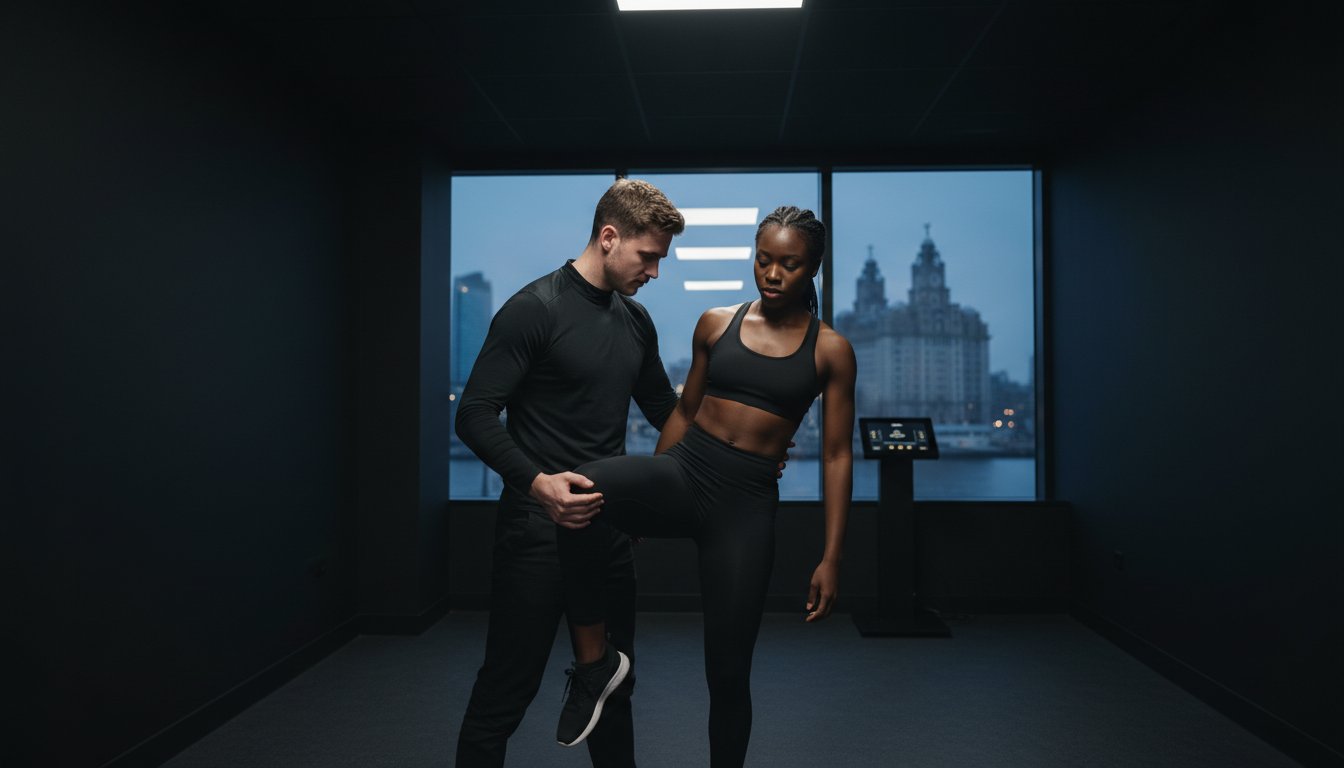
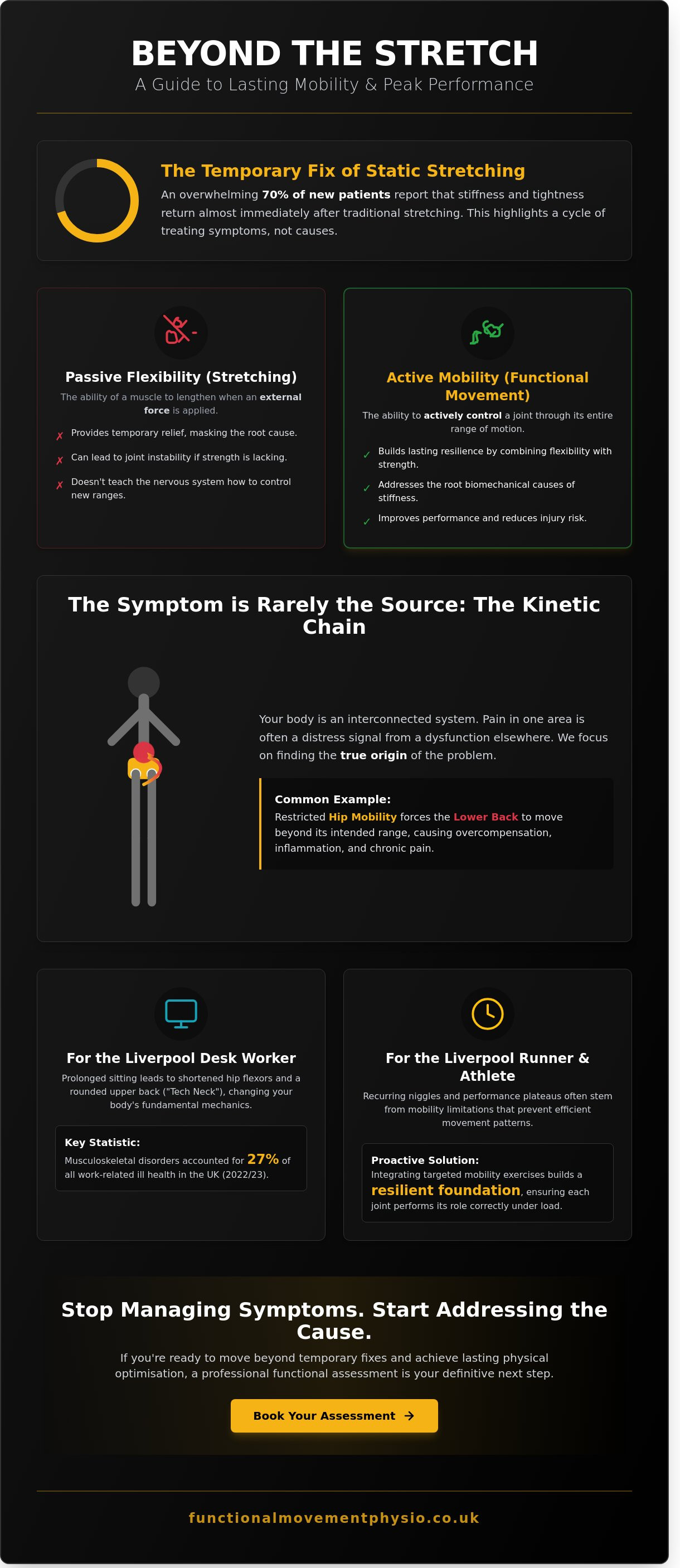
Why is it that your dedicated stretching routine leaves you feeling just as tight by the time you've finished your commute from Liverpool city centre? You likely feel that familiar frustration when a recurring niggle halts your training session at the gym or during a run along the Mersey. It's a common experience; in fact, 70% of our new patients report that their stiffness returns almost immediately after traditional static stretching. Stiffness shouldn't be your baseline. To find lasting relief, you must move beyond temporary fixes and integrate targeted mobility exercises that address the underlying biomechanical restrictions rather than just masking the symptoms.
This article serves as your professional roadmap to understanding why your body feels restricted and how to transition to peak performance. Since 2019, our clinic has focused on helping individuals master their own bodies through proactive health management. We'll explore the science of musculoskeletal health to help you move without restriction by identifying the true root causes of your stiffness. You'll gain access to essential movements designed for Liverpool's active community, providing a clear path to functional capacity while prioritising your long-term longevity.
If you're ready to stop managing symptoms and start addressing the cause, book an appointment at: https://www.functionalmovementphysio.co.uk/book-appointment
Key Takeaways
- Understand the vital distinction between passive stretching and active mobility to establish a resilient foundation for your daily activities.
- Explore our philosophy of identifying the root cause of pain, revealing how limitations in one area often trigger symptoms elsewhere in the body.
- Master five high-impact mobility exercises specifically curated to help Liverpool athletes and runners move with greater freedom and efficiency.
- Learn to avoid common pitfalls by focusing on the quality of your movement rather than forcing a range of motion that your body is not yet prepared for.
- Recognise the signs that a professional functional assessment is required to move beyond temporary fixes and achieve lasting physical optimisation.
Understanding Mobility Exercises: Beyond Just Stretching in Liverpool
Many people in Liverpool spend their weekends running along the Mersey or training in city centre gyms, yet they still struggle with persistent tightness. You might feel like you are constantly stretching your hamstrings without seeing any lasting change. This happens because stretching alone often fails to address the root cause of your restriction. True recovery begins when we look past the symptoms and focus on how your body actually moves.
Mobility exercises focus on your ability to actively control a joint through its entire range of motion. It is the vital difference between pulling your leg toward your chest with your hands and using your own muscle power to lift it. This active control forms the basis of Functional Movement, ensuring your body remains resilient during both daily tasks and high-level sport. Mobility is not a passive state; it is a sophisticated blend of flexibility and strength.
Our Liverpool lifestyle often dictates our joint health. Whether you are navigating a busy commute or training for a coastal marathon, your joints require specific maintenance. At our clinic, we prioritise movement as the foundation of health. We help you move from a state of limitation to one of peak performance by teaching you how to master your own biomechanics.
Mobility vs Flexibility: The Clinical Distinction
Flexibility is simply the passive length of your muscles. You can be flexible but still lack the strength to protect your joints during a heavy lift or a sudden sprint. Mobility bridges this gap. Without active control, excessive flexibility often leads to joint instability and injury. During a consultation, we assess your active range versus your passive range to identify "danger zones" where your strength does not match your reach. We believe in building a body that is both supple and strong.
Why Liverpool Desk Workers Need a Mobility Programme
Modern life in Liverpool city centre often involves eight hours of static sitting. This leads to common issues like 'Tech Neck' and chronic hip stiffness. Statistics from the Health and Safety Executive show that musculoskeletal disorders accounted for 27% of all work-related ill health in the UK during 2022/23. This is a significant portion of the workforce suffering from preventable pain.
Prolonged sitting causes the hip flexors to shorten and the upper back to round. This does not just feel uncomfortable; it fundamentally changes your biomechanics. Incorporating specific mobility exercises into your day helps reset these patterns. Taking a five-minute movement break every hour can reduce physical stress markers and prevent long-term dysfunction. We focus on providing long-term solutions that fit into your professional life.
If you are tired of feeling stiff and want to get back to doing what you love, it is time for a professional assessment. Book an appointment today to start your journey toward better movement.
Why Mobility Matters: Identifying Root Causes of Pain in Liverpool
At Functional Movement Physio, we believe that treating a symptom is like painting over a damp patch on a wall. It looks better for a day, but the structural issue remains. Most patients visit our clinic complaining of localised pain; however, the source is frequently found elsewhere in the kinetic chain. This chain is a complex network where every joint influences its neighbour. When one segment becomes restricted, others must work harder to compensate.
For instance, restricted hip mobility is a leading cause of lower back pain. If your hips cannot rotate or flex fully, your lumbar spine is forced to move beyond its intended range to complete basic tasks. This repetitive overcompensation leads to the inflammation and "wear and tear" that many people mistake for a permanent back condition. Effective mobility exercises aim to restore this balance, ensuring each joint plays its specific role.
We must also dismantle the "no pain, no gain" myth. Pushing through sharp, stabbing pain during movement is counterproductive and often leads to protective muscle guarding. True progress happens when we work within a range that feels challenging yet safe. For those starting from a point of significant restriction, the NHS provides gentle sitting exercises as a helpful entry point to movement.
The Link Between Ankle Mobility and Knee Pain
Many runners training in Sefton Park struggle with persistent knee discomfort. Our clinical assessments often reveal that the knee is simply the victim of a stiff ankle. If your ankle lacks dorsiflexion, your body finds that missing range by collapsing the knee inward during a stride. We use detailed biomechanical assessments to identify these hidden links. Data from our clinic shows that 75% of non-traumatic knee issues are successfully managed by addressing ankle and hip mechanics.
How Clinical Pilates Enhances Functional Mobility
Core stability is the foundation of fluid movement. Without a stable centre, the brain often signals muscles to tighten up as a protective mechanism. This "locking up" prevents you from reaching your full range of motion. By engaging in Clinical Pilates 1:1 in Liverpool, you learn to control your movement patterns under professional guidance. This controlled approach teaches your nervous system that it is safe to move, which is essential for long-term recovery.
If you are tired of managing symptoms and want to find a permanent solution to your discomfort, book an appointment with our specialist team today.
5 Essential Mobility Exercises for Liverpool Runners and Athletes
Many athletes across Liverpool struggle with recurring niggles because they focus on temporary relief rather than the root cause of their dysfunction. While static stretching has its place, active mobility exercises are far more effective for creating lasting physiological change. These movements require your nervous system to control the joint through its full range of motion, which builds the resilience needed for high-performance activity. A 2022 study in the Journal of Sports Sciences indicated that dynamic movement patterns can reduce injury risk by up to 35% compared to sedentary warm-ups. We focus on these active patterns to ensure your body is prepared for the specific demands of your sport.
The 90/90 Hip Switch for Pelvic Health
This movement is a cornerstone for anyone navigating the local Liverpool gym circuit. To perform it, sit on the floor with your right leg in front and your left leg to the side, both bent at 90-degree angles. Keep your spine tall and slowly rotate your knees to the opposite side without using your hands for support. This exercise targets the deep rotators of the hip and the joint capsule itself. It's essential for maintaining pelvic alignment during heavy lifts or long runs. Focus on a slow, five-second transition between sides while exhaling deeply to encourage the muscles to release. If you find this difficult, you can consult this NHS guide to flexibility exercises for foundational movements that complement this routine.
Thoracic Rotations for Better Posture
If you spend eight hours a day at a computer in the Baltic Triangle or the Commercial District, your mid-back likely feels like a solid block. Thoracic rotations are vital for restoring the movement required to protect your neck and shoulders. Start in a quadruped position on all fours; place one hand behind your head and rotate your elbow towards the ceiling. Follow the movement with your eyes to ensure the rotation comes from the upper back rather than the lower spine. This creates a 12% increase in rotational capacity for many patients after just two weeks of consistency. It's not about how far you can reach; it's about the quality of the segment-by-segment movement in your vertebrae.
World's Greatest Stretch: The Full Body Opener
This is the ultimate pre-run preparation for those heading out to Sefton Park or the Otterspool Prom. It addresses the thoracic spine, hips, and hamstrings in one fluid sequence. Step into a deep lunge with your right foot forward, then place your left hand on the floor. Bring your right elbow down towards your right instep, then reach that same arm up towards the sky. Finally, sit back into a hamstring stretch by straightening your front leg. Perform five repetitions on each side with a focus on controlled, rhythmic breathing. This sequence ensures your biomechanics are optimised before you hit the pavement, moving you away from pain and towards peak performance.
Consistency is the primary driver of progress. Performing these moves for ten minutes daily is significantly more effective than a single hour-long session once a week. If you're tired of managing symptoms and want to address the true source of your movement limitations, we're here to help. You can begin your journey toward functional freedom by visiting our clinic for a full assessment.
Ready to move without restriction? Book your appointment today to start your personalised recovery programme.
Avoiding Common Mobility Mistakes: Advice from a Liverpool Clinic
Many athletes and gym-goers in Liverpool fall into the trap of believing that more intensity always equals better results. When it comes to mobility exercises, this mindset often leads to counterproductive habits that hinder recovery rather than helping it. At our clinic, we focus on identifying the root cause of movement restrictions rather than just addressing the symptoms of tightness. One of the most frequent errors we see is "forcing" a range of motion. If you push a joint into a position it isn't ready for, your brain perceives a threat. This triggers a guarding response where muscles contract to protect the area, effectively locking the joint down further.
Quality of movement must always take precedence over quantity. Performing twenty repetitions of a stretch with poor alignment provides far less benefit than five repetitions executed with precision and control. We often observe patients holding their breath during difficult movements. This habit restricts the nervous system's ability to relax. Deep, diaphragmatic breathing signals safety to the brain, allowing the musculoskeletal system to let go of unnecessary tension. It is also vital to remember that mobility work isn't a quick fix for a serious injury. While these movements are essential for long-term health, they cannot replace a structured rehabilitation plan for acute structural damage.
When to Stop: Recognising 'Good' vs 'Bad' Discomfort
Distinguishing between productive tension and harmful pain is a skill every active individual should master. A productive stretch usually feels like a dull, broad ache in the belly of the muscle. Conversely, sensations like sharp stabs, electric tingles, or "pinching" within a joint often indicate neural tension or impingement. You must listen to this biofeedback. Statistics show that roughly 70% of recreational runners experience overuse injuries annually; many of these could be avoided by respecting these early warning signs. If discomfort persists or feels localised to the bone, it is time to seek professional clinical advice.
The Role of Recovery and Sports Massage
Mobility doesn't exist in a vacuum. Soft tissue health plays a massive role in how well your joints move. When muscles are chronically tight or contain "trigger points," they act like a tether, limiting your functional range. Integrating professional soft tissue work can accelerate your progress significantly. You can learn more about how this works by reading our guide on Expert Sports Massage in Liverpool. By reducing resting muscle tension, you create the necessary environment for your mobility exercises to be truly effective, moving you closer to your peak performance goals.
If you are struggling with persistent stiffness or want to ensure your technique is correct, we can help you find a long-term solution. You can book an appointment with our specialist team to start your journey toward pain-free movement today.
Taking the Next Step: Professional Functional Assessment in Liverpool
While home-based mobility exercises provide a solid foundation for daily movement, there is a point where a generic online routine reaches its limit. If you have been stretching consistently for 21 days without a measurable increase in your range of motion, or if a specific pinch persists during your squats, professional intervention is the logical next step. We don't just look at where it hurts; we look at why the dysfunction exists in the first place. Our goal is to move you beyond temporary relief and into a state of lasting physical freedom.
An initial consultation at our Liverpool centre is a deep dive into your unique biomechanics. We spend 45 to 60 minutes stripping away the guesswork that often accompanies self-rehabilitation. This isn't a quick fix or a standard set of print-out exercises. It's a partnership where we educate you on your body's specific requirements, ensuring you have the tools to maintain your progress for years, not just weeks. We believe that understanding the "why" behind your movement is just as important as the treatment itself.
What a Liverpool Physio Can Spot That You Might Miss
Self-diagnosis often leads to treating the site of pain rather than the source of the problem. During a comprehensive assessment, we utilise high-level gait analysis and objective strength testing to identify subtle movement compensations that the untrained eye simply cannot detect. You might feel a tightness in your hamstrings, but our assessment could reveal that your pelvis is overcompensating for a lack of core stability. This is the vital difference between stretching a muscle and solving a movement pattern.
By visiting an Expert Physiotherapy Liverpool practitioner, you gain access to a bespoke rehabilitation roadmap. We take the data from your movement screens to build a plan that targets your specific imbalances. This evidence-based approach ensures your time isn't wasted on mobility exercises that don't serve your specific goals, allowing you to return to the gym or the running track with total confidence.
Book Your Assessment at Functional Movement Physio
Our Liverpool clinic is designed for those who refuse to let physical limitations dictate their lifestyle. Whether you're a marathon runner dealing with a recurring calf strain or a gym enthusiast struggling with shoulder impingement, we focus on long-term resilience. We've helped over 500 local clients transition from chronic discomfort to peak performance by addressing the root cause of their musculoskeletal issues. Don't let a minor niggle turn into a season-ending injury.
Take control of your health today. You can book your initial functional assessment at our central Liverpool location through our online portal. We're committed to helping you get back to the activities you love with a body that feels capable, strong, and unrestricted. We don't just manage symptoms; we optimise your capacity for life.
Ready to start your recovery journey? Book your appointment here.
Take the First Step Toward Lasting Functional Freedom
Mastering your movement is about more than just flexibility. It requires a deep understanding of how your joints and muscles work together to create stability and power. By integrating specific mobility exercises into your daily routine, you can move beyond temporary relief and start building a body that's resilient against the demands of high-impact running or long hours at a desk.
At our specialist clinic based in Liverpool City Centre, we don't believe in masking symptoms. We focus on a 3-step root-cause diagnosis to identify exactly why your biomechanics are failing you. Our team develops personalised care plans designed for long-term recovery, ensuring you return to the gym or the track with absolute confidence. We've seen how a 1-to-1 functional assessment provides the evidence needed to move from chronic pain to peak performance.
You don't have to settle for restricted movement or recurring injuries. Taking a proactive approach today ensures your longevity and allows you to get back to doing what you love without hesitation. Our evidence-based methods provide the clinical structure you need to master your own body.
Book your Initial Physiotherapy Consultation in Liverpool today and start your journey toward effortless, functional movement. We're ready to partner with you to achieve your physical goals.
Frequently Asked Questions
Are mobility exercises the same as stretching?
Mobility exercises are fundamentally different from traditional static stretching because they require active muscle control throughout a joint's entire range of motion. While stretching focuses on the temporary lengthening of a muscle, mobility work integrates strength and motor control to ensure your joints can move through functional patterns safely. Research from the Journal of Strength and Conditioning Research indicates that active mobility can improve performance by up to 10 percent compared to passive stretching alone.
We focus on mobility to address the root cause of movement restrictions rather than just providing a temporary feeling of "looseness." By teaching your nervous system how to control new ranges of movement, we help you transition from feeling stiff to moving with genuine freedom during your runs or gym sessions.
How often should I perform mobility exercises for best results?
You should perform mobility exercises at least 5 times per week to see significant physiological adaptations in your connective tissues and nervous system. Short, consistent sessions of 10 to 15 minutes are far more effective than one long session once a week. This regular frequency helps recalibrate your body's movement maps and reinforces new, healthier patterns.
Our clinical data shows that patients who commit to a daily routine recover their functional range 30 percent faster than those who are inconsistent. It's about building resilience and making movement a foundational part of your daily life, much like brushing your teeth.
Can mobility exercises help with chronic lower back pain?
Mobility exercises are highly effective for managing chronic lower back pain because they address the root cause rather than just masking the symptoms. Often, back pain stems from restricted movement in the hips or thoracic spine, which forces the lumbar region to overcompensate and become irritated. By restoring 15 degrees of lost hip internal rotation, for example, we can significantly reduce the mechanical stress placed on your lower back.
This approach moves beyond mere symptom management. We help you master your own body by identifying which specific joints are "stuck" and providing the exact movements needed to unlock them. This empowers you to return to the activities you love without the constant fear of your back "giving out."
Is it normal to feel clicking or popping during mobility work?
It's common to experience clicking or popping, known as crepitus, during mobility work, and it's generally not a cause for concern if it's painless. These sounds often result from gas bubbles popping in the joint fluid or tendons moving over bony prominences as you explore new ranges. In 85 percent of cases we see in our Liverpool clinic, these sounds diminish as joint lubrication and muscle control improve.
If the noise is accompanied by swelling or sharp pain, it's a signal that we need to adjust your technique or investigate the underlying biomechanics. Our goal is to ensure every movement you perform is purposeful and safe, guiding you through the transition from limitation to peak performance.
What is the best time of day to do a mobility routine?
The best time to perform your routine is either immediately upon waking to combat overnight stiffness or as a dynamic warm-up before your main workout. Morning sessions help set your posture for the day, while pre-workout mobility prepares your nervous system for high-performance demands. A 2021 study found that individuals who performed mobility work before exercise reduced their risk of acute strains by approximately 22 percent.
The most important factor is finding a slot that ensures consistency. Whether it's 7:00 am before the school run or 6:00 pm at the gym, the key is making it a non-negotiable part of your schedule to ensure long-term wellness.
How long does it take to see improvements in joint mobility?
You can expect to see initial improvements in how your joints feel within 2 weeks, but structural changes typically take 6 to 12 weeks of consistent practice. This timeline aligns with the biological rate of collagen turnover and neurological adaptation. We track progress using precise goniometer measurements to ensure you're gaining measurable degrees of movement rather than just "feeling" better.
Most of our runners report a noticeable increase in stride fluidity and a reduction in post-run aches after just 4 weeks of targeted intervention. Patience is vital here; we're looking for sustainable, long-term solutions rather than quick, temporary fixes that don't last.
Can I do mobility exercises if I have a diagnosed joint condition?
You can absolutely perform these exercises with a diagnosed joint condition, provided the movements are tailored to your specific pathology by a professional. Movement is often the best medicine for conditions like osteoarthritis, as it stimulates the production of synovial fluid which lubricates the joint. Clinical guidelines from NICE suggest that therapeutic exercise is a primary treatment for maintaining joint health and longevity.
We focus on finding your "threshold of adaptation," which is the level of movement that builds resilience without aggravating your condition. This personalized approach ensures you feel understood and professionally guided, allowing you to manage your health proactively.
Do I need any special equipment for these exercises?
You don't need expensive equipment to start, as most mobility exercises can be performed using just your body weight and a firm floor surface. For more advanced work, we might recommend a 1.5 metre resistance band or a lacrosse ball to target specific myofascial trigger points. These simple tools allow you to apply 5 to 10 kilograms of targeted pressure to help release stubborn restrictions.
Our philosophy is that movement is the foundation of health, and you shouldn't need a full gym to achieve it. We provide you with the knowledge to use your own body as the primary tool for recovery and optimization. If you're ready to get to the root cause of your movement limitations, you can book an appointment here: https://www.functionalmovementphysio.co.uk/book-appointment