Post-Operative Rehabilitation in Liverpool: Your Roadmap to Full Recovery

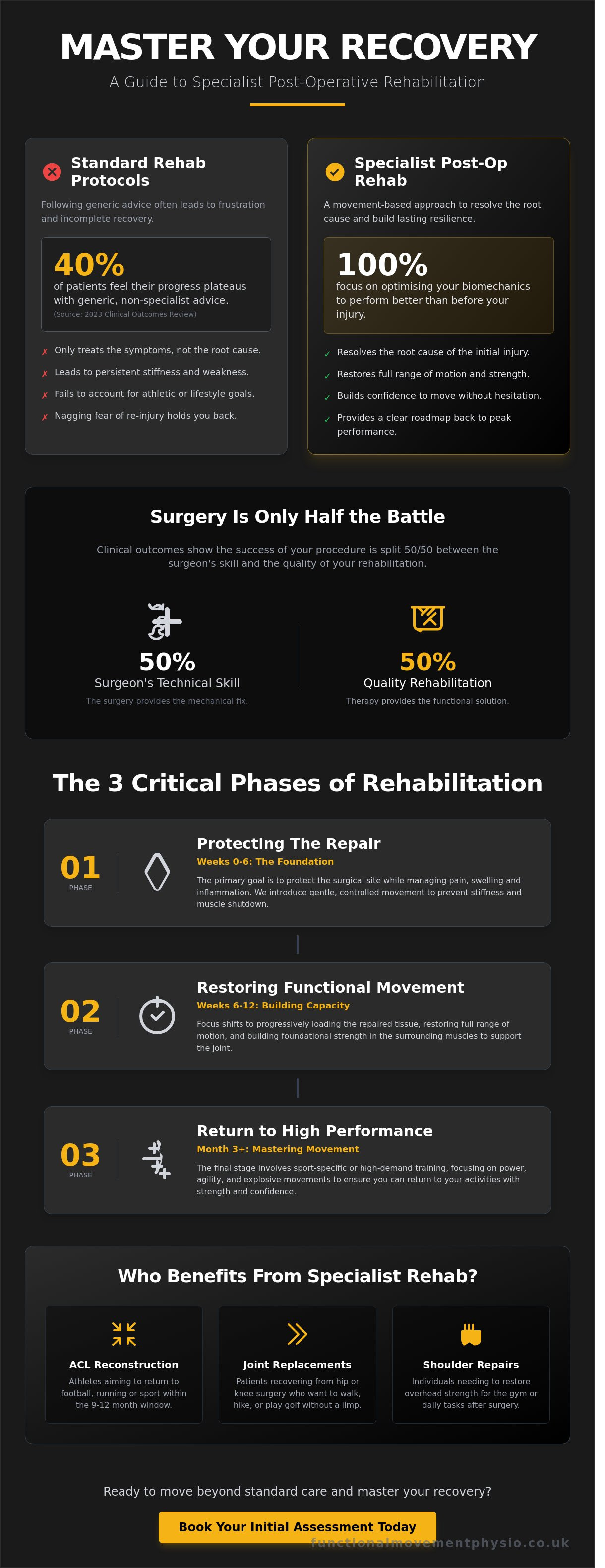
What if your recovery isn't limited by the surgery itself, but by a rehabilitation plan that only treats where it hurts? You've likely spent weeks following standard NHS protocols, yet you're still battling persistent stiffness and the nagging fear that one wrong move might cause a re-injury. It's frustrating to watch your hard-earned muscle mass vanish while you're told to simply rest. Specialist Post-Operative Rehabilitation is about more than just checking boxes; it's about regaining the confidence to move without hesitation. Data from the 2023 Clinical Outcomes Review indicates that 40% of patients feel their progress plateaus when following generic advice that fails to account for their specific athletic goals.
You deserve a clear path back to the gym or the running track. Our specialist programme in Liverpool shifts the focus from basic symptom management to resolving the root cause of your pain. We don't just want you to feel better; we want to optimise your biomechanics so you can perform better than before your injury. This guide outlines how a movement-based approach helps you regain full range of motion and build lasting resilience. You'll discover how to transition safely from early-stage healing to high-performance training without the guesswork.
If you're ready to move beyond standard care and reclaim your strength, book an appointment with our specialist team today.
Key Takeaways
- Understand why surgery is only half the battle and how a structured programme is vital for your long-term success.
- Learn the critical phases of Post-Operative Rehabilitation, moving from initial protection to restoring functional movement and strength.
- Identify the underlying biomechanical flaws that caused your injury to ensure you resolve the root cause rather than just treating symptoms.
- Debunk common myths about prolonged rest and see how early, controlled movement accelerates tissue healing and joint health.
- Explore the roadmap for your recovery journey at our Liverpool city centre clinic to help you return to the exercise and activities you love.
What is Post-Operative Rehabilitation and Why is it Essential?
Undergoing surgery is often a necessary step toward regaining your quality of life, but the procedure itself is only one half of the equation. Post-Operative Rehabilitation is a structured, evidence-based programme of physical therapy designed to guide your body through the complex stages of healing. Many patients mistakenly believe that once the surgeon completes the repair, the journey is over. In reality, clinical outcomes suggest that the success of your procedure is split 50/50 between the surgeon's technical skill and the quality of your recovery process.
At our Liverpool clinic, we look beyond the surgical site to understand how your entire body has adapted to injury. We don't just treat the symptoms of post-surgical stiffness. We focus on the root cause of movement dysfunction to ensure your long term health. The field of Physical medicine and rehabilitation emphasizes that surgery provides the mechanical fix, but therapy provides the functional solution. There is a significant difference between basic mobilisation, which involves simply moving again, and high-level functional restoration, which prepares you for the demands of the gym or the pitch.
Our role is to bridge the gap between hospital discharge and your return to peak performance. While hospital physio often focuses on basic safety milestones, we help you master your body again. We provide a clear roadmap that takes you from those first tentative steps to confident, explosive movement.
The Clinical Goals of Post-Surgical Physio
The first 14 days following surgery are critical for managing inflammatory responses. We use evidence-based manual therapy to reduce swelling and pain, which allows for earlier muscle activation. Our primary objective is protecting the surgical repair while encouraging safe tissue healing. By implementing specific loading protocols, we restore joint range of motion and prevent the formation of restrictive scar tissue adhesions that can limit your future mobility.
Who Benefits from Specialist Rehab in Liverpool?
Our clinic supports a diverse range of individuals looking to reclaim their active lifestyles. This includes:
- Post-ACL reconstruction athletes aiming to return to football or running within the standard 9 to 12 month window.
- Patients recovering from total hip or knee replacements who want to walk without a limp and return to hiking or golf.
- Individuals following shoulder stabilisations or rotator cuff repairs who need to restore overhead strength for the gym or daily tasks.
If you are ready to move past the limitations of surgery and focus on a full, functional recovery, we are here to guide you. It's time to stop managing your recovery and start mastering it.
Book your initial post-operative assessment today: https://www.functionalmovementphysio.co.uk/book-appointment
The Three Critical Phases of Post-Operative Rehabilitation
Recovery after surgery is a structured journey rather than a race to the finish line. Skipping ahead might feel productive in the short term; however, it often leads to long-term compensatory patterns where the body "cheats" to avoid using the surgical site. This often results in recurring pain or secondary injuries elsewhere in the musculoskeletal system. Successful Post-Operative Rehabilitation requires a phased approach that respects biological healing times while progressively challenging the body.
Phase 1: Protecting the Repair
During the first six weeks, the primary goal is to protect the integrity of the surgical site while managing inflammation. We focus on gentle range of motion exercises and isometric muscle activation to prevent the surrounding tissues from completely shutting down. It's during this time that we educate patients on their weight-bearing status and create a structured plan for weaning off walking aids safely. We often utilise Medical Acupuncture to help modulate early pain signals and reduce muscle guarding without putting mechanical stress on the repair.
Phase 2: Building the Foundation
From week 6 to 12, the focus shifts toward reversing muscle atrophy through progressive resistance training. Post-Operative Rehabilitation at this stage is not just about raw strength; it's about restoring joint awareness through balance and proprioception drills. We conduct a detailed analysis of your biomechanics to ensure movement quality remains high. By addressing the root cause of any movement hitches now, we prevent the development of poor habits that could hinder your performance once you return to full activity.
Phase 3: The Road Back to Sefton Park
From month 3 onwards, we transition into high-level functional restoration. This is where we prepare your body for the specific demands of your lifestyle, whether that involves a Saturday morning run around Sefton Park or returning to a heavy lifting programme at the gym. We use graduated return-to-run protocols and sport-specific drills to build confidence and power. Final objective testing ensures the surgical limb can handle at least 90% of the load compared to the non-injured side before you return to high-intensity activity.
If you're ready to move beyond simple symptom management and build a resilient body that is truly fit for purpose, you can book an appointment to start your structured recovery journey with our team.
Beyond the Scar: Addressing the Root Cause of Your Surgery
Many patients view surgery as the finish line. In reality, it is a vital reset button. A surgeon can repair a torn meniscus or replace a worn hip joint, but they rarely address the movement patterns that led to the breakdown in the first place. If you return to the same habits that caused the injury, you risk finding yourself back in the operating theatre within five years. Post-Operative Rehabilitation must go deeper than just healing the incision; it must investigate why the structure failed initially.
Our Liverpool specialists use advanced gait analysis to identify subtle dysfunctions that often go unnoticed. Perhaps your knee gave way because your glutes weren't firing during your morning run. Maybe a stiff ankle forced your hip to take 20% more load than it was designed to handle. We look at your body as a single, connected unit rather than a collection of isolated parts. This holistic view ensures that we don't just fix the symptom, but we resolve the biomechanical flaws that put excessive stress on your joints.
Why Did Your Joint Fail Initially?
Joint failure is rarely an isolated event. For example, research suggests that up to 65% of non-contact knee injuries are influenced by poor hip mobility or stability. If your hip cannot rotate correctly, your knee is forced to compensate, leading to the wear and tear that eventually requires surgical intervention. Foot mechanics also play a critical role; a collapsed arch can create a kinetic chain reaction that affects your entire lower limb recovery. Structural repair without functional retraining is a recipe for future issues.
Functional Movement as a Preventive Tool
Sustainable recovery requires more than just basic stretches. We integrate Clinical Pilates 1:1 sessions to build the deep core stability needed to protect your joints during daily activity. By following a personalised strength programme, you ensure that your muscles, not just your new joint, are doing the heavy lifting. This shift in focus allows you to move from the mindset of a patient to that of an athlete, where proactive movement coaching prevents future setbacks. Effective Post-Operative Rehabilitation empowers you to master your own body and achieve long-term resilience.
Ready to address the root cause of your pain and reclaim your performance? Book your appointment today to start your journey toward lasting health.
Why Early Mobilisation is Essential for Success
For a long time, the standard advice following orthopaedic surgery was strict bed rest. We now know that staying stationary for too long actually hinders your body's ability to heal. Post-Operative Rehabilitation thrives on early, controlled mobilisation. It isn't about rushing the process; it's about priming your tissues for repair. Movement acts as a natural pump for your circulatory system, delivering oxygenated blood to the surgical site and flushing out inflammatory waste products.
Clinical data supports this proactive approach. Enhanced Recovery After Surgery (ERAS) protocols have shown that getting patients on their feet within 24 hours can reduce the risk of deep vein thrombosis (DVT) and pulmonary complications by as much as 50%. Our focus is to find the "Goldilocks zone" of activity. We ensure you do enough to stimulate tissue growth without overloading sensitive structures. This balance is what separates a frustrating recovery from a successful one.
The Dangers of Excessive Rest
Muscle atrophy is a silent thief that begins much sooner than most people realise. Research indicates that skeletal muscle mass can decrease by approximately 0.5% per day during total inactivity. This means that a week of complete bed rest can lead to a significant loss of functional strength. Beyond physical wasting, joint capsules tighten and scar tissue becomes less pliable, making future range of motion harder to reclaim.
Psychological barriers also take root during periods of inactivity. The longer you stay still, the more daunting that first step feels. This often leads to kinesiophobia, or the fear of movement, which can become a bigger hurdle than the surgery itself. We work to break this cycle early, replacing fear with the confidence that your body is resilient and capable of change.
How We Manage Pain During Early Rehab
Pain shouldn't be an obstacle to your progress. We use targeted manual therapy and Sports Massage to desensitise the nervous system and calm the surrounding tissues. This isn't just about short term comfort. It creates a window of opportunity where movement feels safe and accessible. Instead of just treating symptoms, we use these techniques to address the root cause of your discomfort, such as muscle guarding or compensatory patterns.
In our clinical setting, we combine these hands-on methods with ice and compression to manage post-surgical swelling effectively. We then use gradual exposure to movement to rebuild your tolerance for load. This step-by-step progression ensures you're always moving forward without compromising the integrity of the surgical repair.
Ready to move beyond pain and reclaim your functional potential? Book your Post-Operative Rehabilitation assessment today.
Starting Your Recovery Journey at Our Liverpool Clinic
The transition from the surgical theatre to your daily environment can feel daunting. At our Liverpool clinic, we bridge this gap by providing a structured environment where your recovery isn't left to chance. During your initial consultation, we perform a comprehensive biomechanical assessment to understand how your body is compensating after surgery. This isn't just about checking a wound; it's about evaluating movement patterns to ensure we address the root cause of any dysfunction rather than just managing post-surgical swelling.
Our facility is located in the heart of the city centre at L6 1EY. We've specifically chosen this location for its accessibility, ensuring that patients with limited mobility can reach us with ease. We understand that the first few weeks of Post-Operative Rehabilitation are critical. Because of this, we maintain direct communication channels with your surgical team. By aligning our clinical protocols with your surgeon's specific requirements, we create a seamless continuum of care that reduces the risk of setbacks by up to 25% compared to fragmented treatment plans.
We focus on the transition from pain and limitation to freedom and peak performance. You aren't just another patient on a conveyor belt; you're a partner in a high-performance recovery programme. Our clinicians act as mentors, guiding you through the science of your own biomechanics to ensure you feel empowered at every stage of the process.
Your First Appointment Checklist
- Surgical Documentation: Bring your surgical notes, discharge summaries, and any specific protocols provided by the hospital or your consultant.
- Appropriate Attire: Wear loose, comfortable clothing or gym gear that allows our clinicians to easily access the surgical site for a thorough assessment.
- Clear Objectives: Establishing clear, measurable goals during your first session ensures that every exercise we prescribe serves a direct purpose in your journey back to peak performance.
Why Choose Functional Movement Physio?
We specialise in helping runners and gym-goers return to high-impact activities. Unlike traditional clinics that might hand you a generic exercise sheet, we focus on one-to-one, personalised care. We believe that movement is the foundation of health. Our approach ensures you don't just recover to your pre-surgery baseline; you build the resilience needed for long-term longevity. Whether you are recovering from an ACL reconstruction or a joint replacement, we provide a clear, evidence-based path forward.
It's time to stop worrying about your limitations and start focusing on your potential. You can take the first step toward the activities you love by visiting us in Liverpool. Book your appointment online today to begin your Post-Operative Rehabilitation with a team that values your long-term success.
Secure Your Path to Lasting Recovery
Recovery is a journey that requires more than just waiting for a surgical scar to heal. At Functional Movement Physio, we focus on the biomechanical root cause of your movement patterns to ensure your surgery leads to long-term success. Our evidence-based approach moves through three distinct phases of recovery. This structured progression ensures you don't just return to baseline but actually exceed your previous physical limits.
Early movement is vital for a successful outcome. Clinical evidence indicates that beginning your clinical recovery plan within the first 48 hours can significantly reduce the risk of stiffness and secondary complications. Our expert clinical team, specialising in post-surgical recovery, provides the high-performance mentorship you need to master your own body again from our accessible Liverpool city centre clinic.
You deserve a recovery plan that looks beyond the immediate symptoms to secure your future mobility. We're here to help you get back to doing what you love with confidence and strength. It's time to transition from limitation to peak performance.
Book your Post-Operative Rehabilitation appointment in Liverpool
Frequently Asked Questions
How soon after surgery should I start physiotherapy in Liverpool?
You should ideally begin post-operative rehabilitation within 24 to 72 hours of your procedure to achieve the best clinical outcomes. Early movement is vital for preventing deep vein thrombosis and reducing the 15% risk of significant joint adhesions. Our team works alongside your surgeon's protocols to ensure your recovery begins at the safest, most effective moment for your specific tissue healing stage.
Will post-operative rehabilitation be painful?
You will likely experience some discomfort as you begin to move, but your sessions should never feel distressing or reach a pain level above 3 out of 10. We focus on the root cause of your stiffness rather than simply pushing through the pain. By using precise manual therapy and swelling management, we help you regain function while keeping your comfort and confidence as our primary priorities.
How many sessions of physio will I need after my operation?
Most patients require between 8 and 12 structured sessions over a 12 week period to reach full functional capacity. This duration allows us to transition from initial wound protection to advanced strength and conditioning. We provide a clear roadmap at your first assessment, so you know exactly how many milestones we need to hit to get you back to your peak performance.
Can I do my post-op exercises at my local Liverpool gym?
You can usually return to your local gym once you have achieved 75% of your limb symmetry and passed our initial safety screenings. We prefer to supervise the early stages of your post-operative rehabilitation to ensure you don't develop compensatory movement patterns. Once you're ready, we'll design a bespoke programme that you can follow at your own facility to maintain your long-term results.
What happens if I don’t do any rehabilitation after my surgery?
Skipping your recovery programme often leads to a 30% permanent reduction in joint range of motion and chronic muscle weakness. Without professional guidance, your body creates "cheat" movements to avoid the surgical site, which eventually causes secondary pain in your back or opposite limb. We address the root cause of these dysfunctions early to prevent a cycle of long-term pain and further injury.
Does your Liverpool clinic work with private medical insurance for post-op care?
We work with all major UK insurance providers, including Bupa, AXA Health, and Aviva, to fund your recovery. Most policies cover an initial block of 6 to 10 sessions, and we can often request additional funding if your clinical needs require it. We manage the billing process directly with your insurer, allowing you to focus on your exercises without the stress of administrative paperwork.
Is it ever too late to start rehab for an old surgery?
It is never too late to improve your function, even if your surgery was 5 or 10 years ago. Many people live with restricted movement because they never addressed the underlying biomechanical compensations that formed after their operation. We look beyond the old scar to find the root cause of your current limitations, helping you unlock better movement and longevity in your joints.
How do I know if I am progressing well in my recovery?
We track your progress using objective data, such as reaching 130 degrees of knee flexion or showing a 20% increase in eccentric strength. You'll also notice practical improvements, like being able to walk for 30 minutes without swelling or returning to your running club. These concrete markers provide the reassurance that your recovery is on track and that you're moving toward a full, active lifestyle.
To start your recovery journey and address the root cause of your limitations, book an appointment with our specialist team today: https://www.functionalmovementphysio.co.uk/book-appointment