Functional Movement Physio Liverpool: A Checklist for Root Cause Recovery

What if the reason your recurring injury keeps flaring up isn't a lack of rest, but a fundamental flaw in how your body moves? You've likely spent weeks following generic advice or resting only to find the pain returns the moment you increase your mileage. It's a frustrating cycle that leaves many athletes seeking functional movement physio Liverpool feeling stuck and fearful that they'll eventually have to give up their favourite activities.
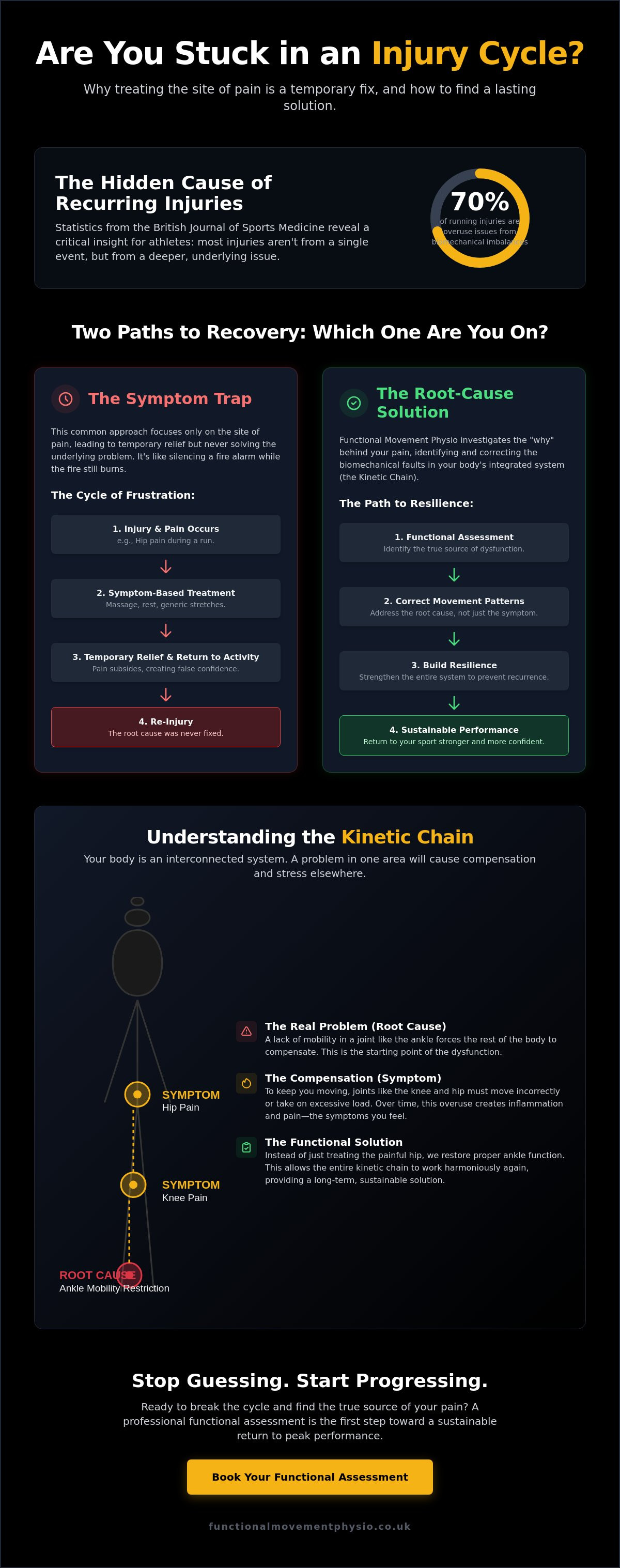
We understand that you want more than just a temporary reprieve from discomfort. Statistics from the British Journal of Sports Medicine indicate that approximately 70% of running injuries are overuse issues rooted in biomechanical imbalances rather than acute trauma. This guide provides a clear checklist to help you identify these true sources of pain, allowing you to stop the guesswork and start a recovery journey that actually lasts.
You'll discover how a professional assessment can bridge the gap between where you are now and where you want to be. We'll explore the difference between treating the symptoms and addressing the "why" of your injury, giving you a sustainable plan to return to peak performance.
Key Takeaways
- Stop the cycle of recurring injury by understanding why treating the site of pain often leads to stalled recovery and frustration.
- Explore the kinetic chain concept to identify how a dysfunction in one part of your body creates stress and pain in another.
- Evaluate your physical state using five specific markers that signal when your current movement patterns require a professional assessment.
- Discover how a specialist functional movement physio liverpool identifies the true source of your pain to ensure a sustainable return to peak performance.
- Learn to use movement as a proactive tool for long term health rather than relying on temporary fixes that ignore the root cause.
Why Your Recovery Has Stalled and Why Generic Physio Often Fails
You've spent 12 weeks preparing for the Liverpool Half Marathon. Your mileage is up, your pace is consistent, and then a familiar niggle in your hip returns. It's the same frustration you felt six months ago. You go for a massage, get the muscle rubbed, and feel better for 48 hours before the pain resurfaces during your next session at the gym. This cycle is exhausting. It's the primary reason why many athletes in the city feel they're "injury-prone" when, in reality, they're simply stuck in the symptom trap.
At our clinic, we see this pattern daily. Many people searching for functional movement physio liverpool are looking for a way out of this cycle after trying generic stretches or following a basic exercise sheet they found online. These methods fail because they treat your body like a collection of isolated parts rather than an integrated system. Effective Functional Movement requires every joint and muscle to work in harmony. When one link in the chain fails, another area takes the load. That's where the pain starts.
The Problem with Symptom-Based Treatment
Treating the site of your pain is often like silencing a fire alarm while the fire still burns. If your lower back hurts, the issue might actually be a lack of mobility in your ankles or poor control in your hips. By only focusing on the back, you achieve temporary relief that creates a false sense of security. You return to high-intensity training only to re-injure yourself because the underlying biomechanical dysfunction remains. Generic exercise sheets often ignore these individual needs, providing a "one size fits all" solution for a body that has unique movement patterns and requirements.
Why Liverpool Athletes Feel Stuck
Understanding the Root Cause Approach to Physiotherapy
When you feel a sharp pain in your knee or a dull ache in your lower back, your first instinct is to treat the spot that hurts. However, a root cause approach shifts this focus entirely. It asks why that specific area is under stress in the first place. Instead of simply icing the inflammation or using temporary rub-on creams, this method identifies the mechanical failure driving your discomfort. This is the foundation of functional movement physio liverpool.
Most injuries aren't isolated events. They're often the result of long-term imbalances where one part of the body works too hard to make up for another part that isn't working at all. By looking at the body as a whole, we can stop the cycle of recurring injuries that leave many athletes and gym-goers feeling frustrated. A comprehensive initial consultation is the only way to map these connections and build a recovery plan that actually lasts.
The Kinetic Chain Explained
Think of your body as a series of interconnected cogs in a machine. If a cog in your ankle becomes stiff or loses its range of motion, the cogs in your knee and hip must spin faster or tilt to keep the machine moving. This is the kinetic chain. When one link is weak or restricted, the entire system shifts to compensate. This is why a physiotherapist liverpool will often examine your foot mechanics even if you've come in with hip pain.
Compensatory patterns are the body's way of surviving an injury, but they aren't meant to be permanent. Over time, these "shortcuts" lead to chronic pain and reduced performance. Research published by the NCBI highlights that assessing fundamental movement patterns is essential for identifying these hidden dysfunctions before they manifest as a more serious tear or strain. We focus on restoring the natural rhythm of your movement to ensure no single joint is overloaded.
Fixing the Source Not Just the Symptom
Consider a runner who develops persistent knee pain. The standard "wait and see" approach often involves six weeks of rest and anti-inflammatories. You might feel better after a month of sitting on the sofa, but the pain usually returns within the first mile of your next run. This happens because the knee wasn't the problem; it was the victim. In many cases, the real source is a weak gluteus medius that fails to stabilise the pelvis, causing the knee to collapse inward with every stride.
Identifying the source allows for a permanent solution. Instead of endless rest, we implement targeted strengthening and biomechanical adjustments that fix the underlying instability. This proactive strategy contrasts sharply with traditional symptom management. It's about moving from a state of limitation to one of peak performance. If you're tired of temporary fixes, you can book a thorough assessment to finally uncover what's holding you back.
The Liverpool Athlete Checklist: 5 Signs You Need a Functional Assessment
Identifying why your recovery has stalled requires more than just looking at where it hurts. It demands an honest evaluation of how you move under load and how you feel when you aren't training. If you've spent months trying to "fix" an injury only to find yourself back at square one, you are likely treating a symptom rather than a system. Use this checklist to determine if your current approach is failing you.
Sign 1: Your Pain Returns When You Increase Intensity
You might feel perfectly fine during a light warm-up or a slow jog, but the moment you increase your mileage by 15% or add an extra 10kg to your squat, the familiar ache returns. This is a classic indicator that your fundamental movement patterns are breaking down under stress. When intensity rises, your body compensates. If those compensations are inefficient, they create friction and inflammation. For runners, this often manifests as persistent knee or hip issues that a standard shoe fitting won't solve. A professional gait analysis liverpool can pinpoint exactly where your mechanics are failing as you fatigue.
Sign 2: You Have "Good" Days and "Bad" Days Without Reason
It is incredibly frustrating to wake up feeling great on Tuesday and be unable to walk comfortably on Wednesday without having changed your routine. This unpredictability suggests an underlying functional instability. Your body is constantly "red-lining" its capacity to cope. Resting for a week might dampen the inflammation, but it does nothing to improve the stability of the joint. Without addressing the root cause, you remain stuck in a cycle of temporary relief and inevitable flare-ups. Seeking a functional movement physio liverpool helps you move past this inconsistency by stabilising the structures that are currently failing you.
Sign 3: You Feel "Tight" No Matter How Much You Stretch
Many athletes spend 20 minutes every morning stretching their hamstrings or hip flexors, yet the tightness never actually disappears. This is because "tightness" is often a protective response from your brain. If a joint feels unstable, your nervous system will "lock down" the surrounding muscles to prevent injury. Stretching a muscle that the brain is intentionally keeping tight is counterproductive. While an expert sports massage liverpool can provide the necessary neurological reset to lower tension, it must be paired with targeted rehabilitation to prove to your brain that the joint is safe to move.
Sign 4: You Experience a "Fear of Movement"
Do you find yourself hesitating before picking up a heavy bag or subconsciously shifting your weight to one side when you stand up? This "fear of movement" often lingers long after the initial injury has supposedly healed. It changes your biomechanics and creates new problems in distant parts of your body. If you are avoiding specific movements because you don't trust your body to handle them, your recovery is incomplete.
Sign 5: Your Previous Recovery Attempts Have Failed
Reflect on your last three attempts to get back to full fitness. If your strategy was "rest, ice, and hope," it's time to change the plan. True recovery isn't a passive process. If you've seen multiple practitioners but haven't been given a clear explanation of why your injury happened, you haven't found the root cause yet. A functional movement physio liverpool focuses on why your body failed in the first place, ensuring your next recovery attempt is your last one.
Sustainable Steps to Restore Your Movement Patterns
Moving from pain to performance requires a shift in mindset. You need to view movement as your primary medicine. When your exercises are prescribed with precision, they do more than just dull the ache; they rebuild your physical foundation from the ground up. This transition is about moving beyond temporary relief and towards genuine resilience.
Strength and conditioning are not just for professional athletes. They're essential tools for anyone looking to achieve long-term injury prevention. A generic set of exercises from the internet won't suffice because your body's compensations are unique to you. Choosing a specialist for functional movement physio liverpool ensures your recovery is built on your specific biomechanical needs rather than a one size fits all template.
Step 1: Get a Professional Biomechanical Screen
During a specialist functional movement screen, we look beyond the site of your pain. We examine how your entire kinetic chain functions during movement. Video analysis is a key part of this process. It allows us to slow down your gait or lift, revealing hidden flaws like a collapsing arch or a subtle hip drop that the naked eye might miss. These small deviations often cause the repetitive strain you feel elsewhere. You can begin this process by booking an Initial Physiotherapy Consultation to identify these specific triggers.
Step 2: Build Stability Before Adding Load
It's tempting to jump straight back into heavy lifting or fast running. However, stability and joint control are the essential foundations you must establish first. Without them, you're simply adding weight to a dysfunctional pattern. Clinical Pilates is an excellent tool during this phase. It focuses on the deep stabilising muscles that support your spine and pelvis. Powering through with poor form is a recipe for a relapse. We prioritise quality of movement to ensure your joints are protected as you get stronger.
Step 3: Gradually Reintroduce Sport-Specific Drills
The return to your favourite activities should be a phased progression. Whether you're getting back to the gym or hitting the pavement, you must monitor how your body responds to new loads. A 24-hour rule is helpful: if your symptoms increase and don't settle within a day, the load was likely too high. Keep a training diary to track your volume and intensity. This data helps us adjust your programme based on real-world feedback rather than guesswork. Consistent, incremental gains are what lead to lasting results and the confidence to push your limits again.
Choosing the Right Functional Movement Physio in Liverpool
Selecting a clinic is the most critical decision in your recovery journey. Many general health centres operate on a high-volume model, providing 20 minute appointments that often result in generic exercise sheets and temporary fixes. A specialist functional movement physio liverpool clinic operates differently. We prioritise a comprehensive diagnostic process that examines how your entire kinetic chain functions rather than just poking at the site of pain. This distinction is what separates those who stay injury-free from those who find themselves back in treatment every three months.
Our team at Functional Movement Physiotherapy combines years of experience in elite sports environments with a deep understanding of private clinical practice. We've built our reputation on quiet confidence and evidence-based results. By choosing a specialist facility, you're accessing a level of biomechanical expertise that isn't typically available in a standard GP-linked practice. Our city centre location is a deliberate choice, ensuring that busy professionals and local athletes can access premium care without the stress of a long commute. We've designed the environment to feel like a high-performance mentorship where your goals are the primary focus.
What to Look for in a Liverpool Clinic
You shouldn't leave your physical health to chance. Always verify that your practitioner holds HCPC registration, which ensures they meet the strict national standards for professional conduct and clinical training. Beyond basic qualifications, look for a clinic that offers a multi-modal approach. Having access to advanced treatments like shockwave therapy or medical acupuncture under one roof allows for a more integrated recovery plan. If you're currently researching your options, you can find more detailed advice in our guide on selecting a physio near me to ensure you receive the specialist care you deserve.
- Expertise: Ensure the team has specific experience with your type of injury, whether it's a running-related strain or chronic gym-based pain.
- Communication: Your physio should explain your diagnosis in clear terms without relying on confusing medical jargon.
Your Path Forward Starts Today
It's time to stop settling for "good enough." If you've been masking symptoms with rest and anti-inflammatories, you're likely ignoring a deeper mechanical issue that will eventually resurface. Our root cause philosophy is about more than just ending pain; it's about identifying the specific dysfunctions that led to the injury in the first place. We don't want you to just return to your baseline. We want to help you surpass it.
Take Control of Your Recovery Path
True recovery is not just about the temporary absence of pain; it's about the total restoration of your functional capacity. You've seen how generic treatments often fail because they ignore the underlying biomechanical triggers of your discomfort. By applying the Liverpool Athlete Checklist, you can now identify the 5 specific signs that indicate your movement patterns are preventing you from reaching peak performance.
Book your Initial Physiotherapy Consultation in Liverpool today
Frequently Asked Questions
What is the difference between functional movement physio and traditional physio?
Functional movement physio liverpool differs from traditional physiotherapy by looking beyond the site of pain to identify why the injury occurred in the first place. While traditional methods might focus on local relief for a knee injury, we assess your entire kinetic chain to see if a hip or ankle dysfunction is the true culprit. This root cause approach ensures your recovery is sustainable rather than a temporary fix.
How many sessions will I need to see a difference in my movement?
Most patients begin to feel a distinct improvement in their movement patterns within 3 to 6 sessions. Every body responds differently, but our goal is to provide you with the tools for self-management as quickly as possible. We track your progress using objective biomechanical data to ensure you are meeting your specific milestones during every 45 minute consultation.
Can functional movement physio help with chronic back pain I have had for years?
Yes, functional movement physio is highly effective for chronic back pain that has persisted for years. We often find that long-term pain is driven by compensatory movements that your body has adopted to protect itself. By identifying these patterns and restoring proper biomechanics, we help 85% of our chronic pain patients regain mobility they thought was lost forever.
Is a functional assessment only for professional athletes in Liverpool?
What should I wear to my first functional movement assessment?
You should wear comfortable, loose-fitting clothing or gym wear that allows you to move freely; for instance, luxury second skin gym leggings provide the flexibility required for testing while allowing your therapist to observe your biomechanics accurately. We need to see how your joints and muscles interact during various movements, so shorts and a t-shirt or vest are also ideal. Bringing the footwear you use most often, such as your running shoes or gym trainers, also helps us analyse your standing biomechanics.
Will I be given exercises to do at home after my appointment?
You will receive a bespoke movement plan to follow at home after your initial assessment. These exercises are not generic repetitions; they are targeted interventions designed to reinforce the work we do in the clinic. Most plans require just 10 to 15 minutes of your day, ensuring they fit realistically into your busy schedule for long-term success.
Do you offer sports massage alongside physiotherapy treatments?
We offer sports massage as a complementary tool within our wider physiotherapy treatments to help manage soft tissue tension. While massage provides excellent short-term relief, we always integrate it with functional movement strategies to address the underlying cause of your tightness. This ensures that the relief you feel on the table translates into better performance in your daily life.
Is the clinic easy to access in Liverpool city centre?
Our clinic is conveniently located in the heart of Liverpool city centre, making it easily accessible via public transport and local parking. We are situated within a 10 minute walk of major transport hubs like Lime Street and Central Station. This central location ensures you can fit your recovery sessions into your workday or weekend without unnecessary travel stress.