Sciatica Treatment in Liverpool: Resolving the Root Cause of Nerve Pain

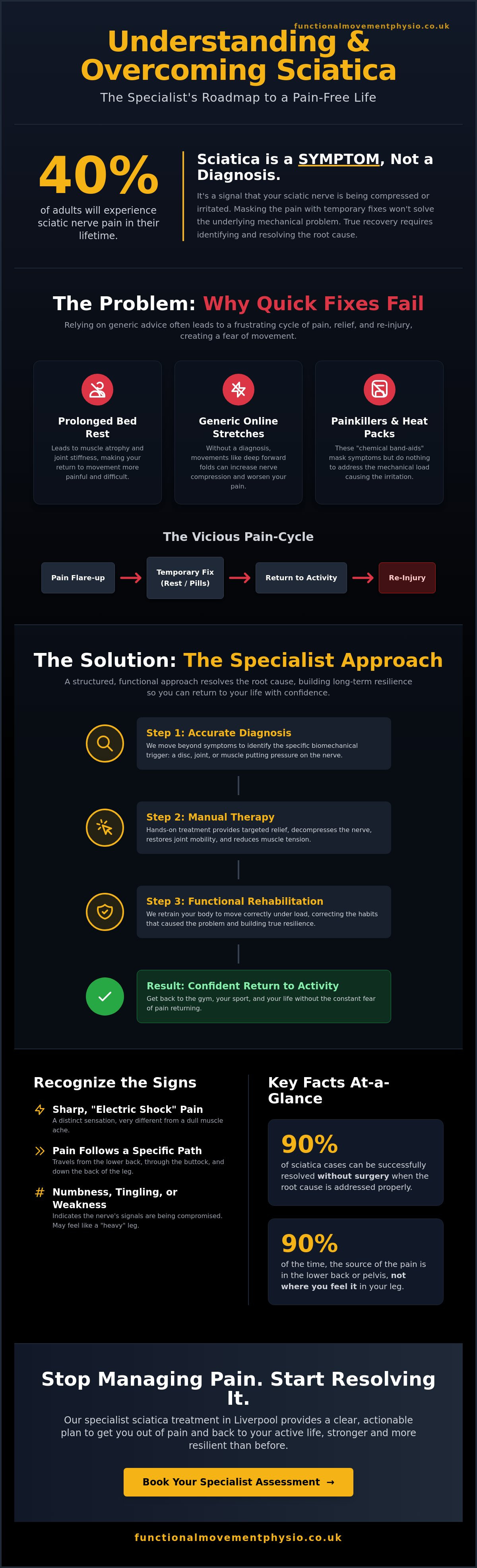
What if that sharp, shooting pain in your glute isn't a sign that you need to quit the gym forever, but rather a signal that your body's mechanics are simply out of balance? Approximately 40% of adults will experience sciatic nerve pain during their lifetime, yet many are left feeling stuck between conflicting online advice and the fear that a slipped disc means the end of their athletic goals. If you're searching for effective sciatica treatment liverpool, you've likely realised that masking the symptoms with heat packs or rest doesn't provide a lasting solution.
It's exhausting to feel like your body is failing you when you just want to get back to your Sunday morning run or your deadlift routine. You deserve to understand exactly why that nerve is irritated and how to fix it for good. This guide will show you how to move past temporary fixes and resolve the underlying cause of your pain with a specialist approach. We'll explore the biomechanical triggers of nerve irritation and outline a clear roadmap to help you return to the gym with total confidence.
Key Takeaways
- Understand why sciatica is a symptom of nerve irritation rather than a standalone diagnosis to change your recovery path.
- Discover why generic stretches and complete bed rest often fail to provide relief and can worsen nerve compression.
- Learn how addressing the link between spinal health and hip mobility resolves the actual root cause of your discomfort.
- Implement practical pacing strategies to stay active and avoid painful flare ups during your daily routine.
- Find out how specialist sciatica treatment liverpool at our clinic integrates manual therapy with functional rehabilitation for long term results.
Sciatica Treatment in Liverpool: Why Your Nerve Pain Persists
Sciatica isn't a condition you simply "have" like a cold or a virus. It's a clinical symptom indicating that your sciatic nerve is being irritated, compressed, or inflamed. If you've been searching for sciatica treatment liverpool, you've likely experienced the frustration of pain that disappears for a few days only to return with a vengeance the moment you return to the gym or head out for a run. This cycle persists because the focus remains on the leg pain rather than the mechanical breakdown in your lower back or pelvis that started the fire.
Many people in Liverpool find themselves stuck in a loop of "management" rather than resolution. You might have been prescribed painkillers or told to rest, but these are passive strategies. Masking symptoms with medication doesn't change the fact that a disc, joint, or muscle is still putting pressure on the nerve. Research suggests that while 90% of sciatica cases can be managed without surgery, those who rely solely on symptom-masking often face longer recovery times and higher recurrence rates. True recovery is built on functional movement, which involves retraining your body to move in a way that naturally decompresses the nerve and restores your physical capacity.
Recognising the Signs of Sciatic Nerve Irritation
It's easy to confuse a severe muscle strain with neural irritation. True sciatica typically manifests as a sharp, electric-shock sensation that travels from the lower back through the buttock and down the back of the leg. Unlike general muscle soreness that resolves within 48 to 72 hours, sciatic pain is often persistent and follows a specific path. You should seek a professional assessment if you experience tingling, numbness, or a "heavy" feeling in your leg. These sensations indicate that the nerve's ability to transmit signals is compromised. For a comprehensive overview of sciatica and its various causes, it's helpful to understand that the source of the pain is rarely where you actually feel the sensation.
Why Liverpool Residents Choose Specialist Physiotherapy
Active individuals in our city don't have time for generic "one size fits all" healthcare. Whether you're training for the Liverpool Half Marathon or lifting at a local CrossFit box, you need a plan that respects your lifestyle. Generic advice often fails because it doesn't account for your specific biomechanical flaws. Choosing specialist sciatica treatment liverpool means entering a partnership where we prioritise your long-term function over a quick fix. We move beyond the treatment table to analyse how you sit, stand, and move under load. This proactive approach ensures you don't just get out of pain, but you develop the resilience needed to stay active and perform at your peak without the constant fear of a relapse.
The Problem with Quick Fixes and Generic Sciatica Advice
Many people believe that complete bed rest is the only way to heal a trapped nerve. This is a common misconception that actually delays your recovery. While resting for 24 hours might provide temporary relief, prolonged inactivity leads to muscle atrophy and joint stiffness. This makes your eventual return to movement even more painful. When seeking sciatica treatment Liverpool residents often find themselves overwhelmed by conflicting advice that prioritises rest over resilience.
You might have tried searching for the best stretches on YouTube. While well-intentioned, these generic movements often do more harm than good. If your pain is caused by a disc herniation, performing a deep forward fold or a piriformis stretch could increase the pressure on your nerve. Without a professional diagnosis, you are essentially guessing with your health. Relying on symptom-based treatments like heat pads or ice packs provides a temporary "chemical band-aid" but fails to address the mechanical load causing the irritation. Understanding the full scope of sciatica diagnosis and treatment options is essential to move beyond these short-term fixes.
If you ignore the root cause, you enter a cycle of recurring pain. You feel better for a week, return to the gym, and then find yourself unable to walk the next morning. This cycle creates a fear of movement that limits your life and makes you feel older than your years.
The Failure of Passive Treatments
Passive treatments like sports massage or simple spinal adjustments can feel incredible in the moment. However, they rarely solve the underlying movement dysfunction. If your pelvis is tilting or your core isn't engaging correctly during a run, a massage won't fix that habit. This often leaves patients feeling stuck in a pain loop, where they become dependent on their therapist for a weekly fix. It also breeds a psychological fear that every small twinge signifies a permanent injury. We focus on breaking this cycle by providing sciatica treatment Liverpool patients can use to reclaim their independence.
Why Your Previous Treatment Might Have Failed
Standard care often lacks a comprehensive biomechanical assessment. You might have been given a one size fits all exercise sheet with generic leg lifts or bridges. These fail because they don't account for your specific movement patterns, limb lengths, or injury history. Just because a previous course of physiotherapy didn't work doesn't mean your condition is untreatable. It simply means the root cause hasn't been identified yet. Recovery is about precision, not just doing more exercise. We help you understand your body so you can move with quiet confidence again.
The Root Cause Approach: Beyond the Slipped Disc
While many people associate nerve pain with a slipped disc, this diagnosis is often just one piece of a much larger puzzle. Your spine doesn't operate in a vacuum. It relies on a complex relationship between hip mobility and core stability to function correctly. When your hips lack the necessary range of motion, your lower back is forced to compensate by moving excessively. This repetitive mechanical stress is frequently what leads to the nerve irritation you feel in your leg.
Effective sciatica treatment liverpool requires a deep understanding of your unique biomechanics. We look at how you move during your daily life, whether you're walking through the city centre or sitting at a desk for eight hours. According to sciatica information from the NIH, while compression is the primary cause of symptoms, the underlying reason for that compression is often related to movement habits and physical strain. Our goal is to identify these patterns and correct them.
The journey to recovery starts with an Initial Physiotherapy Consultation. This session serves as your roadmap, where we move beyond symptom management to find out exactly why your body is struggling. We don't just want to stop the pain; we want to ensure it doesn't return by optimizing how your body handles load.
Identifying Your Specific Movement Triggers
We use clinical testing to identify neural tension and specific functional deficits. This often involves looking at areas you might not expect, such as your feet. Foot mechanics dictate how force travels up your legs to your spine. If your foot hits the ground poorly, your lower back pays the price. For those who frequent the gym, we analyze your lifting form. A slight shift in your pelvis during a squat or deadlift can create the exact pressure needed to trigger a flare-up. Understanding these triggers allows us to build a precise plan for your sciatica treatment liverpool.
The Science of Nerve Desensitisation
Nerves need blood flow and space to heal. We use "nerve flossing" techniques to gently move the nerve through its anatomical pathway, which helps reduce inflammation and sensitivity. This isn't about stretching through pain; it's about restoring smooth movement. As your symptoms settle, we focus on gradual loading to build tissue resilience. To support this process, acupuncture liverpool can be used to modulate pain signals. This medical approach to acupuncture helps calm the nervous system, making it easier for you to progress through your rehabilitation exercises without being held back by constant discomfort.
Actionable Steps for Managing Sciatica in Liverpool
Managing sciatica shouldn't mean total immobilisation. In fact, avoiding movement often leads to increased stiffness and prolonged recovery times. When seeking sciatica treatment liverpool, the goal is to find the "sweet spot" where you remain active without aggravating the nerve. This requires a shift from total rest to modified activity.
Pacing is your most effective tool during this phase. Instead of pushing through a long day at the office or a heavy gym session, break your activity into smaller, manageable chunks. If you work in Liverpool city centre, stand up and stretch every 20 to 30 minutes. This prevents the sciatic nerve from being compressed under your body weight for extended periods. A quick walk around the room or a simple standing lumbar extension can reset your posture and reduce neural tension.
Consistency is more important than intensity. Incorporate low-level movement like walking on the flat paths of Sefton Park. The even terrain allows you to maintain circulation and promote nerve gliding without the unpredictable strain of uneven pavements or steep hills. Aim for three 15-minute walks rather than one long 45-minute trek to keep symptoms stable.
Sustainable Movement Strategies
Safely testing your limits involves using a "red light, green light" system. A green light means you feel no pain or a mild ache that disappears as soon as you stop. Amber is a warning; you feel a slight increase in symptoms that lingers for a few minutes. A red light is sharp, radiating pain or numbness that lasts for hours after the activity. If you hit a red light, you've pushed too far and need to scale back the next day.
To maintain mobility while sitting, try pelvic tilts or seated cat-cow stretches. These movements keep the joints of your lower back lubricated without requiring you to leave your desk. By staying within the green and amber zones, you build confidence in your body's ability to heal without the fear of a major setback.
Preparing Your Body for Long-Term Progress
As your pain levels drop, the focus must transition from immediate relief to building a resilient foundation. This is where many people fail; they stop their rehab as soon as the pain goes away, only for the sciatica to return months later. True recovery requires strength and conditioning tailored to your specific biomechanical needs.
Core strength is often misunderstood. It's not about doing 100 crunches or achieving a visible six-pack. It's about the deep stabilising muscles of the trunk working together to support your spine during functional movements like lifting, running, or even sitting. A skilled physiotherapist liverpool will help you identify which muscles aren't firing correctly and create a programme to bridge the gap between pain-free movement and peak performance.
Stop managing the symptoms and start addressing the cause. Book your initial consultation at Functional Movement Physio to reclaim your mobility.
Specialist Sciatica Care at Functional Movement Physio
We don't settle for temporary relief or quick fixes that leave you back at square one a month later. At our clinic, we recognise that nerve pain is often a symptom of a deeper biomechanical imbalance. Our approach to sciatica treatment liverpool focuses on a dual-phase strategy: calming the nervous system through manual therapy and then rebuilding your body's resilience through functional rehabilitation.
Manual therapy is essential for desensitising the irritated nerve and restoring normal joint mechanics. But true longevity comes from how you move. We integrate Clinical Pilates into our recovery programmes to help you develop the spinal control and core strength required for a life free from restriction. This isn't just about exercise; it's about re-patterning your movement to protect your spine during the high-performance activities you love. We want to move you from a state of limitation to one of quiet confidence in your body's abilities.
Our Comprehensive Assessment Process
Your recovery starts at our Henger Street clinic with a detailed 60-minute diagnostic session. We look beyond the site of the pain to assess your global movement patterns and identify why the nerve became compressed in the first place. This data allows us to build a bespoke recovery roadmap tailored to your specific lifestyle goals. Whether you're a runner aiming for a personal best or a parent who wants to lift their child without hesitation, we provide a clear, step-by-step path to get you there. Our focus is on sustainable movement that keeps you active for the long term.
Book Your Sciatica Consultation in Liverpool
Choosing the right sciatica treatment liverpool means moving away from the frustrating cycle of rest and relapse. We offer a partnership where your recovery is guided by clinical evidence and a deep understanding of human movement. We don't just treat the injury; we help you master your own body so you can return to the gym, the track, or your daily routine with total peace of mind.
Accessing our expert care is straightforward. You can view our availability and secure your consultation through our digital booking system. Don't let nerve pain dictate your activity levels for another day. Take control and start your journey toward sustainable health and peak performance. Book your appointment online today.
Take Control of Your Recovery and Return to Movement
Living with nerve pain is exhausting, but it doesn't have to be your permanent reality. You've likely tried generic stretches and rest without success because those methods ignore the underlying biomechanical root cause. True recovery happens when we identify exactly why your nerve is being irritated and correct those specific movement patterns to prevent the pain from returning.
Since 2018, our specialist team has guided hundreds of active individuals and runners through successful recoveries by focusing on functional movement and root cause diagnosis. We don't settle for temporary relief; we prioritise long-term biomechanical restoration so you can return to the gym or the track with total confidence. If you're looking for the effective sciatica treatment liverpool residents rely on for sustainable results, you deserve a diagnostic approach that treats your body as a complete system rather than a collection of symptoms.
Book your initial sciatica assessment in Liverpool
You've spent enough time feeling stuck and frustrated by conflicting advice. Let's work together to resolve the source of your limitation and get you back to the activities you love.
Frequently Asked Questions
Is walking good for sciatica or should I rest?
Walking is generally much better for your recovery than total bed rest, which can often lead to increased stiffness and muscle inhibition. Clinical data from the NICE guidelines suggests that staying active helps maintain spinal mobility and improves blood flow to the compressed nerve.
You should aim for short, frequent walks on flat surfaces rather than one long trek to avoid over-sensitising the nerve. If your pain increases by more than 2 points on a 10-point scale during the activity, you should reduce your pace or distance until your symptoms settle.
How many physio sessions will I need for sciatica treatment in Liverpool?
Most patients seeking sciatica treatment liverpool see a meaningful reduction in symptoms within 4 to 6 sessions. While every case is unique, a 2021 study on lumbar radiculopathy showed that structured rehabilitation over 8 weeks leads to significantly better functional outcomes than medication alone.
We focus on a bespoke plan that addresses your specific biomechanical triggers to ensure you aren't just masking the pain. Your progress is monitored at every stage to ensure we are moving toward your specific goals, whether that is returning to the gym or walking pain-free.
Can a physiotherapist tell if I have a herniated disc without an MRI?
Yes, a specialist physiotherapist can accurately identify a herniated disc through a comprehensive neurological examination and specific orthopaedic tests. Research indicates that clinical findings, such as the Straight Leg Raise test which has a sensitivity of approximately 91%, are often more relevant to your treatment plan than an image alone.
We look at how your body moves and responds to pressure to determine the exact level of nerve involvement. This clinical assessment allows us to start your recovery immediately rather than waiting weeks for a scan that may not change the course of your treatment.
What is the fastest way to relieve sciatic nerve pain at home?
The fastest way to reduce acute pain at home is through unloading positions, such as lying on your back with your legs supported by a chair at a 90-degree angle. This position can reduce intradiscal pressure by up to 35% compared to standing, providing immediate relief to the compressed nerve.
You can also use gentle nerve flossing exercises to encourage the nerve to glide through its pathway. It's vital to stop these movements if the pain begins to travel further down your leg, as this indicates the nerve is being irritated rather than desensitised.
Is it safe to go to the gym while I have sciatica symptoms?
It's safe to remain in the gym, provided you modify your movements to avoid aggravating the nerve. You should temporarily avoid heavy axial loading, such as traditional back squats or deadlifts, which can increase spinal compression and worsen symptoms.
Instead, focus on unilateral exercises or seated movements that maintain your strength without stressing the lumbar discs until your neural tension has decreased. We can help you adapt your current programme so you don't lose your hard-earned progress while you recover.
How do I know if my sciatica is getting better or worse?
You can track your progress by monitoring centralisation, where the pain moves out of your foot or calf and travels back up towards your lower back. This is a positive clinical sign that the nerve pressure is decreasing and your recovery is on the right track.
Conversely, if your symptoms move further down the leg or you notice a 20% increase in numbness or muscle weakness, it indicates the condition may be worsening. If you experience any loss of bladder or bowel control, you must seek emergency medical attention immediately.
What happens if I ignore my sciatica symptoms for too long?
Ignoring sciatica can lead to chronic neural plasticity, where your brain becomes hyper-sensitive to pain, potentially making your recovery 50% longer. Prolonged compression can also cause permanent muscle atrophy or foot drop if the motor nerve fibres remain compromised for more than 12 weeks.
Addressing the root cause early prevents these long-term functional deficits and ensures you don't lose the ability to perform daily activities. Early intervention is the most effective way to maintain your mobility and prevent the need for more invasive surgical options.
Can Clinical Pilates help prevent my sciatica from returning?
Clinical Pilates is an excellent tool for long-term prevention because it specifically targets the deep stabilising muscles of the spine. By improving your core control and pelvic alignment, you reduce the shear forces acting on your lumbar discs during daily movement.
Our approach ensures that once we've resolved your pain, you build the resilience needed to return to high-performance activities without the fear of a relapse. It's about moving beyond symptom management and mastering your body's functional capacity for the long term.
If you're ready to stop managing symptoms and start addressing the root cause of your pain, book an appointment at https://www.functionalmovementphysio.co.uk/book-appointment.