Shockwave Therapy for Achilles Tendonitis Liverpool: A Guide to Lasting Recovery

What if the rest you've been prescribed is actually preventing your Achilles from healing? It's incredibly frustrating to feel like you're doing everything right, only to have that familiar, searing pain return every time you lace up your trainers. If you're searching for shockwave therapy for Achilles tendonitis Liverpool, you likely want more than just temporary relief. You need a solution that addresses why the tendon failed in the first place.
We understand the anxiety that comes with chronic tendon issues and the constant fear that one wrong step might lead to a rupture. This article explains how shockwave therapy acts as a catalyst for recovery by stimulating blood flow and tissue regeneration. You'll discover a clear, evidence-based path that combines this advanced technology with specific loading strategies. Our goal is to ensure you can return to your daily activities and running goals with absolute confidence and lasting results.
Key Takeaways
- Learn why chronic Achilles pain is often a state of failed healing and why traditional rest rarely provides a long-term solution.
- Discover how shockwave therapy for Achilles tendonitis Liverpool uses high-energy acoustic pulses to stimulate neovascularization and restart your natural recovery process.
- Identify the clinical standards and practitioner expertise you should look for to ensure you receive effective, evidence-based treatment.
- Understand how to use the pain-free window created by therapy to address the biomechanical root cause of your injury.
- Gain a clear, actionable roadmap to transition from physical limitation back to peak performance in your daily life and sports.
The Problem with Achilles Tendonitis and Why Traditional Treatments Fail
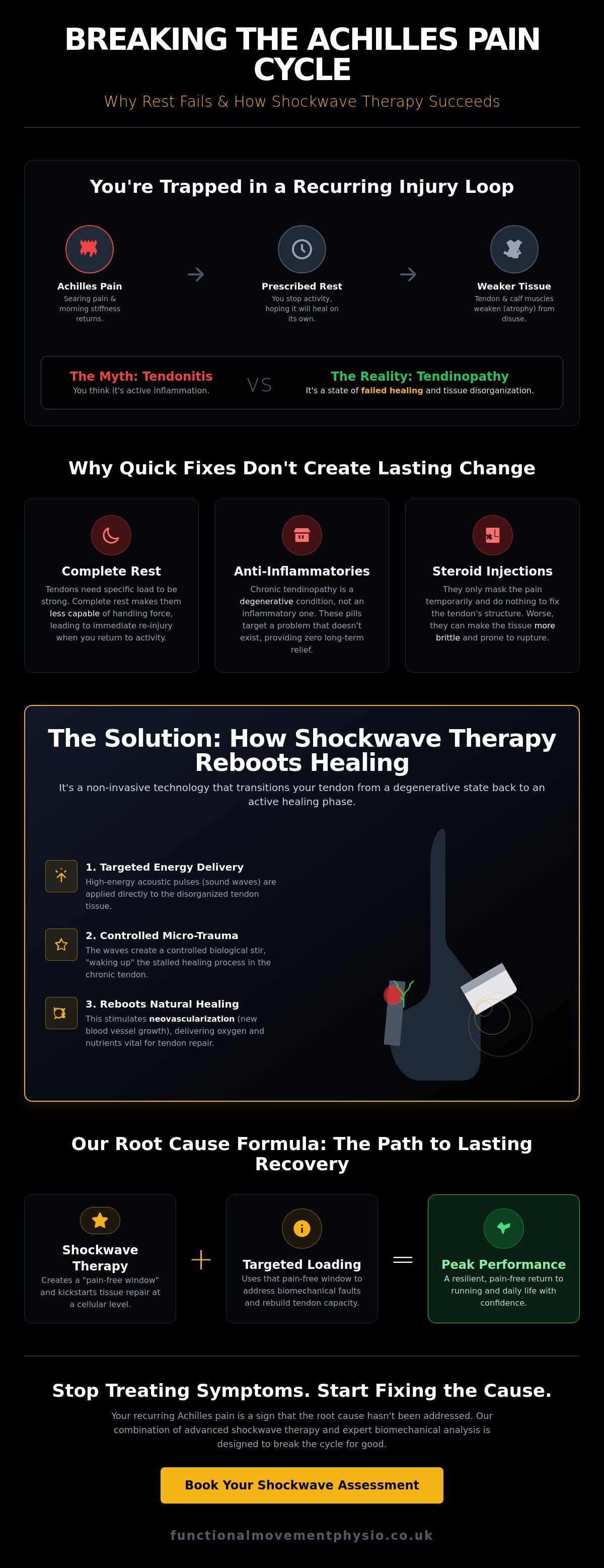
Most people call it tendonitis, but if you've been struggling for months, you're likely dealing with Achilles tendinopathy. While "itis" implies active inflammation, tendinopathy is actually a state of failed healing. Your tendon has become disorganized at a cellular level, and the body has essentially stopped trying to repair it. This is why anti-inflammatories often provide zero relief; there isn't actually any inflammation to treat.
If you're looking for shockwave therapy for Achilles tendonitis Liverpool, you've probably noticed a frustrating pattern. You wake up with a stiff, "wooden" ankle that takes ten minutes to loosen. You start your run, and the first mile is agony, only for the pain to dull slightly as you warm up, then scream back at you the next morning. It's an exhausting cycle that makes you feel like your body is failing you.
Traditional approaches fail because tendons are inherently different from muscles. They have a notoriously poor blood supply. Without adequate blood flow, the nutrients required for repair simply can't reach the damaged site. Quick fixes like steroid injections might mask the pain temporarily, but they do nothing to restore the structural integrity of the tendon. In fact, they can sometimes make the tissue more brittle.
Why Rest is Not the Answer for Tendon Pain
It sounds logical to stop moving when things hurt, but complete rest is one of the worst things you can do for an Achilles injury. Tendons are like springs; they require specific, progressive loading to stay strong and healthy. When you stop all activity, your tendon becomes even less capable of handling force.
This period of inactivity also leads to muscle atrophy in your calf. As the muscle weakens, the Achilles has to work even harder to compensate, pushing you further into the "red zone" of overload. Many Liverpool runners hit this zone by jumping back into their old mileage too quickly after a period of total rest, leading to an immediate flare-up. Research shows Achilles tendinopathy affects up to 9.5% of runners, yet many are still advised to simply "stop running" without a plan to rebuild capacity.
The Frustration of the Recurring Injury Cycle
There is a significant emotional toll when you feel like you're constantly back at square one. You might have tried standard physiotherapy exercises before, but if they weren't progressed correctly or didn't address your specific biomechanics, they likely felt like a waste of time. You don't just need exercises; you need to understand why your specific movement patterns are overloading the tissue.
True recovery requires moving beyond symptom management. This is where Extracorporeal shockwave therapy (ESWT) becomes a game-changer. It provides the biological "kickstart" that a dormant, degenerative tendon needs. By understanding that your pain is a sign of tissue disorganization rather than just "soreness," you can begin to follow a roadmap that actually builds resilience. Choosing shockwave therapy for Achilles tendonitis Liverpool is the first step in breaking this cycle for good.
How Shockwave Therapy Works to Reboot Your Healing Process
Shockwave therapy isn't just about masking pain. It's a targeted intervention designed to transition your tendon from a degenerative state back into an active healing phase. When you choose shockwave therapy for Achilles tendonitis Liverpool, you're opting for a technology that uses high-energy acoustic pulses to penetrate deep into the damaged tissue. This isn't a laser or an electrical current; it's a physical sound wave that carries energy to the exact site of your injury.
These pulses create controlled micro-trauma. While that sounds counterintuitive, it's exactly what a chronic tendon needs. As we discussed, tendinopathy occurs when the body's natural repair process stalls. The shockwaves create enough of a biological stir to wake up the immune system and restart the healing cascade in a controlled, productive way. This process also overstimulates local nerve endings, which often leads to an immediate reduction in the sensitivity and pain you feel when walking or climbing stairs.
The Science of Neovascularization and Tissue Repair
One of the most critical effects of this treatment is neovascularization. This is the medical term for the growth of new blood vessels. Because tendons have such poor natural blood supply, they often lack the oxygen and nutrients required for cellular repair. Shockwave therapy stimulates the release of growth factors that encourage these new vessels to form. For those with chronic issues, the treatment can also help break down calcified deposits that have formed within the tendon over time. This isn't just a mechanical "hammering" of the tissue; it's a complex biological response that fundamentally changes the environment of the Achilles. You can find more detailed patient information on shockwave therapy to understand how these biological changes support long-term recovery.
What to Expect During a Shockwave Session
If you're concerned about the procedure itself, rest assured that it's straightforward and non-invasive. During a session, a handheld device is moved over the painful area using a coupling gel. You'll hear a repetitive clicking sound and feel a tapping sensation against your skin. While it can be mildly uncomfortable, the intensity is always adjusted to your tolerance. Most sessions are efficient, usually lasting between 10 and 15 minutes.
In Liverpool, we typically find that a course of 3 to 6 sessions, spaced about a week apart, provides the most sustainable results. Studies have shown that over 80% of patients experience a significant improvement in pain and function following this protocol. If you're ready to see if shockwave therapy for Achilles tendonitis Liverpool is the right fit for your injury, you might consider a Runner's Assessment to evaluate your current tendon health and biomechanics.
Selecting the Right Shockwave Therapy Clinic in Liverpool
Choosing where to receive treatment is just as important as the treatment itself. When you search for shockwave therapy for Achilles tendonitis Liverpool, you'll likely see various options, from high-street clinics to specialized sports centers. However, your recovery depends on two critical factors: the quality of the technology and the clinical expertise of the person operating it. You aren't just paying for a machine to be turned on; you're investing in a clinical roadmap designed to return you to peak performance.
Machine Quality vs Practitioner Expertise
Not all shockwave machines deliver the same results. You should look for a clinic that utilizes clinical-grade radial or focused devices rather than cheap, portable units that often lack the power to reach deep tendon tissues. Even the best machine is only as effective as the therapist's understanding of your injury. The "where" and "how" of the application are vital. A skilled practitioner understands the nuances of tendon pathology and will adjust the frequency and pressure based on your specific stage of tendinopathy. There is significant clinical evidence for shockwave therapy as a primary intervention, but the best outcomes always come from precise, expert application. Don't be afraid to ask about your therapist's specific qualifications and their experience treating complex Achilles cases.
The Importance of a Comprehensive Assessment
A quality clinic will never suggest shockwave therapy without a detailed initial consultation. If a provider offers you a "quick fix" session over the phone without seeing you move, they aren't looking at the root cause. Your Achilles doesn't exist in isolation; it's the anchor of your entire kinetic chain. We need to know why your tendon is being overloaded in the first place. It might be a lack of calf strength, poor hip stability, or specific running mechanics that are placing unnecessary stress on the tissue.
This is why Gait Analysis Liverpool is so critical for lasting recovery. By filming you in motion, we can see exactly how your foot strikes the ground and how that force travels up your leg. Without this data, shockwave is just treating a symptom. A professional clinic integrates this analysis into your recovery plan, ensuring that while the shockwave reboots your healing, your rehabilitation plan fixes the movement flaws that caused the injury. You deserve a partner who looks at your long-term physical capacity, not just your immediate pain. Selecting the right provider for shockwave therapy for Achilles tendonitis Liverpool means choosing a team that values sustainable movement over temporary fixes.
The Root Cause Approach: Combining Shockwave with Biomechanics
Shockwave therapy is a powerful clinical tool, but it is not a magic wand. Its primary function is to open a "window of opportunity" by significantly reducing your pain and stimulating the biological repair process we discussed earlier. Once that window is open, the real work of long-term recovery begins. If you only use shockwave therapy for Achilles tendonitis Liverpool without changing how you move, the same mechanical stresses will eventually cause the injury to return.
Sustainable results require a dual approach. We use the therapy to settle the tendon's sensitivity, and then we immediately begin addressing the biomechanical factors that caused the initial overload. This ensures that when you return to your peak activity levels, your Achilles is not just "healed" but is actually more resilient than it was before the injury. It's about moving from a state of vulnerability to a state of high performance.
Identifying Your Biomechanical Load Drivers
Why did your Achilles fail while your other leg stayed healthy? Often, the answer lies in subtle movement patterns that you might not even notice. For many runners, a low running cadence or a tendency to over-stride creates excessive "braking" forces that the Achilles must absorb. Similarly, if your hip stability is lacking, your foot may over-pronate, creating a "wringing" effect on the tendon tissue. These are the "load drivers" that must be corrected.
By identifying these drivers, we move beyond mere symptom management. You can learn more about how we identify and fix these movement flaws in our guide to Expert Physiotherapy Liverpool. Resolving these root causes is what separates a temporary fix from a permanent recovery that allows you to train without the constant fear of a setback.
The Progressive Loading Roadmap
Our evidence-based protocol follows a logical, step-by-step progression. We don't guess; we measure your progress against specific strength benchmarks to ensure your tendon is ready for the next level of stress. This structured approach is why the combination of therapy and exercise is so effective.
- Step 1: Focuses on pain management and isometric loading. These "hold" exercises help settle the tendon and provide an immediate analgesic effect.
- Step 2: Introduces isotonic loading. This is where we build the raw strength of the calf-complex to support the tendon.
- Step 3: Involves energy storage and plyometric work. This is the final stage where we teach the tendon to act like a spring again, preparing it for the high-impact demands of running.
Research indicates that combining shockwave therapy with a structured loading program results in an 82% success rate, with patients feeling "completely recovered" or "much improved." If you're tired of temporary relief and want a clear, mentored path back to the activities you love, you can book an initial consultation today to begin your roadmap to recovery.
Start Your Recovery Journey at Functional Movement Physio
Choosing Functional Movement Physio means moving beyond the "wait and see" approach that has likely kept you stuck in a cycle of frustration. We specialize in helping local runners and athletes bridge the gap between initial pain relief and full, purposeful movement. Our role is to act as your high-performance mentor, providing the clinical expertise and the structured roadmap required to ensure your Achilles can handle the demands of your training once again. We don't just treat the injury; we help you master the physical capabilities needed to prevent its return.
We understand that chronic pain creates a sense of vulnerability, especially when you've received conflicting advice about rest versus exercise. Our clinic provides a sophisticated environment where clinical authority meets empathetic encouragement. By focusing on the transition from physical limitation to peak performance, we ensure that every step of your rehabilitation is purposeful and geared toward your long-term goals. We're here to provide the reassurance you need to push forward with confidence.
Expert Care in the Heart of Liverpool
Our clinic is a hub for evidence-based recovery in the city. We work closely with Liverpool's running clubs and fitness communities, understanding the specific challenges you face when training on local terrain. Whether you're navigating the hills of Everton Park or logging miles along the Mersey, we ensure your rehabilitation is grounded in the reality of your daily life. We don't just provide shockwave therapy for Achilles tendonitis Liverpool; we offer a supportive environment where your long-term wellness is the absolute priority.
Our commitment to excellence means we utilize clinical-grade equipment and stay at the forefront of tendon pathology research. We've seen firsthand how a disorganized tendon can derail a training season, and we know exactly how to guide you back. By choosing a specialist team that values sustainable movement over temporary fixes, you're investing in a future where your activity levels are no longer dictated by pain.
Take the First Step Toward Pain-Free Movement
Your recovery begins with a thorough Initial Physiotherapy Consultation. This isn't a brief check-up; it's a deep dive into your injury history and a comprehensive assessment of your physical capacity. We'll examine the biomechanical drivers we discussed earlier, from ankle mobility to hip stability, to create a plan that is uniquely yours. For runners, this often includes a specific Runner's Assessment to pinpoint the exact moment your gait might be failing you. You'll leave with a clear understanding of why your injury happened and exactly what steps we'll take together to resolve it.
The path from physical limitation back to the activities you love is rarely a straight line, but with the right guidance, it is entirely achievable. We're committed to helping you achieve sustainable results that allow you to master your own physical capabilities. We don't just want to get you back to the start line; we want to ensure you have the strength and resilience to finish. Don't let chronic pain hold you back any longer. Book your appointment here to start your journey back to peak performance with shockwave therapy for Achilles tendonitis Liverpool.
Take Control of Your Achilles Recovery Today
Achieving a lasting recovery from chronic pain requires more than just waiting for the soreness to fade. You now understand that successful treatment involves a biological reboot of the tendon tissue and a precise correction of the movement patterns that led to the injury. By choosing shockwave therapy for Achilles tendonitis Liverpool at a clinic that prioritizes long-term root cause resolution, you can stop managing symptoms and start building true physical resilience.
Our approach combines clinical-grade ESWT technology with specialist runner biomechanics expertise to ensure your return to activity is both safe and sustainable. We're here to provide the evidence-based roadmap you need to move from physical limitation back to peak performance. It's time to stop the cycle of recurring injuries and master your own physical capabilities.
Book your initial assessment and shockwave consultation in Liverpool to begin your journey toward pain-free movement. We look forward to partnering with you on your path to a full and purposeful recovery.
Frequently Asked Questions
Is shockwave therapy for Achilles tendonitis painful?
Shockwave therapy is generally described as a series of fast, repetitive pulses that feel like a deep thumping sensation against the skin. While it can be mildly uncomfortable, it shouldn't be unbearable. We always adjust the intensity of the device based on your specific tolerance levels. Most patients find that any sensitivity subsides immediately after the 15 to 30 minute session is complete.
How many sessions of shockwave therapy will I need for my Achilles?
A typical treatment protocol involves three to five sessions to achieve the best clinical outcome. These appointments are usually spaced approximately one week apart to allow your body to respond to the biological stimulus. While some individuals notice a reduction in morning stiffness after the first visit, the cumulative effect of the full course is necessary to reboot the healing process and ensure lasting results.
Can I continue running while receiving shockwave therapy treatment?
You don't necessarily need to stop running, but your training volume will likely require modification. We use a pain-monitoring model to determine how much load your tendon can safely handle without entering the "red zone" of overload. The goal of shockwave therapy for Achilles tendonitis Liverpool is to keep you as active as possible while we work on fixing the underlying movement flaws.
What is the success rate of shockwave therapy for chronic Achilles pain?
Shockwave therapy demonstrates a high success rate that is comparable to surgical outcomes but without the associated risks or long recovery times. Research indicates that over 80% of patients with chronic Achilles issues experience a statistically significant improvement in both pain and physical function. It's an exceptionally reliable option for those who have felt stuck in a cycle of recurring pain for months.
Are there any side effects or risks associated with shockwave therapy?
Side effects are minimal and usually resolve within a few days of your appointment. You might experience some temporary redness, minor swelling, or a dull ache around the Achilles tendon. Some patients also report a temporary tingling sensation. Because the treatment is non-invasive, it avoids the complications associated with more aggressive interventions like surgery or corticosteroid injections, making it a safe choice for most athletes.
How soon will I see results after starting shockwave therapy in Liverpool?
Some patients experience immediate pain relief due to the treatment's effect on local nerve endings, but the biological repair takes longer. You'll typically notice the most significant improvements in your physical capacity between three and six weeks after your final shockwave therapy for Achilles tendonitis Liverpool session. This delay occurs because it takes time for your body to regenerate healthy tissue and grow new blood vessels.
Is shockwave therapy covered by private health insurance in the UK?
Many major private health insurance providers in the UK, such as BUPA, AXA, and Aviva, may cover shockwave therapy. Coverage usually depends on the treatment being deemed medically necessary and prescribed by a consultant. We recommend contacting your insurance provider directly before your initial physiotherapy consultation to confirm your policy details and ensure you have the necessary authorization for your sessions.
What should I wear to my shockwave therapy appointment at your Liverpool clinic?
You should wear comfortable clothing that allows us to easily access your lower leg and ankle. Shorts are the best option, but loose trousers that can be rolled up above the knee are also perfectly fine. If you are an athlete, we also suggest bringing your current running shoes. This allows us to conduct a more thorough movement analysis as part of your comprehensive recovery plan.