Sports Massage Treatment in Liverpool: A Root Cause Approach to Recovery
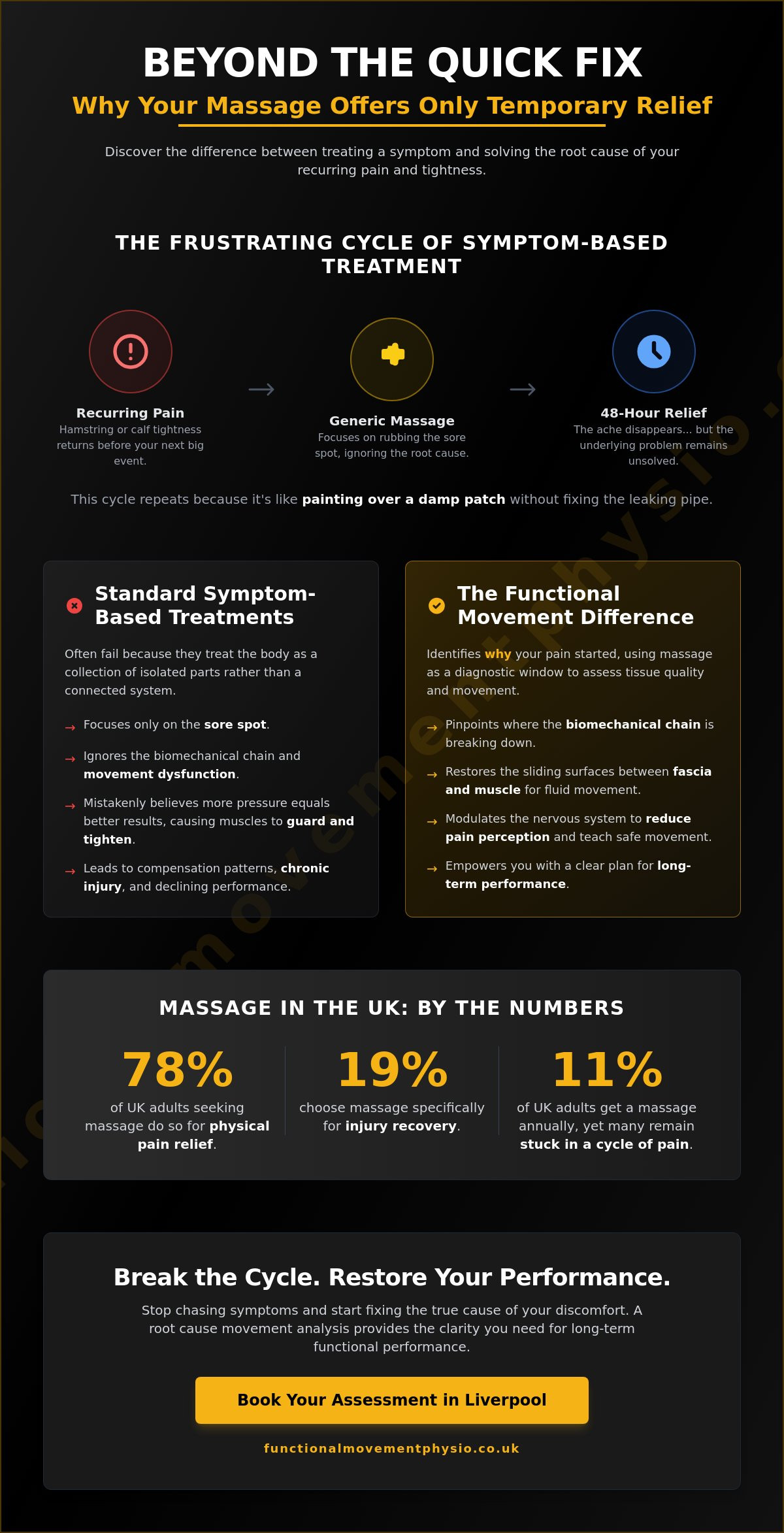
What if the recurring tightness in your hamstrings has nothing to do with your legs and everything to do with how your pelvis moves during your morning run? You've likely felt the frustration of a generic sports massage treatment that provides relief for 48 hours before the same old ache returns just as you're preparing for a local event like the Liverpool Half Marathon. It's a common struggle; research from December 2025 shows that 78% of UK adults seeking massage do so for physical pain relief, yet many find themselves stuck in a cycle of temporary fixes.
You deserve a strategy that respects your anatomy and your training schedule. This article explains how a specialist approach identifies the true source of your discomfort to restore functional movement and peak performance. We will examine why traditional symptom-based treatments often fail and how a root cause assessment provides the clarity you need for long term recovery. By focusing on biomechanical efficiency rather than just rubbing sore muscles, you can move away from the fear of injury and get back to the activities you love with confidence.
Key Takeaways
- Learn why recurring muscle tightness often signals an underlying movement dysfunction rather than a simple local injury that needs rubbing.
- Understand the physiological science of how a sports massage treatment restores the sliding surfaces between your fascia and muscle fibres for better mobility.
- Discover the critical differences between clinical sports therapy and standard relaxation massages to ensure you choose the right approach for your recovery.
- Get practical advice on how to prepare for your first clinical session, including what to wear and how to describe your symptoms for an accurate assessment.
- Find out how a root cause movement analysis in Liverpool helps you move past temporary relief and toward long term functional performance in your sport.
Understanding Sports Massage Treatment in Liverpool: Beyond the Quick Fix
A sports massage treatment at our Liverpool clinic is a targeted clinical intervention designed to manage soft tissue dysfunction. Unlike a standard spa visit, this process focuses on restoration and biomechanical efficiency. Many active people in the city, from those training for the Liverpool Marathon to gym enthusiasts in the Baltic Triangle, often ask: What is Sports Massage? Simply put, it is the skilled manipulation of soft tissues to improve range of motion, enhance recovery, and reduce injury risk. It is a partnership between practitioner and patient aimed at long term health.
We understand the frustration of recurring calf or hamstring tightness that keeps you off the trails at Sefton Park. Generic relaxation massages often fail because they treat the body as a collection of isolated parts rather than a connected system. At Functional Movement Physio, we view movement as the foundation of your health; if your movement is compromised, your quality of life follows. Our clinic serves as a hub for performance where we prioritise your ability to move without restriction.
This focus on performance extends to the local community; for those managing businesses in Liverpool's retail or hospitality sectors, you can learn more about specialized payment processing and card machines designed to keep operations running smoothly.
The Problem: Why symptom based treatments fail
Treating only the area where you feel pain is like painting over a damp patch on a wall without fixing the leaking pipe. If you have chronic lower back pain, the issue might actually stem from poor ankle mobility or a dormant glute. This is the biomechanical chain in action. When a practitioner only rubs the sore spot, you enter a cycle of temporary relief followed by the inevitable return of tightness within days. This cycle is why approximately 11% of UK adults receive a massage annually but many still struggle with the same recurring issues.
Many people believe the myth that more pressure always equals a better result. In reality, excessive force can cause the nervous system to perceive a threat, leading the muscles to guard and tighten further. Ignoring the root cause leads to compensation, where your body creates new, inefficient movement patterns to avoid discomfort. Over time, these compensations become "normal" to your brain, leading to chronic injury and a decline in your functional capacity.
The Functional Movement difference
Our philosophy is built on identifying why your pain started in the first place. We don't just follow a generic routine; we use the sports massage treatment as a diagnostic window to assess your tissue quality and how you move. By feeling how the muscles and fascia respond to manual therapy, we can pinpoint where the biomechanical chain is breaking down. This allows us to create a personalised recovery plan that addresses your specific imbalances rather than a one size fits all approach.
Our goal is to empower you with a clear understanding of your own body. By restoring functional capacity, we help you break the cycle of injury and get back to doing what you love, whether that is hitting a PB at the gym or enjoying a pain-free walk along the Mersey. If you are ready to stop chasing symptoms and start fixing the cause, you can book an appointment at our Liverpool clinic today.
The Science of Soft Tissue: How Sports Massage Supports Movement
The science behind a sports massage treatment is far more sophisticated than simply working out a knot. When you experience a session, we are targeting your fascia, which is the connective tissue that wraps around every muscle fibre. In a healthy body, these layers should glide effortlessly over one another. However, repetitive strain or injury causes these surfaces to become sticky, restricting your movement. Myofascial release techniques help restore these sliding surfaces, allowing for the fluid, functional movement required in the gym or on the track.
Beyond the physical tissue, this treatment modulates your nervous system. By stimulating specific receptors in the skin and muscle, we can lower your brain's perception of pain. This isn't just about feeling good; it is about teaching your body that it is safe to move through a full range of motion. Additionally, while the old toxin flushing narrative is outdated, manual therapy does improve local circulation. This brings fresh oxygenated blood to the area and assists the lymphatic system in clearing metabolic waste. This is why 19% of UK adults choose massage specifically for injury recovery. To learn more about our philosophy, you can explore how we prioritise functional health.
Breaking down adhesions and myofascial tension
Adhesions are essentially small areas of scar tissue that act like glue between your muscle fibres. They often form when you don't fully recover between training sessions. Targeted pressure helps realign collagen fibres into a more organised, functional pattern. This realignment is vital for tissue elasticity; without it, your muscles become brittle and prone to tears. For those dealing with tendon issues, myofascial release serves as a key technique to reduce the tension pulling on the joint, ensuring your body remains resilient under load.
The Root Cause Approach: Why we look elsewhere
If you come to us with tight calves, we don't just start rubbing your lower legs. Your body is an integrated system. Often, calf tightness is a symptom of poor hip mobility or a weak posterior chain. We use manual therapy as a tool to test our biomechanical hypotheses in real time. By assessing your movement before we begin, we can see exactly where the restriction lies. This ensures that the sports massage treatment you receive isn't just a temporary fix but a step toward sustainable movement patterns. We focus on the long term goal of keeping you active and injury free.
Our goal is to ensure you understand why your body is reacting this way. If you are tired of chasing symptoms and want to master your own recovery, you can book an appointment at our Liverpool clinic to start your journey toward peak performance.
Comparing Sports Massage vs Deep Tissue and Swedish Massage
Choosing the right manual therapy shouldn't be a guessing game. While a Swedish massage is excellent for the 37% of UK adults seeking stress relief, it lacks the clinical depth required for genuine injury recovery. A deep tissue massage is often confused with a sports massage treatment, but the difference lies in the objective. Deep tissue is a general application of high pressure to reach deeper muscle layers. In contrast, a sports massage is a remedial intervention that incorporates clinical assessment, trigger point therapy, and active stretching to solve a specific musculoskeletal problem.
The clinical assessment component is what separates a professional clinic from a high street spa. We don't just ask where it hurts; we test your joint range of motion and muscle strength to understand the "why" behind the pain. This framework allows you to choose the right session based on your goals:
- Swedish Massage: Best for general relaxation, improving sleep, and lowering cortisol levels.
- Deep Tissue Massage: Suitable for general tension release without a specific injury focus.
- Sports Massage: Essential for identifying root causes, restoring functional movement, and managing athletic recovery.
Why sports massage is the choice for Liverpool athletes
Athletes training for the Liverpool Half Marathon or powerlifters at local gyms have specific physiological needs that change throughout the year. We adapt our techniques based on your current training phase. A pre-event massage focuses on stimulating the nervous system and increasing blood flow without causing deep soreness. Conversely, a post-event session prioritises lymphatic drainage and gentle myofascial work to accelerate recovery. To understand how these sessions fit into a broader performance plan, read our guide on Expert Sports Massage in Liverpool.
When to choose physiotherapy over a standalone massage
It's vital to know when a sports massage treatment isn't enough. If you've experienced an acute injury, such as a sudden "pop" in your calf or a joint that has physically locked, you require a full initial physiotherapy consultation. Massage alone cannot fix structural damage like ligament tears or bone stress injuries. Our team works together to ensure a seamless transition between manual therapy and clinical rehabilitation. If you're dealing with chronic pain that hasn't responded to simple rubbing, a professional diagnosis is the only way to ensure long term results. You can book an appointment to speak with a specialist and find the right path forward for your body.
Planning Your Sports Massage Recovery Strategy in Liverpool
Integrating a sports massage treatment into your Liverpool training schedule requires more than just showing up for an appointment. To bridge the gap between clinical intervention and long term performance, you need a structured recovery strategy. Whether you are navigating the heavy lifting phases of a powerlifting programme or tapering for the Liverpool Half Marathon, how you manage the hours after your session determines the longevity of your results. We view this process as a collaboration; our manual expertise combined with your proactive habits creates the foundation for sustainable movement.
A common concern for first time visitors is the sensation of post-massage soreness. It is normal to feel a slight ache, similar to delayed onset muscle soreness (DOMS), for 24 to 48 hours after a deep tissue intervention. This is simply your body's inflammatory response to the mechanical changes we've made to your fascia and muscle fibres. To support this transition, we recommend prioritising hydration and light, non-impact movement like a gentle walk along the waterfront. For most active individuals, a maintenance frequency of once every four to six weeks is ideal, though high volume athletes may require fortnightly sessions during peak training cycles.
How to prepare for your first session at our clinic
Preparation begins before you step through our doors. We recommend wearing or bringing appropriate clothing, such as loose gym shorts or a vest top, which allows us to perform a thorough biomechanical assessment without restriction. If you've been struggling with recurring pain, keep a brief log for three days prior to your visit, noting when the tightness is most prevalent. During the session, we encourage an open dialogue. While we use specific pressure to realign collagen fibres, your comfort and feedback are essential for us to modulate the treatment to your nervous system's needs.
Sustainable habits to maintain results between appointments
A single sports massage treatment is a powerful catalyst, but your daily habits dictate how long those benefits last. To maintain the tissue elasticity we've restored, we provide three specific mobility drills tailored to your unique restrictions. These often focus on "un-doing" the postural strain of modern life; for example, if you spend eight hours a day at a desk, your hip flexors and thoracic spine will likely need daily attention to prevent the return of lower back pain.
Sleep and nutrition also play a vital role in tissue repair. Aiming for seven to nine hours of quality sleep ensures your hormonal environment is optimised for recovery. By taking this proactive approach to health management, you move away from being a passive recipient of care and become the master of your own body. If you are ready to build a recovery plan that actually works, you can book an appointment at our Liverpool clinic today.
Why Functional Movement Physio is Liverpool’s Choice for Performance
At Functional Movement Physio, we've moved beyond the traditional clinical model to create a high-performance environment where your recovery is the priority. Our clinic, situated in the heart of Liverpool, isn't just a place for temporary relief; it's a space where we identify the physiological drivers of your pain. By choosing a sports massage treatment with us, you're opting for a long term solution that respects your body's complex biomechanics. Our team specialises in treating the specific demands placed on runners and gym goers, ensuring that every session is a step toward your peak performance. We believe that understanding your body is the first step toward mastering it.
This mastery of movement is what allows you to fully engage in your passions, whether that's running a marathon or heading abroad for a big game; for fans looking to see their team in action, Fotballturer.no provides organized trips to the most iconic stadiums in Europe.
We've built our reputation on a commitment to results that last. Many high street options offer generic routines that ignore your history and your goals. We do the opposite. We listen to your frustrations, validate your experience, and then apply a rigorous, evidence-based approach to your recovery. This clinical authority, combined with an empathetic understanding of the athlete's mindset, makes us the trusted choice for those who refuse to let injury dictate their lifestyle. You are not just a patient here; you are a partner in the recovery process.
Integrating massage with clinical pilates and gait analysis
The true value of our approach lies in how we integrate different modalities to support your journey. Often, a sports massage treatment acts as a necessary reset for your soft tissues, which perfectly prepares the body for Clinical Pilates. While the massage restores tissue glide and reduces guarding, Pilates builds the functional strength and control needed to maintain those gains long term. This synergy ensures you don't just feel better for a few days, but actually move better for years to come.
Similarly, we use Gait Analysis to pinpoint exactly where your movement patterns are failing during a run or walk. This objective data tells us precisely where a manual intervention is required, turning a standard session into a targeted performance tool. For those needing a comprehensive reset, our Sports Massage (60 Minutes) provides the time necessary for deep recovery and a thorough biomechanical assessment. This roadmap from acute pain to peak performance is what sets our Liverpool clinic apart.
Book your sports massage in Liverpool today
Taking the first step toward pain free movement is straightforward. Our simple online booking system allows you to schedule your session at a time that fits your training block or work schedule. Remember that a professional clinical assessment is the most valuable part of your visit; it's the difference between guessing and knowing exactly why your body is tight. You don't have to accept recurring tightness as an inevitable part of your training. We are here to help you return to the gym, the track, or the trails with total confidence and a clear path forward. Visit our booking page to book an appointment and start your recovery today.
Take Control of Your Recovery and Performance
Effective recovery is not a passive process. By shifting your focus from temporary relief toward a root cause diagnosis, you break the cycle of recurring tightness and chronic injury. We've explored how a clinical sports massage treatment acts as a diagnostic tool, identifying the biomechanical imbalances that hold you back from your true potential. Our expert team at our specialist Liverpool clinic uses high performance experience to ensure every session serves a clear purpose in your training roadmap.
Whether you're a marathon runner or a dedicated gym-goer, your body deserves a strategy that prioritises longevity and functional capacity. You now have the tools to prepare for your sessions and maintain your results through better movement habits. It's time to stop managing symptoms and start mastering your own body. Book your sports massage appointment at our Liverpool clinic today to begin your journey toward lasting health. We're ready to help you get back to doing what you love with total confidence.
Frequently Asked Questions
Is a sports massage treatment painful?
A sports massage treatment should be intense but never agonizing. We work within your "pain threshold" to ensure the nervous system doesn't perceive the pressure as a threat, which would cause your muscles to guard and tighten further. You'll likely feel a "good ache" as we release myofascial tension and address deep-seated adhesions in the tissue.
Communication is the foundation of our partnership. We constantly modulate the depth of our techniques based on your feedback and the physical response of your soft tissues. The goal is to create a therapeutic change in the muscle fibres while keeping you relaxed enough to facilitate genuine recovery.
How often should I get a sports massage in Liverpool?
Most active individuals benefit from a maintenance session every 4 to 6 weeks. If you are in a high-volume training block for an event like the Liverpool Marathon, you might require fortnightly appointments to manage the increased load on your musculoskeletal system. This proactive schedule prevents small niggles from becoming chronic injuries.
Can sports massage help with non-sporting injuries like desk strain?
Yes, it is highly effective for treating postural dysfunction caused by long periods of sedentary work. Desk-based roles often lead to specific tissue restrictions in the neck, shoulders, and hip flexors. We use manual therapy to reverse these adaptations, restoring your functional movement and reducing the headaches or back pain associated with office work.
What is the difference between a 30 minute and 60 minute session?
A 30 minute session is a targeted intervention for one specific area, such as a tight calf or a sore shoulder. A 60 minute session is our "performance reset" which allows time for a comprehensive biomechanical assessment. This longer duration is essential if we need to identify the root cause of chronic pain across multiple joint systems.
Should I get a sports massage before or after a race like the Liverpool Half Marathon?
Both serve distinct roles in your recovery strategy. A pre-event session 3 to 5 days before the race should be light and stimulatory to prepare your nervous system. A post-event session 24 to 48 hours after the race focuses on lymphatic drainage and gentle tissue work to reduce the impact of delayed onset muscle soreness.
What should I wear to my sports massage appointment?
Please bring loose gym shorts and a vest top to your session. This clothing allows us to perform movement assessments and access the relevant soft tissues while ensuring you remain comfortable. Being able to see how your joints move during the assessment phase is vital for an accurate root cause diagnosis.
Can I have a sports massage if I am currently injured?
Yes, but the timing depends on the nature of the injury. For acute injuries like a grade 2 muscle tear, we typically wait 72 hours for the initial inflammatory phase to subside. After this period, manual therapy becomes a vital part of your clinical rehabilitation plan to ensure scar tissue forms in a functional, organised pattern.