Success Rate of Shockwave Therapy for Tendinopathy: 2026 Clinical Evidence
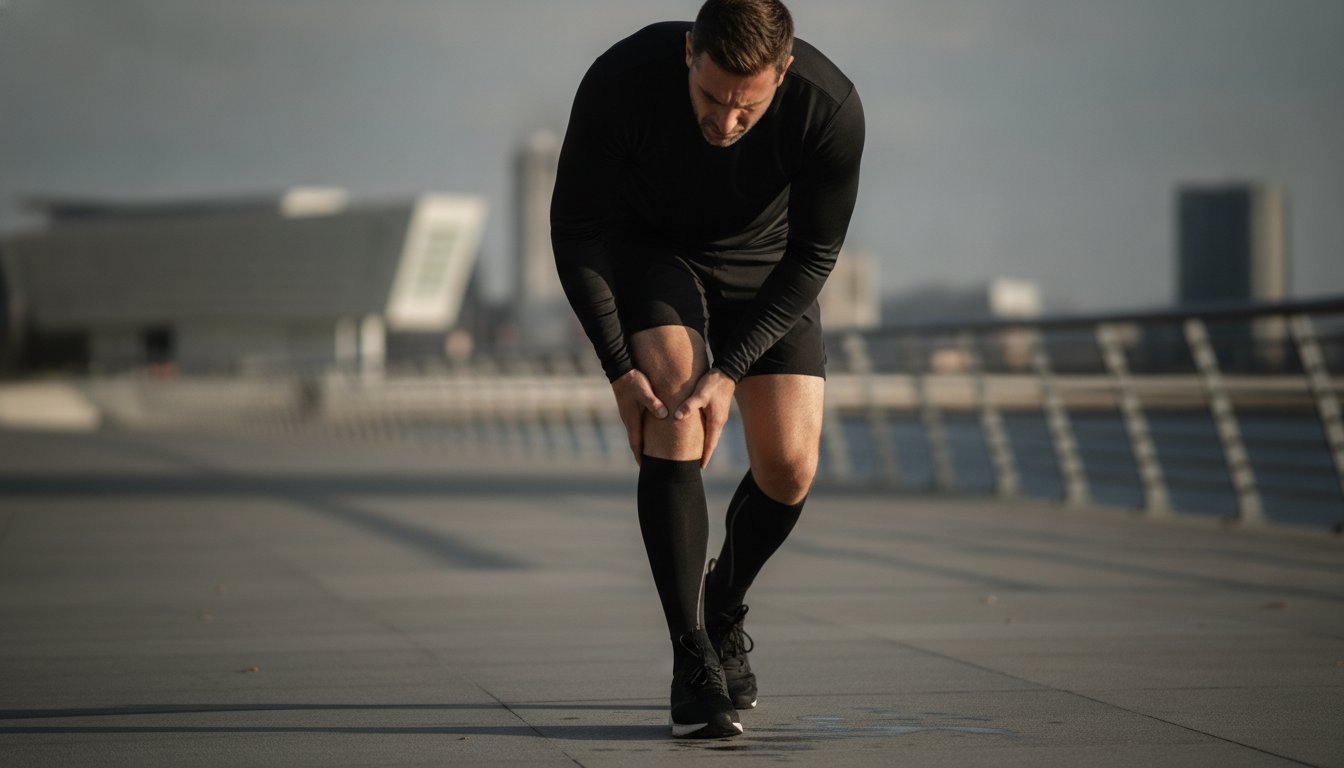
Did you know that the success rate of shockwave therapy for tendinopathy is now documented as high as 91% in recent clinical studies? If you are a runner or a dedicated gym-goer, you have likely experienced the frustration of pain that vanishes during rest but flares up the moment you try to train again. It is exhausting to navigate conflicting advice from different practitioners while fearing that surgery is the only remaining option to get back to the activities you love.
You deserve a clear path forward based on evidence rather than guesswork. This article shares the latest 2026 clinical success rates for shockwave therapy and explains how this non-invasive technology targets the root cause of your pain to restart a stalled healing process. We will show you exactly how this intervention provides more than just a temporary fix for chronic tendon issues by focusing on long-term tissue repair.
We will provide a specific breakdown of success percentages for conditions like Achilles tendinopathy and plantar fasciitis, while explaining why the right loading program is essential for lasting results. This overview gives you a reliable roadmap for your return to sport, helping you move from physical limitation back to your peak performance with confidence.
Key Takeaways
- Discover why the success rate of shockwave therapy for tendinopathy is consistently high for chronic cases that have failed to respond to traditional rest or medication.
- Learn how this non-invasive technology uses mechanotransduction to trigger a biological healing response and address the root cause of your pain rather than just masking symptoms.
- Understand the importance of pairing your clinical sessions with a progressive loading programme to ensure your results are both effective and sustainable for the long term.
- Identify the specific treatment timeline and number of sessions required to transition from persistent physical limitation back to your favourite sports and activities.
- Gain confidence in a clinical approach that combines high-spec technology with expert biomechanical analysis to help you master your own physical capabilities and prevent future injury.
Understanding the Real World Success Rate of Shockwave Therapy
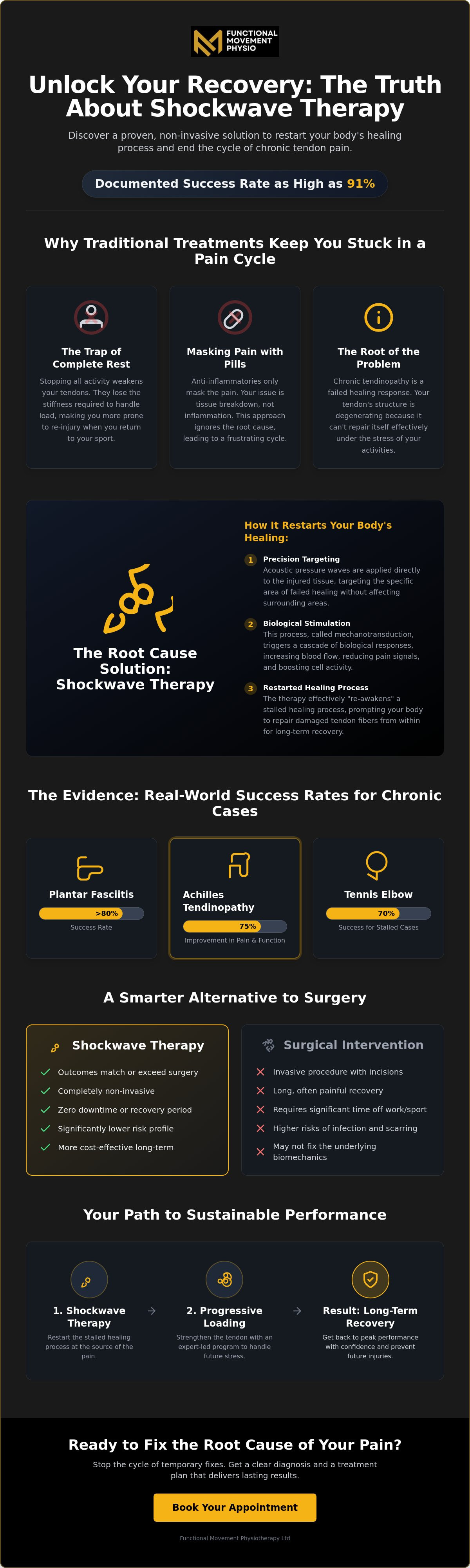
When you are struggling with persistent tendon pain, you want more than just vague promises of improvement. You need to know if the intervention actually works. Current clinical evidence indicates that the success rate of shockwave therapy for tendinopathy sits between 70 percent and 80 percent for chronic cases. This is particularly significant for you if you have been managing pain for over six months and haven't seen results from standard rest or anti-inflammatories.
Extracorporeal shockwave therapy is a non-invasive mechanotherapy that uses acoustic pressure waves to stimulate tissue repair. It isn't just about dulling the pain. We measure success by how much your pain decreases and, more importantly, how much your functional movement patterns improve. It's about getting you back to your peak performance without the limitations that have held you back for months.
Success Rates for Common Conditions
The effectiveness of this treatment varies slightly depending on the specific area of your body, but the numbers remain consistently high across the board. Clinical data highlights the following outcomes:
- Achilles Tendinopathy: Studies show up to a 75 percent improvement in both pain levels and overall function for those dealing with mid-portion or insertional issues.
- Plantar Fasciitis: This condition often sees a success rate exceeding 80 percent, especially when we combine shockwave therapy with advice on proper footwear and calf mobility.
- Tennis Elbow: For chronic cases where traditional physiotherapy has stalled, shockwave therapy delivers significant results for approximately 70 percent of patients.
Shockwave vs Surgery: The Evidence
Many patients come to us fearing that surgery is their only remaining option. The evidence suggests otherwise. Research indicates that outcomes from shockwave therapy often match or even exceed surgical intervention, particularly for mid-portion Achilles issues. Unlike surgery, this treatment involves zero downtime. You won't have to navigate a long, painful post-operative recovery or deal with the higher risk profiles associated with invasive procedures.
From a practical standpoint, it is also highly cost-effective. When you consider the long-term expense of recurring medication or the significant costs and time off work required for surgery, the success rate of shockwave therapy for tendinopathy makes it a logical first choice. It provides a safer, faster route to recovery by addressing the root cause of the tissue failure rather than just attempting a structural fix that might not solve the underlying biomechanical issue.
The Problem: Why Traditional Tendinopathy Treatments Often Fail
Most patients we see in the clinic have already tried the standard advice: rest it, ice it, and take some ibuprofen. It feels logical. If something hurts, you stop doing it. But with chronic tendon issues, this common sense approach is often why you stay stuck in a cycle of frustration. Understanding why these methods fail helps explain why the success rate of shockwave therapy for tendinopathy is so high among athletes who have tried everything else. Tendinopathy is not a simple case of inflammation; it is a breakdown in the tendon's ability to repair itself under stress.
When you rely on anti-inflammatories, you are treating a condition that isn't actually inflammatory. Research shows that chronic tendon pain involves degenerative changes in the tissue rather than a swarm of inflammatory cells. Masking this pain with medication allows you to push through a workout, but it does nothing to improve the quality of the tendon fibers. This is exactly why the success rate of shockwave therapy for tendinopathy is higher than traditional passive care; it actually addresses the biological failure of the tissue.
The Trap of Complete Rest
Resting a tendon is one of the most counterproductive things you can do for long-term health. Tendons are specialized structures designed to store and release energy like a spring. When you stop using them entirely, they lose their stiffness and load-bearing capacity. This explains why your pain returns the very moment you try to run after a month on the sofa. Your tendon hasn't healed; it has simply become less capable of handling the demands of your sport.
Purposeful, guided movement is the only way to rebuild that capacity. If you don't address the underlying weakness, you are just waiting for the next injury. If you feel like you are spinning your wheels, a professional Initial Physiotherapy Consultation can help you break the cycle and identify the true source of your pain.
Masking Pain vs Fixing Pathology
We often see runners who have been offered steroid injections as a quick fix for their Achilles or patellar pain. While these can provide temporary relief, they often come at a cost. Steroids can actually inhibit the production of collagen, potentially weakening the tendon structure over time. This makes the tissue more susceptible to future tears rather than resolving the root issue.
According to the Washington State Health Care Authority review, evaluating the safety and long-term efficacy of musculoskeletal interventions is vital. Passive treatments like ice and rest are useful tools for immediate symptom management, but they are not solutions. They don't tell your body to grow stronger or repair the damaged fibers. To achieve a permanent fix, we must move beyond symptom masking and focus on the cellular environment of the tendon itself.
The Root Cause Approach: How Shockwave Restarts Healing
To understand why the success rate of shockwave therapy for tendinopathy is so impressive, you have to look beneath the surface at how your body responds to physical stimulus. Shockwave therapy uses a process called mechanotransduction. This is a sophisticated way of saying the machine turns a physical sound wave into a biological healing signal. When a tendon has been painful for months, it often enters a "stuck" state where the natural repair cycle has simply stopped. Extracorporeal Shockwave Therapy (ESWT) effectively reboots this healing process in a tendon that has become trapped in a chronic, non-healing phase.
The treatment works by creating controlled micro-trauma at the site of the injury. This isn't damage for the sake of it. Instead, it acts as a chemical flare, signalling your body to send fresh blood, oxygen, and vital nutrients back to the area. It also helps to break down calcifications and small adhesions that may be limiting your range of motion and causing that persistent, sharp discomfort during your training sessions. By addressing these physical barriers, we clear the path for high-quality tissue to take their place.
Neovascularisation and Pain Mediation
One of the primary reasons tendons take so long to heal is their poor blood supply compared to muscles. Shockwave therapy stimulates neovascularisation, which is the growth of new blood vessels, also known as angiogenesis. This increased vascularity is essential for long-term repair. On a more immediate level, the treatment helps manage your symptoms by depleting Substance P, a neurotransmitter responsible for sending pain signals to your brain. This dual action provides both immediate relief and the biological foundation for lasting recovery.
Correcting the Biomechanical Root Cause
While shockwave therapy is a powerful catalyst for healing, we don't view it as a standalone magic wand. It fixes the tissue, but it doesn't always fix the reason the tissue failed in the first place. This is why we integrate shockwave with a specialist runner’s assessment. We need to know why your Achilles or patellar tendon was overloaded to begin with.
Perhaps your hip mobility is restricted, or your foot strike is placing unnecessary torque through your lower limb. If we only treat the pain and ignore these movement imbalances, the issue will eventually return. Our goal is to use shockwave to resolve the immediate pathology while simultaneously coaching you on how to move better. This holistic strategy ensures that the success rate of shockwave therapy for tendinopathy translates into a sustainable return to your peak performance without the fear of relapse.
Maximising Your Success: Actionable Advice for Tendon Recovery
The high success rate of shockwave therapy for tendinopathy is not solely dependent on the technology used in the clinic. It is heavily influenced by what you do in the days between your appointments. To achieve the top-tier clinical outcomes we discussed earlier, you must act as an active partner in your own recovery. Clinical evidence shows that consistency is vital; most patients require between 3 and 6 sessions, typically spaced one week apart, to allow the biological repair process to reach its full potential.
While the treatment acts as a powerful catalyst, your lifestyle and training choices determine how well that new tissue integrates into your movement patterns. You aren't just a passive recipient of care. You are the primary driver of your long-term results. By following a structured post-treatment protocol, you ensure that the acoustic energy we apply translates into functional strength and pain-free movement.
The 48 Hour Rule
Immediately following a session, your tendon enters a state of productive inflammation. This is the signal your body needs to begin repairs. Because of this, you must avoid taking anti-inflammatory medications like ibuprofen for at least 48 hours. These drugs can blunt the very healing response we are trying to trigger. You might experience some temporary soreness or a dull ache after treatment, but this is a normal part of the process.
During this two-day window, you should also avoid high-impact activities or "testing" the tendon with a heavy run. It can be tempting to push your limits if the immediate pain has decreased, but the tissue is still in a vulnerable state of remodelling. Stick to gentle movement and allow the biological response to settle before returning to your full training load.
Loading Your Tendon Safely
Success rates soar when shockwave is paired with a progressive loading programme. We usually begin with isometric exercises, which involve holding a muscle under tension without moving the joint. These exercises are excellent for building tendon capacity and providing immediate pain relief. As your tolerance improves, we transition to eccentric loading, which focuses on the lengthening phase of a movement. This specific stress helps align new collagen fibres, making the tendon more resilient to future demands.
To guide your intensity, use a 0 to 10 pain scale. A pain level of 3 or 4 during your rehab exercises is often acceptable, provided it returns to baseline within 24 hours. If your pain spikes to a 7 or 8 and lingers into the next morning, it is a sign that we need to adjust the load. If you are tired of the "rest and repeat" cycle, you can book a Shockwave Therapy session to start a recovery plan that actually addresses the root cause of your injury.
Shockwave Therapy in Liverpool: Achieving Sustainable Results
At Functional Movement Physio, we believe that the impressive success rate of shockwave therapy for tendinopathy is only the starting point of your recovery journey. Having access to high-spec technology is vital, but clinical expertise is what ensures that technology works for your specific body. Our Liverpool clinic combines advanced ESWT with expert biomechanical analysis. This integrated approach means we don't just treat the site of your pain; we investigate the movement imbalances that caused the tissue to fail in the first place.
Our clinicians are specialists in sports injury rehabilitation who focus on building long-term physical capacity. We don't want you to just feel better for a week; we want to ensure you can return to your favourite activities in Liverpool safely and permanently. For those specifically dealing with heel pain, you can read our guide on Achilles Tendonitis in Liverpool for specific local advice and recovery strategies.
A Partnership in Your Recovery
When you visit us for a specialist consultation, you aren't just a patient on a conveyor belt. We begin with a thorough initial assessment to confirm that shockwave therapy is the right clinical choice for your specific condition. We look at your history, your training volume, and your physical goals. This data allows us to create a personalised treatment plan that reflects your unique lifestyle and demands.
We understand the frustration of being told to just stop training. That isn't our approach. We work as your high-performance mentor, helping you master your own physical capabilities whether your goal is a personal best at the Liverpool Marathon or a pain-free walk in Sefton Park. This partnership ensures you feel professionally guided at every stage of your recovery, from the first pulse of the shockwave machine to your final rehabilitation session.
Taking the Next Step
Waiting for chronic pain to simply go away is a strategy that rarely succeeds. In fact, delaying intervention often leads to compensatory injuries and a further decline in tendon health. The success rate of shockwave therapy for tendinopathy is highest when the treatment is applied strategically to a stalled healing process. By choosing a proactive approach, you reduce the risk of long-term degeneration and the potential need for more invasive procedures later.
You don't have to stay stuck in a cycle of recurring injury and conflicting advice. Start your journey back to purposeful, pain-free movement today by addressing the root cause of your limitation. You can book your initial physiotherapy consultation online to begin your recovery with a team that values your long-term wellness and physical optimization.
Take Control of Your Recovery Today
The clinical evidence is clear: you don't have to accept chronic pain as your new normal. With an evidence-based success rate of shockwave therapy for tendinopathy sitting between 70 percent and 80 percent, this technology offers a proven alternative to invasive surgery and long-term medication. By restarting your body's natural healing cycle and addressing the biological root cause of your injury, we can help you transition from physical limitation back to your peak performance.
At our specialist Liverpool sports injury clinic, our expert clinicians focus on more than just temporary relief. We combine high-spec shockwave technology with bespoke loading programmes and biomechanical analysis to ensure your results are sustainable. This holistic approach empowers you to master your own physical capabilities and return to the activities you love with complete confidence.
Stop waiting for the pain to fade on its own and start your journey toward purposeful movement. Book your Shockwave Therapy assessment at our Liverpool clinic to receive a personalised roadmap for your recovery. You have the resilience to overcome this setback, and we are here to provide the clinical expertise to make it happen.
Frequently Asked Questions
Is shockwave therapy successful for long-term chronic tendinopathy?
Shockwave therapy is highly successful for chronic tendinopathy and is often the preferred choice when other conservative treatments have failed for six months or more. Clinical evidence suggests that the success rate of shockwave therapy for tendinopathy reaches up to 91% for specific chronic conditions. It works by restarting the healing process in tissue that has become stuck in a degenerative cycle, making it an ideal intervention for long-term issues.
Does shockwave therapy hurt during the treatment?
You will likely feel some discomfort during the treatment, but it is generally well-tolerated and does not require any anaesthetic. The sensation is often described as a deep, rhythmic pulsing or a fizzy feeling over the painful area. We can adjust the intensity of the acoustic waves to ensure you are comfortable while still achieving the necessary biological stimulus for tissue repair.
How many sessions of shockwave therapy will I need for success?
Most patients require between 3 and 6 sessions to achieve significant, long-term results. These sessions are typically spaced one week apart to allow your body time to respond to the biological signals and begin the remodelling process. While some people feel immediate relief, the cumulative effect of multiple sessions is what leads to the sustained restoration of your physical capacity.
Are there any side effects or risks with shockwave therapy?
Shockwave therapy is a non-invasive treatment with a very low incidence of complications compared to surgical options. You might experience some minor side effects such as temporary redness, swelling, or slight bruising in the treated area. These symptoms usually resolve within a few days and are a normal part of the body's inflammatory response as it begins to repair the damaged tendon tissue.
Can I run or exercise immediately after a shockwave session?
You should avoid high-impact exercise or heavy training for at least 48 hours following a session. This resting period is crucial because the treatment creates a productive inflammatory response that you don't want to disrupt with excessive load. Gentle movement is encouraged, but testing the tendon with a run too soon can interfere with the biological healing signals we have just triggered.
Is shockwave therapy covered by private health insurance in the UK?
Many major private health insurance providers in the UK cover shockwave therapy when it is delivered by a registered physiotherapist. Since policies vary, you should check with your specific provider to confirm your level of coverage for this treatment. It is often listed under physiotherapy or as a specialist intervention for chronic musculoskeletal conditions like plantar fasciopathy or Achilles issues.
Why is shockwave therapy better than a steroid injection for tendons?
Shockwave therapy is often superior to steroid injections because it addresses the root cause of the issue rather than just masking the symptoms. While steroids can provide quick pain relief, they may actually weaken the tendon structure and inhibit collagen production over time. In contrast, shockwave therapy stimulates the natural healing cycle and improves the quality of the tendon fibers for more sustainable results.
How soon will I see results after starting shockwave therapy?
You may experience immediate pain relief due to the temporary depletion of pain-signalling chemicals, but the real structural changes take longer. Most patients notice a significant improvement in their functional movement patterns after the second or third session. Because the body needs time to grow new blood vessels and remodel tissue, the full benefits are typically realized around 12 weeks after your final treatment.