Understanding Your MRI Scan Results for Back Pain: A Clinical Guide

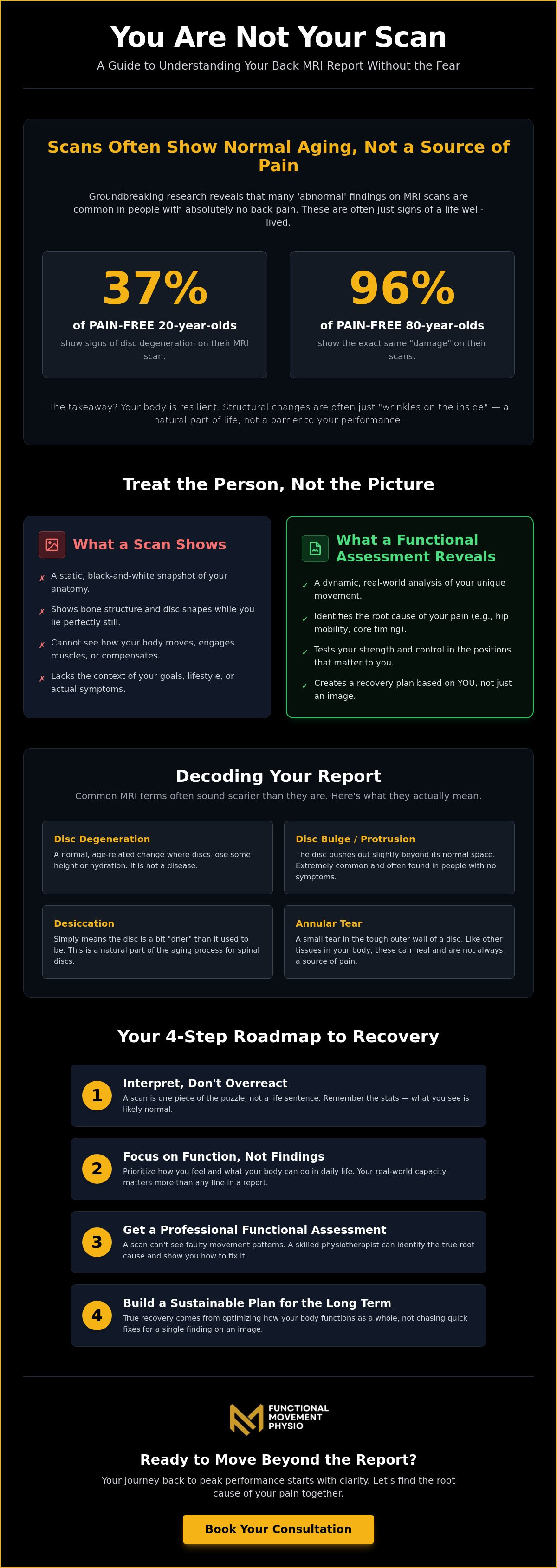
Did you know that 37% of pain-free 20-year-olds and 96% of asymptomatic 80-year-olds show signs of disc degeneration on their scans? This data from the American Journal of Neuroradiology highlights a vital truth: what shows up on an image doesn't always dictate your physical potential. You've likely spent hours Googling terms from your report, feeling a growing sense of anxiety that your athletic days are over. It's frustrating to deal with conflicting advice while trying to make sense of understanding your MRI scan results for back pain on your own.
This clinical guide will help you interpret those complex findings without the fear, showing you why a scan is only one small piece of your recovery puzzle. We believe in a partnership where clinical expertise meets your personal goals, focusing on the root cause of your discomfort rather than just a black and white image. We will explain common medical jargon, clarify why your physical symptoms matter more than the picture, and provide a clear roadmap for returning to the sports and activities you love. You are more than a radiologist's report, and your journey back to peak performance starts with clarity.
Key Takeaways
- Learn why complex medical jargon in your report often sounds more alarming than it is and how to separate anatomical findings from your actual pain experience.
- Gain clarity on understanding your MRI scan results for back pain by distinguishing between natural aging processes and findings that actually require intervention.
- Discover why focusing on the root cause of your movement patterns is more effective for long-term recovery than chasing quick fixes based on a single image.
- Understand common terminology in spinal reports, such as disc bulges and degeneration, to help remove the fear of returning to the gym or running.
- Build a sustainable roadmap for returning to peak physical performance by prioritizing a functional assessment over a static snapshot of your spine.
Why Reading Your Back MRI Report Can Be Overwhelming
Opening your MRI report for the first time often feels like reading a foreign language where every word sounds like bad news. You might see terms like "desiccation," "annular tear," or "stenosis" and immediately assume your days of lifting weights or running are over. This sense of dread is a natural response to complex medical jargon, but it's important to remember that these reports are written by radiologists for other clinicians. They are technical inventories of your anatomy, not a definitive prediction of your future physical capacity.
To put it simply, what an MRI scan is involves using powerful magnetic fields and radio waves to create detailed images of the soft tissues and bones in your spine. While the technology is incredible, the report itself lacks the context of who you are and how you move. This is why understanding your MRI scan results for back pain requires looking beyond the text on the page and focusing on how those findings correlate with your daily life.
The Difference Between Anatomy and Pain
One of the biggest misconceptions in modern healthcare is that a "perfect" spine is a prerequisite for a pain-free life. It isn't. Research published in the American Journal of Neuroradiology in 2015 found that 37% of 20-year-olds with no back pain at all had disc degeneration. By age 80, that number rises to 96%. These structural changes are often just "wrinkles on the inside," representing a natural part of the aging process. Your body is remarkably resilient. It can adapt to these variations, and many individuals with significant findings on a scan continue to perform at an elite level in sport without any discomfort.
Why Scans Are Only One Part of the Story
An MRI provides a high-resolution snapshot of your spine while you are lying perfectly still on a flat table. However, you don't live your life in a static, horizontal position. A scan cannot see how your pelvis tilts when you run or how your core engages when you deadlift. It doesn't capture the inflammation levels in your tissues or the sensitivity of your nervous system. This is why a clinical examination remains the gold standard for diagnosis. We use the scan to rule out serious pathology, but we use movement assessment to find the solution. Understanding your MRI scan results for back pain is about integrating that image with your real-world symptoms and physical goals to create a path forward.
The Problem with Treating the Scan Instead of the Person
When you receive a medical report filled with alarming terms, it's easy to fall into the trap of treating the image rather than your body. This approach often leads to a cycle of frustration. If you only look at the scan, you might miss the fact that your hip mobility or core timing is the actual driver of your discomfort. This is why understanding your MRI scan results for back pain requires a broader perspective that includes your history, your goals, and your unique movement patterns.
The "Nocebo" effect is a real phenomenon where the fear generated by scary medical language actually increases your pain sensitivity. When you believe your spine is "unstable" or "damaged" based on a report, your brain heightens its protective response. This can make simple movements feel dangerous, even when they aren't. According to the MedlinePlus guide to MRI for low back pain, many findings on these scans are not the primary cause of pain. This is why a thorough physical assessment is so critical for recovery. If you feel stuck in this cycle of worry, an initial physiotherapy consultation can help bridge the gap between your scan and your actual symptoms.
Why Quick Fixes Often Fail for Back Pain
Many people seek out injections or surgery as a "reset button." While these interventions can sometimes provide temporary relief or address a specific structural issue, they rarely address why the problem started. An injection might dampen inflammation around a nerve, but it won't change the way you sit at your desk or how you land during a run. If the underlying movement pattern remains faulty, the pain will likely return once the medication wears off. Sustainable results come from optimizing how your whole body functions together, not just suppressing a single symptom on an image.
The Risk of Unnecessary Activity Avoidance
Fear of your scan results often leads to a "protection" mindset. You might stop running, skip the gym, or avoid lifting your children because you're afraid of worsening a "bulge" or "tear." This inactivity is often the worst thing for a healing spine. It leads to a downward spiral of physical deconditioning:
- Muscle Atrophy: The supporting muscles around your spine weaken, leaving you with less stability and support.
- Increased Stiffness: Joints and soft tissues lose their natural elasticity when they aren't moved through their full range.
- Nervous System Sensitivity: Your brain becomes more protective when you move less, which can actually lower your pain threshold.
Movement is the foundation of long-term health. Instead of avoiding activity, the goal should be finding the right level of challenge to help your body adapt, heal, and grow stronger. Your spine is a robust structure designed for movement, not a fragile ornament that needs to be shielded from life.
Decoding Common MRI Terms and What They Actually Mean
Understanding your MRI scan results for back pain starts with translating technical language into clear, functional concepts. Radiologists use precise terms to describe every detail they see, but these descriptions don't always explain why you feel pain. A clinical review of spine MRI shows that many of these findings are standard anatomical variations rather than injuries. To help you regain confidence in your movement, we have broken down the most common terms found in spinal reports:
- Disc Bulge or Protrusion: This occurs when the soft inner material of a spinal disc extends beyond its usual space. It's often compared to a tire that is slightly deflated; it might look different, but it still functions.
- Degenerative Disc Disease (DDD): Despite the name, this isn't actually a disease. It's a natural aging process where discs lose some of their water content. Think of it as grey hair for your spine.
- Facet Joint Hypertrophy: This refers to wear and tear on the small joints that link your vertebrae together. It's often a sign that the joint has thickened to better handle the loads you place on it.
- Spinal Stenosis: This is a narrowing of the spaces within your spine. While it sounds restrictive, many people with stenosis live active lives without ever needing surgery.
- Foraminal Narrowing: This indicates less space in the small "tunnels" where nerves exit the spinal column. It only becomes significant if it actually irritates the nerve passing through.
Understanding Disc Changes Without the Fear
When you see "disc bulge" on a report, it's easy to picture a fragile spine. In reality, your discs are incredibly strong, fluid-filled shock absorbers designed to handle significant force. They are living tissues capable of healing and adapting to the demands of the gym or the running track. A disc bulge is a normal variation of aging that is frequently found in high-performance athletes who have no history of back pain. Understanding your MRI scan results for back pain requires recognizing that these changes don't mean you are broken; they simply mean your anatomy is unique to your life experiences.
What Nerve Compression Really Means for You
Terms like "nerve root impingement" or "compression" can sound aggressive and permanent. However, these findings on a scan are often transient or manageable without invasive procedures. The presence of a compressed nerve on an image doesn't always correlate with the level of pain or weakness you feel. Physiotherapy focuses on creating space for these nerves by optimizing your movement and reducing the mechanical stress on your spine. If you are experiencing symptoms like sciatica or tingling, seeking physio for nerve pain in leg Liverpool can help you identify the specific movement habits that are irritating the nerve. By addressing the root cause, you can often relieve the pressure and return to full activity without needing to "fix" the image on the scan.
How to Move Forward After Your Back Pain Diagnosis
Receiving your report is just the beginning of the journey. The most critical step you can take now is to move away from the screen and toward a specialist who prioritizes functional movement. Understanding your MRI scan results for back pain is only valuable when those findings are correlated with how you actually move, lift, and run. Without this context, a scan is just an isolated picture that might lead to unnecessary worry or inappropriate treatment.
Your recovery roadmap should focus on what you can do today to build a stronger tomorrow. By shifting your attention from the anatomical variations on a page to the physical capabilities of your body, you reclaim control over your performance. This proactive mindset is what separates those who stay stuck in a cycle of chronic pain from those who successfully return to their peak physical potential.
The Importance of a Professional Assessment
A specialist does not treat an image; they treat the individual. During a professional assessment, we correlate your scan findings with your physical symptoms to rule out "incidental findings" that are not actually causing your pain. It is common for a report to highlight a disc bulge that has been present for years without causing issues. A thorough evaluation looks at the big picture, examining your hips, mid-back, and specific movement patterns to see how they influence the load on your spine. This ensures we are targeting the root cause of your discomfort rather than just chasing symptoms on a screen.
Building Resilience Through Sustainable Movement
Building a resilient spine requires a progressive loading plan tailored to your specific goals. You don't need to stop moving; you need to move with purpose. Start by identifying the specific habits or movements that irritate your back and work on modifying them. Incorporating low-impact activities like walking or swimming in the early stages can help maintain mobility and blood flow to the healing tissues. As your confidence and strength improve, your plan should evolve to include the high-intensity activities you love.
Consistency is the foundation of long-term results. While you focus on strengthening your core and spine, you may find that managing secondary muscle tension helps you stay on track. You can learn more about managing these secondary issues in our guide to sports massage for muscle knots Liverpool. If you are ready to stop feeling limited by your diagnosis and want a clear path back to activity, you should book an initial physiotherapy consultation to begin your personalized recovery plan.
Finding the Root Cause of Your Back Pain in Liverpool
At Functional Movement Physio, we don't just look at your images; we look at you. Understanding your MRI scan results for back pain is only the first step in a much larger process of physical optimization. Our Liverpool clinic is dedicated to identifying the underlying reasons why your back pain started in the first place. Whether it's a lack of hip mobility, poor core timing, or training errors, we dig deeper than the surface-level symptoms to ensure long-term results. We provide a supportive environment where you can transition from the anxiety of a diagnosis to the confidence of high-performance movement.
The gap between a static medical image and your peak performance is often filled with confusion and conflicting advice. We bridge that gap by providing a clear, evidence-based explanation of your findings and how they relate to your specific symptoms. Our goal is to shift the focus from what is "wrong" on a scan to what is possible through targeted, functional rehabilitation. By addressing the root cause of your discomfort, we help you build a body that isn't just pain-free but is also resilient enough to handle the demands of an active lifestyle.
Specialist Services for Back Health in Liverpool
Our approach is built on evidence-based interventions that restore purposeful movement. We offer Clinical Pilates 1:1 sessions designed to build the deep core stability necessary for a healthy spine. These sessions are not about generic exercises; they are tailored to your unique anatomy and movement goals. For those who want to get back to the track or the weight room, our Runner's Assessment and comprehensive evaluations for gym-goers pinpoint the exact biomechanical issues holding you back. Your rehabilitation plan is never generic. It is a personalized roadmap focused on your specific sport and lifestyle goals, ensuring that every step you take brings you closer to your full physical potential.
Take Control of Your Recovery Journey
You shouldn't let a radiologist's report define your physical boundaries. While a scan provides anatomical data, it doesn't account for your body's incredible ability to adapt and grow stronger. Expert guidance helps you interpret these results with confidence, removing the fear that often leads to unnecessary inactivity. Understanding your MRI scan results for back pain with the help of a specialist allows you to stop guessing and start progressing. It's time to bridge the gap between a static image and your peak performance. Take the first step toward a sustainable recovery and book your Initial Physiotherapy Consultation today.
Reclaim Your Movement Potential
Your MRI report is a technical inventory of your spine; it's not a blueprint of your pain or a barrier to your future performance. We have explored how understanding your MRI scan results for back pain requires looking past scary terminology like disc bulges and degeneration to focus on how your body actually functions. By identifying the root cause of your discomfort rather than just managing symptoms, you can move away from the anxiety of a diagnosis and toward sustainable, purposeful movement.
Since 2018, our specialist clinic in Liverpool has helped runners and gym-goers overcome complex sports injuries and chronic pain. We provide the expertise needed to turn clinical data into a clear, actionable recovery plan. Don't let a piece of paper dictate your physical limits or keep you from the activities you love. It's time to focus on your potential rather than your limitations.
Book your expert physiotherapy assessment in Liverpool today and start your journey back to peak performance with a partner who understands the athlete behind the image. Your best days of movement are still ahead of you.
Frequently Asked Questions
Can an MRI scan show exactly where my pain is coming from?
No, an MRI scan identifies structural changes but cannot pinpoint the exact source of your pain. Many findings, such as disc bulges, are present in people with no symptoms at all. Pain is complex and involves your nervous system, movement patterns, and inflammation levels. A physical assessment is necessary to correlate what the image shows with your actual experience and symptoms.
Is a disc bulge permanent or can it heal on its own?
Disc bulges are not necessarily permanent and can often regress or heal over time. Your body has a natural capacity to reabsorb disc material through a process called resorption. This is especially true when you support the area with progressive movement and strength training. Focus on building resilience in the surrounding muscles rather than worrying about the static image of the bulge on your report.
Do I always need surgery if my MRI shows a herniated disc?
No, the vast majority of herniated discs are successfully managed without surgery. Evidence shows that conservative treatments like physiotherapy are highly effective for long-term recovery. Surgery is typically reserved for rare cases involving progressive neurological deficits or specific red flags. Most individuals return to full activity, including the gym and running, by focusing on functional rehabilitation and movement optimization rather than invasive procedures.
Why does my back hurt if my MRI scan came back normal?
A normal MRI simply means there are no significant structural abnormalities, but it doesn't mean your pain isn't real. Pain often stems from movement dysfunction, muscle imbalances, or a sensitized nervous system; none of which show up on a scan. Understanding your MRI scan results for back pain involves recognizing that normal imaging is actually a positive sign. It rules out serious pathology and confirms your spine is structurally sound.
Can I continue to run if my MRI shows degenerative changes?
Yes, you can usually continue to run even if your scan shows degenerative changes. Research suggests that running can actually help maintain disc health by providing the mechanical loading necessary for nutrient exchange. The key is to manage your training volume and ensure your running mechanics are efficient. We focus on helping you build the capacity to handle these loads safely rather than telling you to stop the activities you love.
What are the red flags I should look for in my MRI report?
Red flags are clinical symptoms rather than specific words on a report. You should seek immediate medical attention if you experience sudden changes in bowel or bladder function, numbness in the saddle area, or progressive weakness in your legs. While a radiologist may note cord compression, these clinical signs are the most critical factors. Most findings on a report are common anatomical variations that don't require urgent medical intervention.
How long should I wait after an injury before getting an MRI?
Unless you have serious red flag symptoms, it's often best to wait at least six weeks before considering an MRI. Most episodes of back pain resolve significantly within this timeframe with appropriate movement and care. Early imaging can often lead to unnecessary anxiety by highlighting normal age-related changes that aren't actually related to your recent injury. A thorough physical assessment should always be your first step after an injury.
Will physiotherapy help if my MRI shows significant wear and tear?
Yes, physiotherapy is highly effective regardless of how much wear and tear appears on your scan. Understanding your MRI scan results for back pain means realizing that your function is not limited by your anatomy. We focus on improving your joint mobility, muscle strength, and movement efficiency. This reduces the stress on those areas of wear, allowing you to return to peak performance and daily activities with confidence.