
Plantar Fasciitis · Liverpool City Centre
Plantar Fasciitis Physiotherapist Liverpool
That stabbing heel pain with your first steps in the morning is the classic sign of plantar fasciitis. It is one of the most treatable foot conditions, but only with the right loading plan, not just insoles and rest.
- Treat stubborn heel pain at the cause
- Rehab-led, not insole-dependent
- Appointments 8am to 8pm
£75 new patient assessment
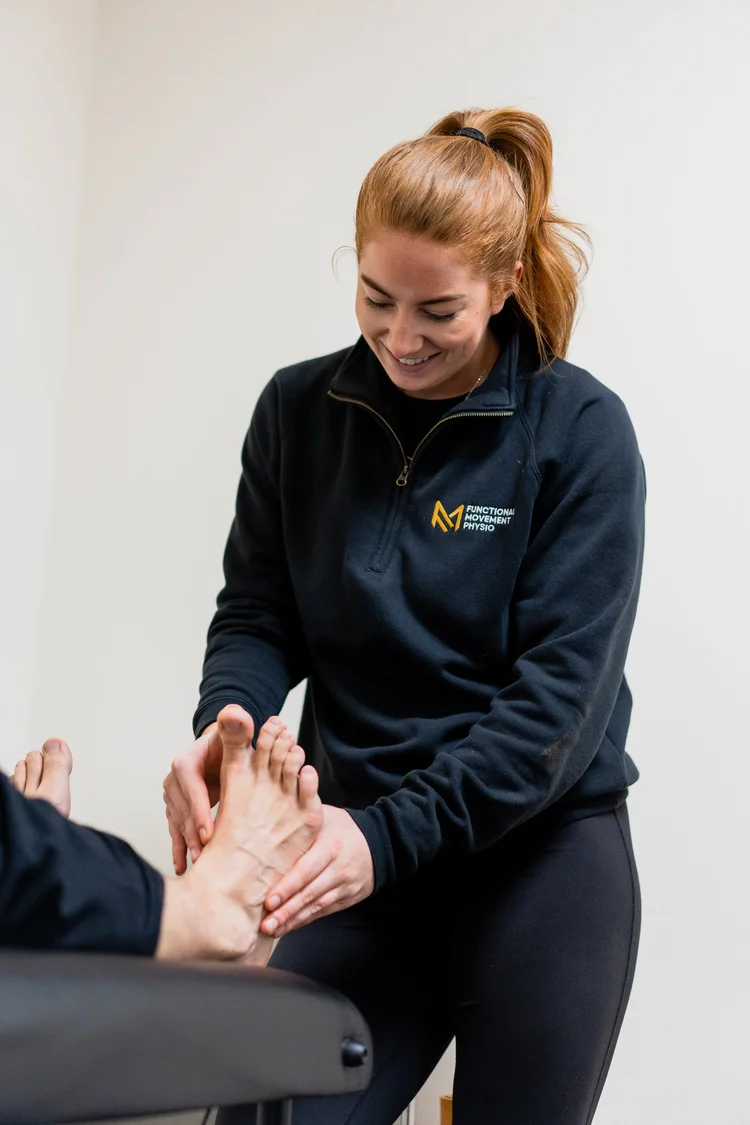
Sharp heel pain with your first steps?
Plantar fasciitis is irritation of the thick band of tissue under your foot that supports the arch. The hallmark is sharp heel pain first thing in the morning or after sitting, that eases as you warm up but returns. It is incredibly common and, treated properly, very fixable.
- First-step pain sharp heel pain getting out of bed or after rest
- Pain that eases then returns better as you warm up, worse again later in the day
- Tender under the heel or along the arch of the foot
- Worse after standing long periods on your feet or after exercise
- Lingering for months because rest alone does not fix it
- Not helped by insoles alone which mask it rather than fixing the cause
Causes and types
Why plantar fasciitis happens
Getting the specific cause right is what makes treatment work. We assess and treat:
Load spikes
A sudden increase in running, walking, or standing that overloads the plantar fascia.
Calf and foot weakness
Weak or stiff calves and feet that fail to support the arch under load.
Footwear and surfaces
Unsupportive shoes or hard surfaces increasing the strain.
Reduced ankle mobility
Stiff ankles shifting load onto the heel and arch.
Body weight and load
Increased load through the foot over time.
Biomechanics
How you walk and load the foot driving repeated strain.
Our approach
How we treat plantar fasciitis
Accurate diagnosis
We confirm it is plantar fasciitis and not nerve, fat pad, or other heel pain, since the treatment differs.
Settle and load
Hands-on treatment to ease symptoms, plus a progressive loading programme that rebuilds the fascia and calf, the proven path to recovery.
Fix the cause
Footwear, training load, calf and foot strength, and walking mechanics, so it does not come straight back.
Stubborn cases
Shockwave for chronic heel pain
For plantar fasciitis that has lasted more than a few months despite loading, shockwave therapy can kick-start healing in stubborn tissue. We use it alongside your loading programme, not instead of it.
Stimulates repair
Shockwave promotes blood flow and healing in chronic plantar fascia tissue.
Alongside loading
Used with progressive loading, the foundation of recovery.
3 to 6 sessions
Most patients improve within a short course of treatment.
Why us
Why FM Physio for plantar fasciitis in Liverpool
Rehab-led, not insole-dependent
Accurate diagnosis
Shockwave for stubborn cases
45-minute assessments
No referral needed
Our therapists
Top rated plantar fasciitis physio Liverpool
20+ years experience
All our sports therapists and physiotherapists are handpicked as the best in the industry.
300+ 5-star reviews
We do not bang our own drum, our clients do it for us.
HCPC and CSP registered
Fully qualified, regulated physiotherapists. You are always in safe, professional hands.
Plantar Fasciitis FAQs
How long does plantar fasciitis take to heal?
With the right loading programme, many cases improve significantly over 6 to 12 weeks. Long-standing cases take longer and may benefit from shockwave. The key is loading, rest alone tends to let it drag on for months.
Do I need insoles?
Not necessarily. Insoles can give short-term relief but they do not fix the underlying weakness or load problem. We focus on rebuilding the foot and calf so it can support itself, which is what lasts.
Why is it worse in the morning?
Overnight the fascia tightens and is not loaded, so the first steps stretch and irritate it sharply. As you warm up it eases, then often worsens again later from cumulative load.
Do I need a scan?
Rarely. Plantar fasciitis is usually diagnosed clinically. We only refer for imaging if the picture is unclear or not responding as expected.
What are your prices?
A new patient assessment is £75 for 45 minutes, including a full assessment, hands-on treatment, and a clear plan.
Related services and pages
These related pages may help:
Beat heel pain for good
Stop limping through your mornings. Book a plantar fasciitis assessment and get a real loading plan from a Liverpool specialist.
Book appointment